Geomag: The magnetic construction toy that made forces visible
Geomag turned magnetism into hands-on play. Since the late 1990s, its rods and spheres have helped kids (and adults) build, test, and rethink structures using invisible forces you can feel.
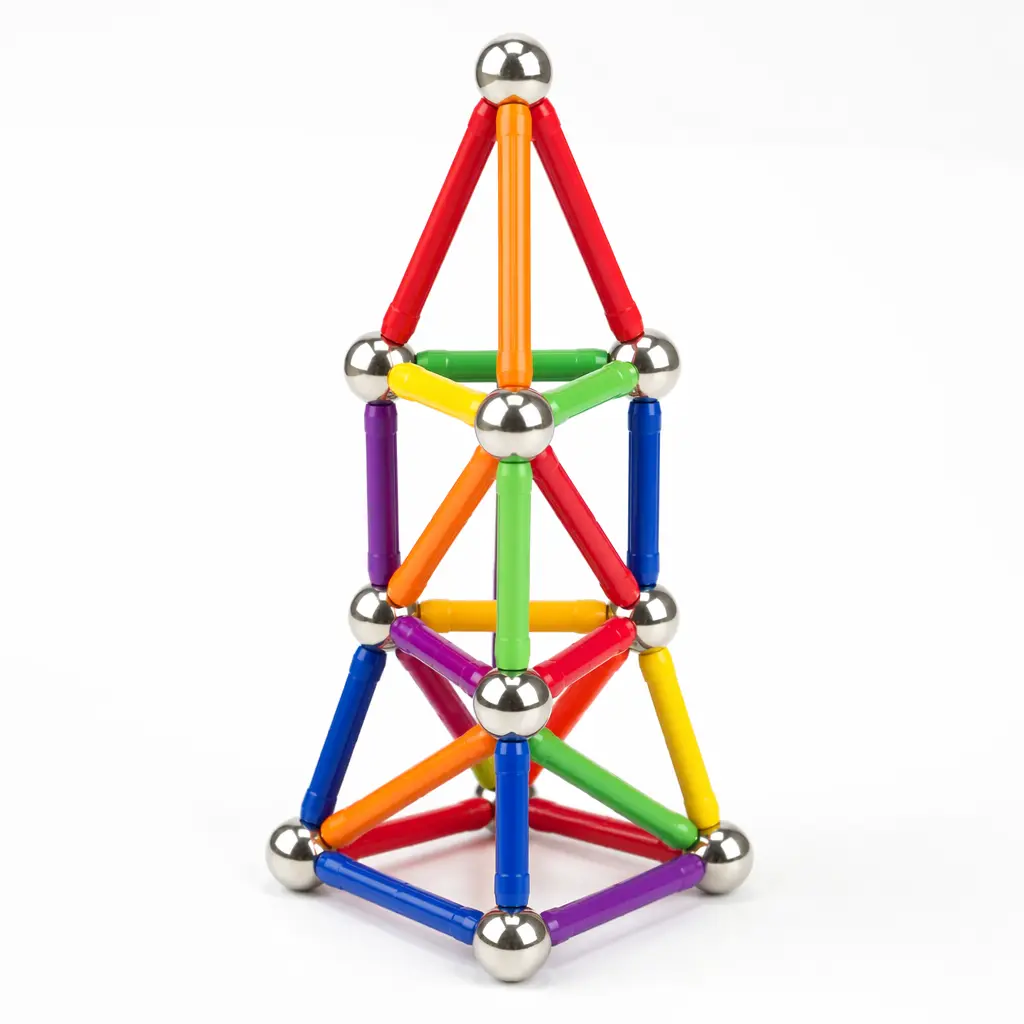
Compare prices and availability
Check current prices and availability for this guide on eBay.
As an eBay Partner, we may be compensated if you make a purchase.
Geomag is one of those toys that feels almost magical the first time you pick it up. A handful of metal spheres, a bundle of colourful rods, and suddenly structures snap together with a confidence that seems to defy gravity. What makes it interesting isn’t just that it sticks, but that it invites players to experiment with balance, tension, and collapse in real time. You’re not following instructions so much as negotiating with physics.
Where it came from
Geomag originated in 1998, at a moment when construction toys were starting to move beyond bricks and beams. Developed in Europe, the idea was to make magnetism — normally hidden away inside motors or fridge doors — something children could actively explore. Instead of screws, clips, or studs, the connections themselves became the lesson.
Early Geomag sets focused on simplicity: straight rods, spherical connectors, and strong internal magnets. This minimalist approach made the system feel both modern and educational, fitting neatly into the growing interest in STEM learning long before the acronym became a marketing staple. Over time, the brand expanded its range, but the core concept stayed remarkably consistent.
Why it works
At its heart, Geomag works because it provides instant feedback. A structure either stands or it doesn’t, and the reasons are usually obvious. Add one rod in the wrong place and the whole thing can twist or collapse. Get the balance right, and you can build surprisingly large, airy shapes that feel stronger than they look.
The toy also sits at an interesting crossroads between free play and learning. Children might start by simply snapping pieces together, but they quickly encounter ideas like triangles being stronger than squares, or why symmetry matters. There’s no need for a lesson plan — the discoveries happen naturally.
- Magnetic rods that connect at any angle
- Steel spheres that allow multi-directional joints
- Open-ended system with no single "right" build
- Immediate cause-and-effect when structures fail or succeed
Who it’s for
Geomag is typically aimed at school-age children, but its appeal stretches well beyond that. Younger builders enjoy the satisfying snap of magnets and simple shapes, while older kids and teens can attempt complex bridges, towers, and abstract designs. Adults often find themselves drawn in too, especially those who enjoy puzzles, desk toys, or stress-relieving hands-on activities. It’s one of the few construction toys that doesn’t feel childish once you pass a certain age.
Variants and what to look for today
Modern Geomag sets come in a variety of sizes and themes, from compact starter kits to large classroom-style boxes. Some introduce curved rods or panels, while others focus on motion or more advanced engineering concepts. The underlying system remains compatible, which is part of the toy’s long-term appeal.
When shopping today, it’s worth paying attention to build quality. Strong, well-encased magnets make a noticeable difference to how satisfying the set feels and how tall or complex you can build. Cheaper magnetic construction toys can look similar but may have weaker connections or inconsistent sizing, which can frustrate more ambitious builders.
Frequently asked questions
Is Geomag educational or just a toy?
It’s both. While it’s fun to play with casually, Geomag naturally introduces concepts from geometry, physics, and engineering. Many schools and clubs use similar magnetic systems for hands-on learning.
Do you need instructions to get started?
Not really. Most sets include idea booklets, but the system is intuitive. Many players learn more by experimenting, failing, and rebuilding than by following step-by-step guides.
Can different Geomag sets be mixed together?
Generally, yes. One of the strengths of the Geomag system is compatibility across sets, allowing collections to grow over time.
Is it safe around electronics?
As with any strong magnets, it’s best to keep pieces away from sensitive electronics and storage media. Normal household use with basic care is usually fine.
More than two decades after its introduction, Geomag still feels relevant. By turning an invisible force into something you can see, touch, and argue with, it offers a kind of play that rewards curiosity and patience. Whether it’s used as a learning tool, a creative outlet, or a quiet desk companion, its enduring appeal lies in how simply — and honestly — it lets physics do the talking.