The Pogo Stick: A simple bounce that never quite goes away
Invented a century ago, the pogo stick is a deceptively simple outdoor toy that keeps testing balance, bravery, and leg strength—generation after generation.
Compare prices and availability
Check current prices and availability for this guide on eBay.
As an eBay Partner, we may be compensated if you make a purchase.
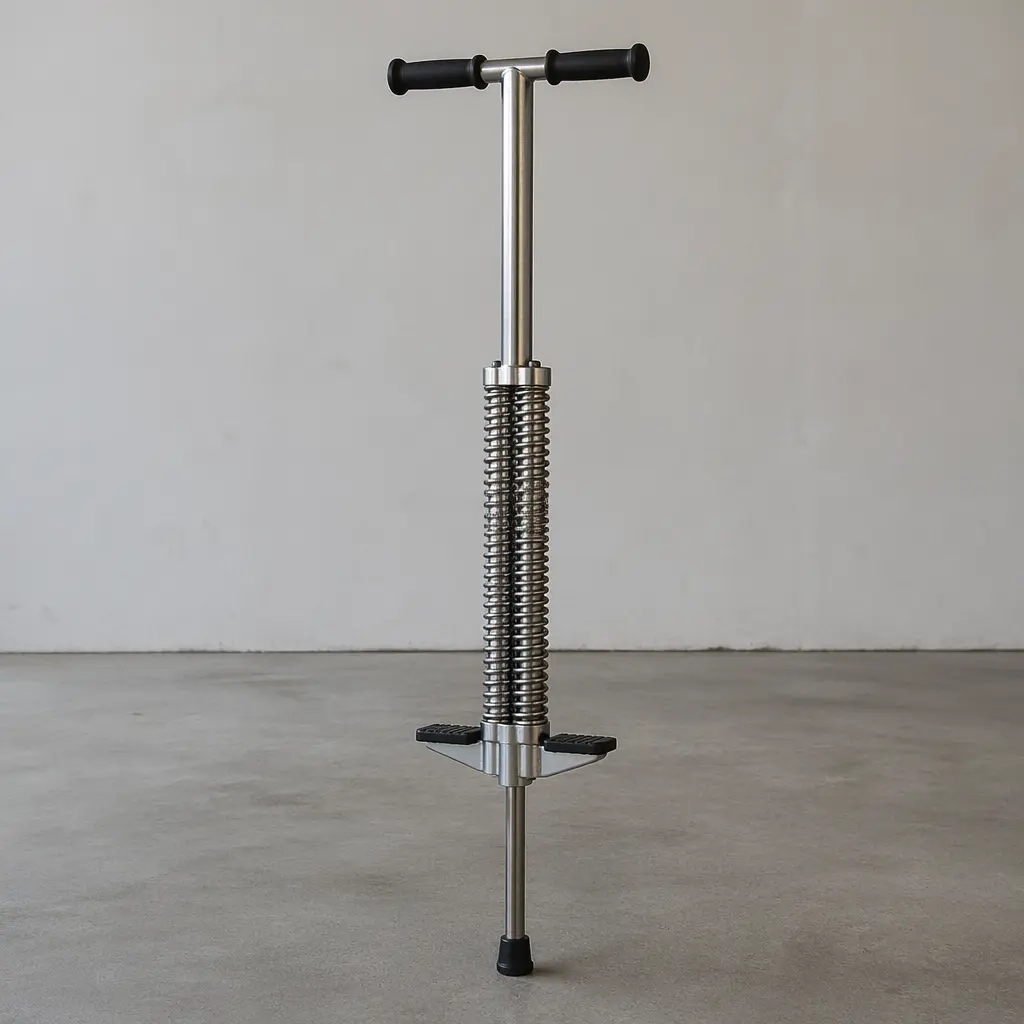
The pogo stick looks almost too simple to be interesting: a pole, two foot pegs, a handle, and a spring. And yet, for more than a hundred years, it has kept daring kids (and the occasional brave adult) to climb on, bounce upward, and see how long they can stay upright. Few toys balance fun and fear quite so neatly. You either master it, or it masters you.
Where it came from
The pogo stick traces its roots to the early 20th century, with patents appearing around 1920. Early designs were inspired by simple spring-powered walking aids and novelty jumpers, and several inventors refined the idea around the same time. The goal was not extreme sport or stunt performance, but straightforward amusement: a compact device that turned vertical motion into play.
As manufacturing improved, pogo sticks became sturdier and more reliable, making them suitable for mass-market toy production. By the mid-20th century, they were a familiar sight in toy catalogues, often marketed as a test of coordination and nerve. Unlike many fads of the era, the pogo stick never fully disappeared; it slipped in and out of popularity, but always bounced back.
Why it works
At its core, the pogo stick works because it offers immediate feedback. Every bounce tells you whether your timing, balance, and posture are right. There are no batteries, no instructions beyond “hold on and jump,” and no shortcuts. Progress is physical and visible, which is deeply satisfying—especially for kids who enjoy mastering a challenge.
Its design also leaves room for imagination. One child sees a simple jumping toy; another imagines a space hopper, a stunt device, or a personal endurance test. That openness is part of its lasting appeal.
- Simple spring-driven bounce with no electronics
- Instant cause-and-effect learning
- Builds balance, leg strength, and coordination
- Compact design that stores easily
- Clear sense of progress as skills improve
Who it's for
Traditionally, pogo sticks are aimed at school-age children who have developed basic balance and confidence. They tend to appeal most to kids who enjoy physical challenges rather than pretend play. That said, adults often feel the pull too—whether out of nostalgia or curiosity about whether they’ve “still got it.” Modern versions often specify weight ranges, making it easier for teens and grown-ups to join in safely.
Variants and what to look for today
While the classic pogo stick design remains instantly recognisable, today’s versions vary in materials and performance. Traditional steel-spring models offer a familiar feel and are often the most affordable. Newer designs may use elastic cords or air-powered systems, which can provide smoother or higher bounces with less impact.
When shopping today, it’s less about flashy extras and more about fit and build quality. Height adjustment, non-slip foot pegs, and comfortable grips make a real difference. It’s also worth being cautious of very cheap options that may look the part but lack durability or stability.
Frequently asked questions
What age is appropriate for a pogo stick?
Most manufacturers recommend pogo sticks for children aged 6 or 7 and up, depending on balance and strength. Younger children may struggle to control the bounce safely.
Are pogo sticks safe?
Like any active toy, they carry some risk. Using them on flat ground, wearing protective gear, and choosing a model suited to the rider’s size greatly reduces the chance of injury.
Do pogo sticks help with fitness?
Yes. Regular use can strengthen leg muscles, improve balance, and boost coordination. While it’s not a full workout, it’s a fun way to stay active.
Why did pogo sticks stay popular so long?
Their staying power comes from simplicity. They’re easy to understand, challenging to master, and don’t rely on trends or technology that can quickly feel outdated.
A century on, the pogo stick remains a small act of bravery on a spring. It asks for focus, rewards persistence, and delivers a thrill that’s hard to replace. In a world of increasingly complex toys, its enduring bounce feels almost radical.