Polly Pocket: How a tiny dollhouse became a lasting icon
From a compact locket in the late 1980s to a modern doll line, Polly Pocket shows how small-scale play, portability, and imaginative worlds helped a toy endure across generations.
Compare prices and availability
Check current prices and availability for this guide on eBay.
As an eBay Partner, we may be compensated if you make a purchase.
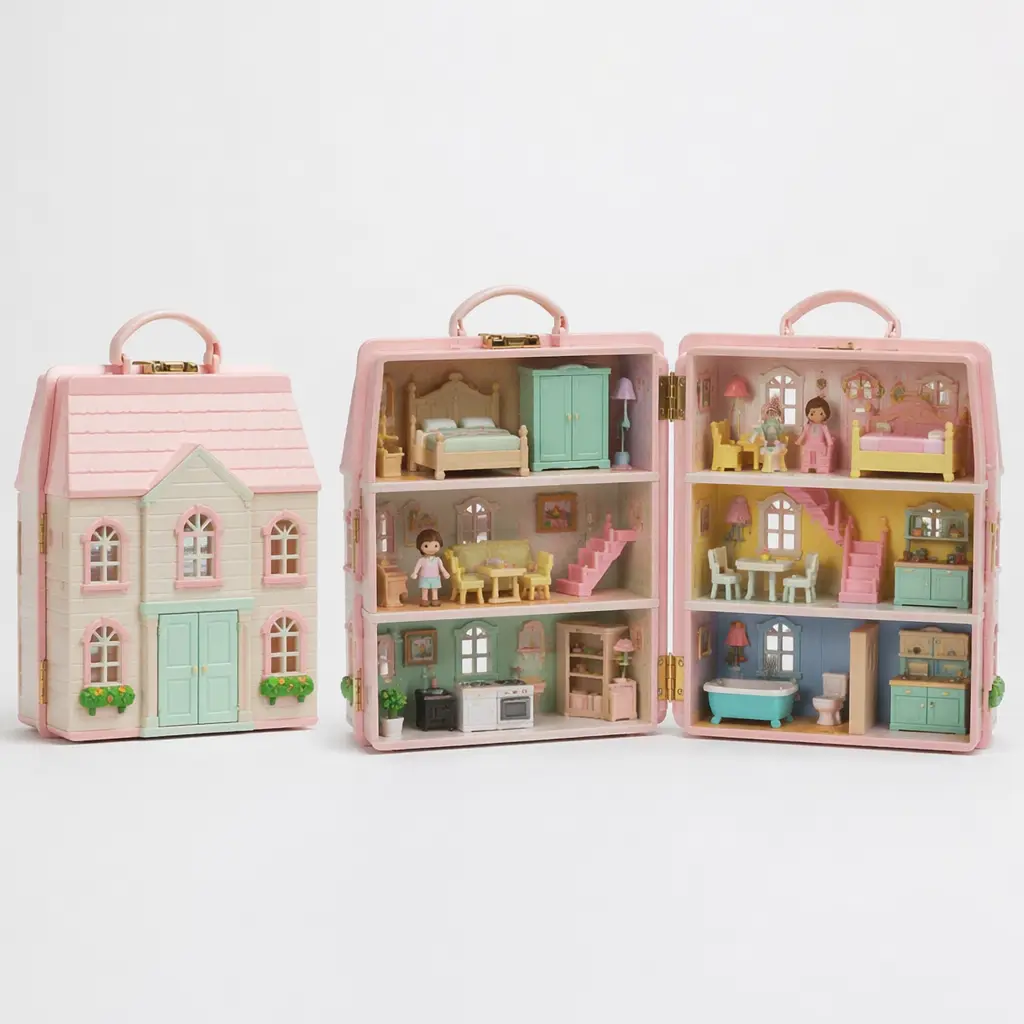
Polly Pocket is remembered as the toy you could carry anywhere. Barely bigger than a compact, the original playsets opened to reveal whole worlds in miniature: houses, shops, parks, and holiday scenes, all scaled for tiny figures you could move with a fingertip. For many children of the 1990s, Polly Pocket was about private, imaginative play — a complete story world that fit in a pocket, school bag, or coat sleeve.
Where it came from
Polly Pocket was invented in 1989 by British toy maker Chris Wiggs. The idea began as a homemade gift: a compact-sized case designed so his daughter could play with tiny figures while travelling. Early versions were made of injection-moulded plastic with simple hinges and latch closures, reflecting both portability and durability.
The concept was licensed and produced commercially in the early 1990s, arriving at a time when doll play was often large-scale and room-bound. Polly Pocket stood apart by shrinking the experience down. Its early success came from this contrast: it offered detailed, imaginative play without taking over a bedroom floor.
Why it works
At its core, Polly Pocket works because it combines three ideas children respond to instinctively: miniaturisation, secrecy, and storytelling. Opening the case feels like unlocking something special. Inside, every tiny chair, bed, or shop counter suggests a story without spelling it out.
The original design encouraged careful, focused play. Figures were small enough to feel precious, and settings were detailed enough to reward close attention. Standout features included:
- Pocket-sized cases that could be opened and closed mid-story
- Fully moulded environments rather than loose furniture
- Simple peg-style figures that stayed put during play
- Themes that mirrored everyday life and small adventures
Who it's for
Originally aimed at primary-school-aged children, Polly Pocket also found a strong adult audience years later. Many adults now associate the toy with childhood travel, quiet play, and collecting. Today’s versions are generally designed for younger children, while vintage sets are often sought by collectors and nostalgic parents.
Variants and what to look for today
Polly Pocket has changed significantly over time. Early versions focused on ultra-small scale, while later editions grew larger with chunkier figures and simplified details. Modern releases often prioritise durability and safety over intricate moulding.
If you are looking for Polly Pocket today, it helps to know what you value most:
- Vintage-style compacts for collectors and nostalgic adults
- Larger modern playsets for easier handling by young children
- Secure closures and robust hinges for travel play
- Complete sets with original figures rather than loose pieces
Frequently asked questions
Why were the original Polly Pocket figures so small?
The tiny scale was intentional. It allowed entire play environments to fit into pocket-sized cases, reinforcing the idea of portable, private play rather than room-filling setups.
Are modern Polly Pocket toys the same as the originals?
No. Modern versions are generally larger and sturdier, designed to meet current safety standards and suit younger hands. The core idea remains, but the scale and feel are different.
Is Polly Pocket mainly a collector’s toy now?
It spans both worlds. New sets are made for children, while older compact-style sets are often collected by adults who grew up with them.
What made Polly Pocket stand out from other doll toys?
Its portability and self-contained worlds were unique. Unlike larger dolls or houses, Polly Pocket offered imaginative play that could happen anywhere.
More than three decades on, Polly Pocket remains a reminder that toys do not need to be big to feel rich. Its enduring appeal lies in the simple pleasure of opening something small and discovering a whole world inside.