Reusable Water Art Pads vs Gel Boards for Flights
A parent-focused guide to reusable water art pads and gel drawing boards for flights with ages 3–5, covering drying time, leak risk, tray-table fit, cleanup and travel practicality.
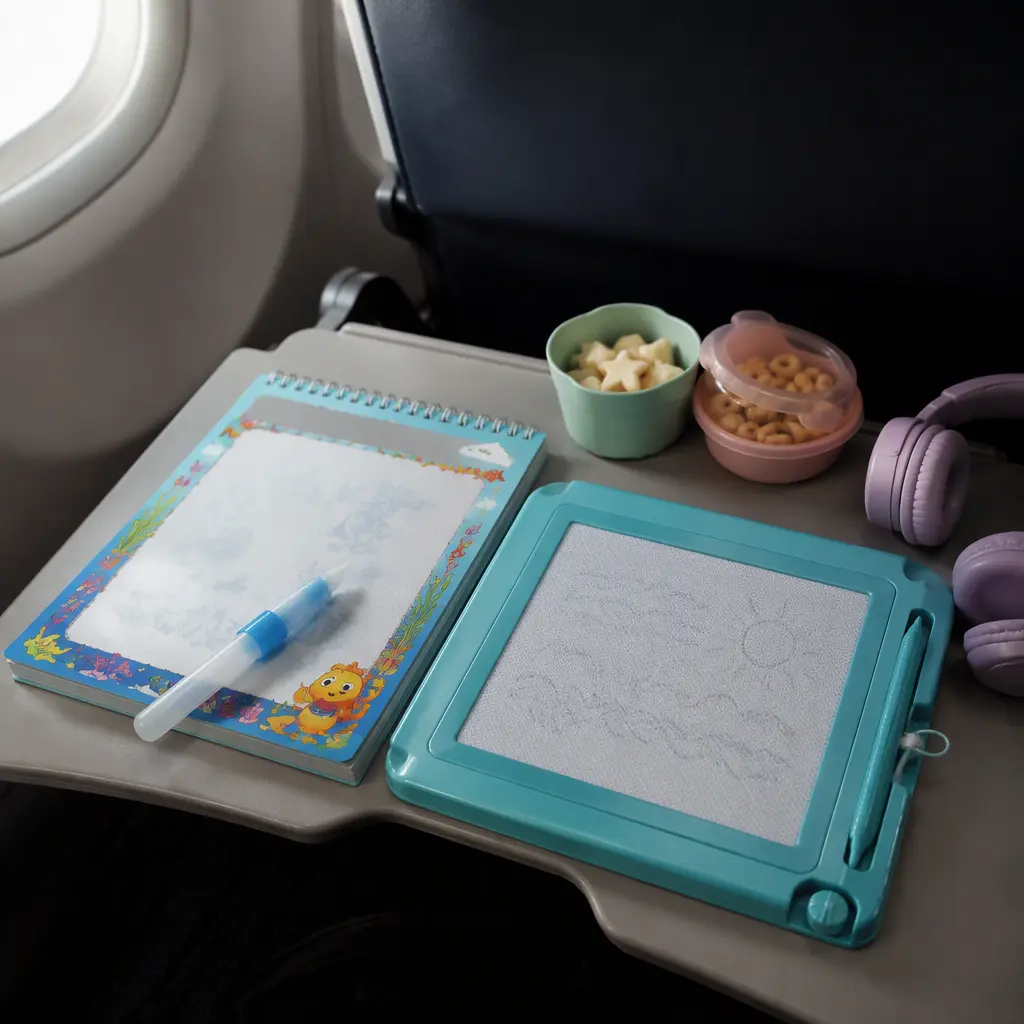
Compare prices and availability
Check current prices and availability for this guide on eBay.
As an eBay Partner, we may be compensated if you make a purchase.
For flights with preschoolers, reusable drawing toys can fill long stretches without screens, loose crayons or sticker debris. Two of the most common options are reusable water art pads and gel drawing boards. Both are designed for repeated use, but they behave very differently once you add cramped tray tables, turbulence, limited cleanup options and tired children into the mix. Water art pads use refillable pens that reveal colors temporarily on special pages, while gel boards let children press and trace shapes through a sealed gel surface. The better choice often comes down to drying time, spill tolerance and how much active supervision a child still needs during travel.
What to look for
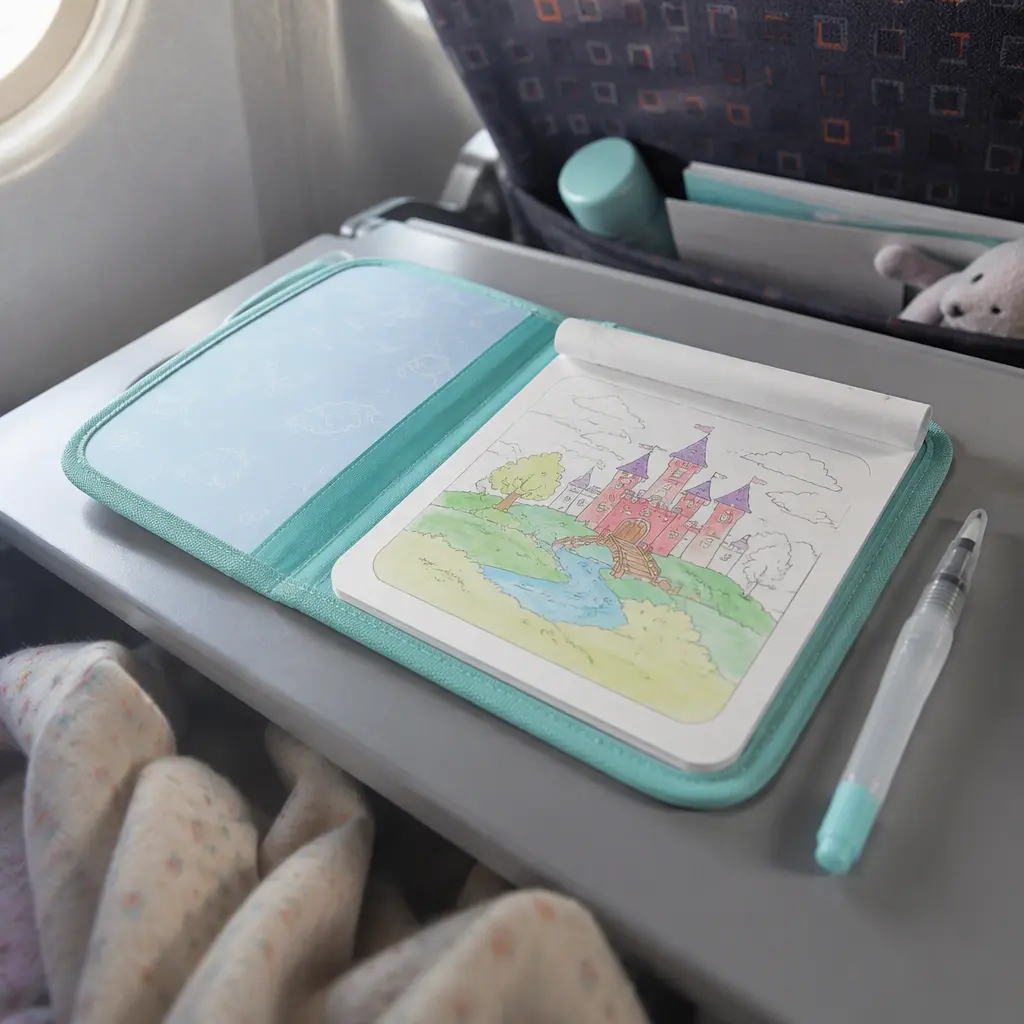
Travel art toys work best when they stay contained, reset quickly and fit comfortably on a standard tray table. For ages 3–5, simple setup matters as much as entertainment value because parents may already be juggling snacks, seat belts and carry-ons. The most useful travel-friendly options avoid separate ink pots, detachable tiny pieces and anything likely to roll under seats.
- Drying speed: Water art pages usually need time before they can be reused. Faster drying is useful on shorter flights when children want to repeat the same page often.
- Leak risk: Refillable water pens are generally low mess, but caps that loosen inside bags can leave damp spots. Gel boards avoid liquid refills but may split if bent heavily in packed luggage.
- Tray-table footprint: Compact pads fit better in economy seating. Oversized boards can crowd snack space or bump neighboring passengers.
- Noise level: Most reusable art toys are quiet, though some magnetic or plastic drawing boards include clicking sliders or attached stamps that can become repetitive during long flights.
- Durability: Hardcover water pads tend to survive backpacks better than thinner paper-backed versions. Flexible gel boards travel well but may crease if packed tightly.
- Ease of cleanup: Water-based systems dry cleanly without residue. Gel surfaces can collect crumbs, lint and sticky fingerprints during travel.
- Independence: Some 3-year-olds still need help filling water pens or turning pages carefully, while older preschoolers may manage either format independently.
- Storage and weight: Lightweight pads are easier for children to hold during takeoff delays or gate waits. Bulky boards may require a larger personal item bag.
Age suitability
For ages 3–5, both formats can work well, but developmental stage affects which one feels easier during a flight. Younger preschoolers often enjoy water art pads because the color-change effect is immediate and forgiving. There is no pressure to draw recognizable pictures, and the pen movement feels similar to painting. Children closer to age 5 may get more creative mileage from gel boards because they can trace shapes, practice letters or invent games without waiting for pages to reset. Very active children who press hard on surfaces may become frustrated with delicate gel textures, while children who dislike damp hands may avoid water pens entirely. Parents traveling with multiple siblings may also prefer toys that reset quickly without arguments over whose turn comes next.
Options compared
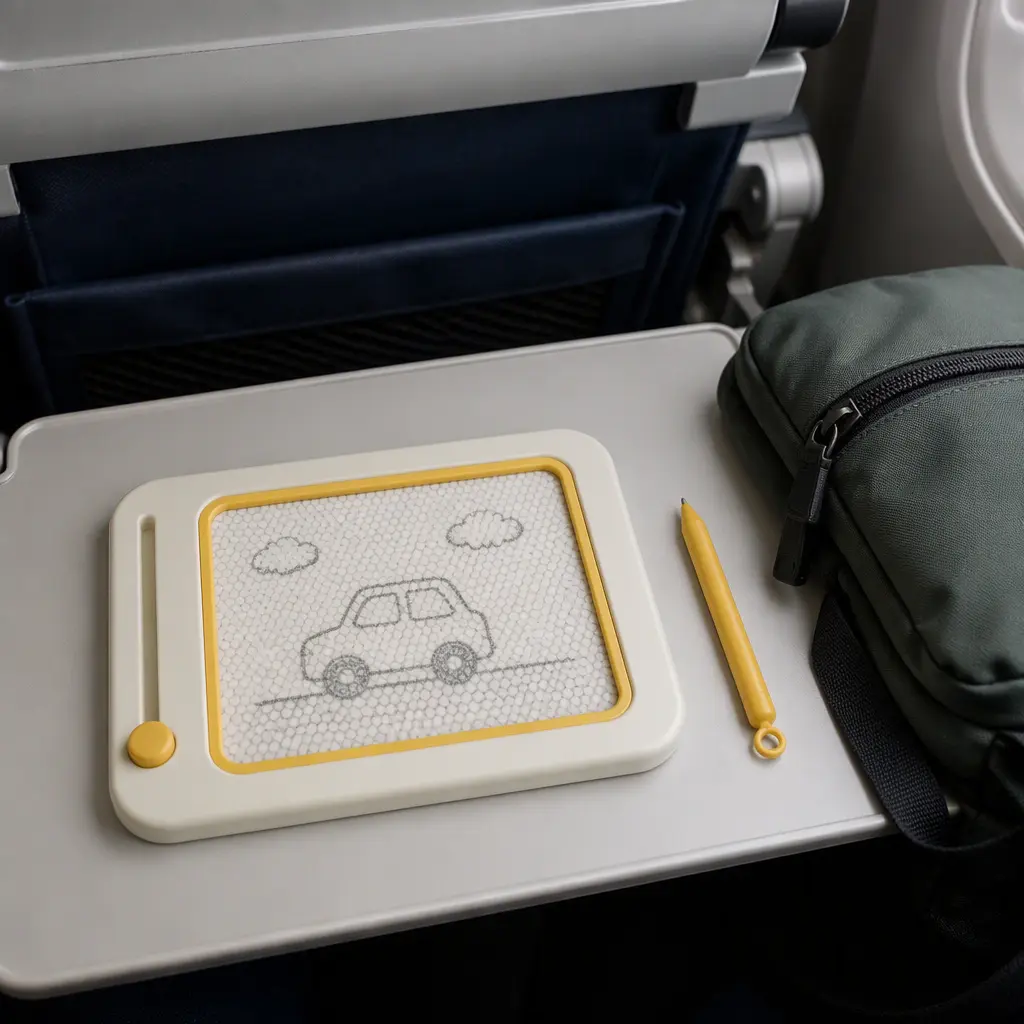
Reusable water art pads are usually the more forgiving option for air travel. They create very little visible mess, stay quiet and pack flat into seat-back pockets. Many preschoolers enjoy the surprise effect of hidden colors appearing with water. The main drawback is drying time. Once a child fills a page, they may need to wait before reusing it, which can feel slow on a delayed flight or airport layover. Some children also squeeze refillable pens too hard, leading to drips around tray tables or damp sleeves. Parents who want a calmer, lower-noise activity often prefer this format despite the slower reset cycle.
Gel drawing boards are better suited to repeated drawing without pauses. Children can erase and redraw immediately, making them useful for longer flights or children who lose interest quickly. They also avoid carrying water refills through airports. However, the gel surface can attract dirt and may feel sticky after heavy use. Some boards are thicker and less practical on narrow tray tables, especially when snacks or drinks are also in use. They are often a stronger choice for children who enjoy tracing letters, making patterns or drawing continuously. Families trying to minimize leak concerns may also prefer them. Parents should avoid very flimsy versions that bend easily inside backpacks, since punctures or seam damage can make the toy unusable mid-trip.
- Choose reusable water art pads for quieter play, flatter packing and children who enjoy color-reveal activities.
- Choose gel drawing boards for quick reset times, repeated drawing and children who like tracing or doodling continuously.
- Avoid larger rigid boards if tray-table space is limited or if the child already travels with multiple activities.
- Avoid water-based options if your child frequently chews pen caps or squeezes containers forcefully.
Frequently asked questions
Do reusable water art pads leak on planes?
Most are designed to use small amounts of water and are lower risk than paint or markers, but leaks can still happen if pens are overfilled or packed loosely. Keeping the pen upright in a zip bag can reduce surprises inside carry-ons.
Which option works better during turbulence?
Gel drawing boards are often easier during bumpy periods because they do not rely on water flow. Water art pads still work during turbulence, but younger children may drip water accidentally if the pen is shaken or squeezed.
Are these toys realistic for a full long-haul flight?
They work best as one part of a rotation rather than the only activity. Preschoolers typically benefit from switching between snacks, movement breaks, books and quiet toys during long travel days.
Which is easier to clean after travel?
Water art pads usually dry cleanly with little residue. Gel boards may need wiping because lint, crumbs and fingerprints can stick to the surface after repeated handling.
Can these toys fit in a personal item bag?
Many compact versions can fit into backpacks or under-seat organizers, but sizing varies. Slim foldable pads are generally easier to pack than rigid boards with thick frames.
For most families flying with children ages 3–5, reusable water art pads are the simpler and more compact travel companion, especially for shorter flights and quieter play. Gel drawing boards make more sense for children who want continuous drawing without waiting for pages to dry. The better option depends less on artistic ability and more on your child’s patience, your available tray-table space and how much cleanup or supervision you want to manage in the air.