Washable Stamp Sets vs Sticker Kits for Mess-Sensitive Kids
Choosing between washable stamp sets and sticker kits for preschoolers? This guide compares cleanup, supervision, durability, storage, and play value for mess-sensitive families.
Compare prices and availability
Check current prices and availability for this guide on eBay.
As an eBay Partner, we may be compensated if you make a purchase.
For parents who want creative play without a major cleanup, washable stamp sets and sticker kits are two of the most practical options for preschool-aged children. Both support fine motor skills, independent play, and screen-free entertainment, but they create very different experiences at home. Stamp sets usually offer more open-ended creativity and repetition, while sticker kits tend to be quieter, tidier, and easier for short attention spans. The better choice depends on how sensitive your household is to mess, how much supervision is realistic, and whether your child enjoys process-focused play or quick creative results.
What to look for
For children aged 3 to 5, the main difference between these craft types is how much setup, cleanup, and guidance they require. A well-designed washable stamp set can be reused for years, but some children need reminders about where ink belongs. Sticker kits are often lower mess overall, though peeling backing paper and managing loose stickers can create their own kind of clutter. Storage also matters. Preschool craft supplies tend to spread quickly across tables, floors, and bags unless the pieces fit into a simple container.
- Choose clearly labeled washable inks or water-based materials that clean from common household surfaces more easily.
- Look for larger stamps or oversized stickers that preschoolers can handle without frustration.
- Consider whether the kit encourages open-ended creativity or follows a fixed activity format.
- Check how many loose pieces are included and whether they can realistically stay organized.
- Think about noise levels if crafts happen during quiet times or alongside siblings.
- Prioritize durable storage cases or trays if the kit will travel between rooms or to grandparents' homes.
- Avoid overly complex kits that require frequent adult assembly or precise instructions for younger preschoolers.
Age suitability
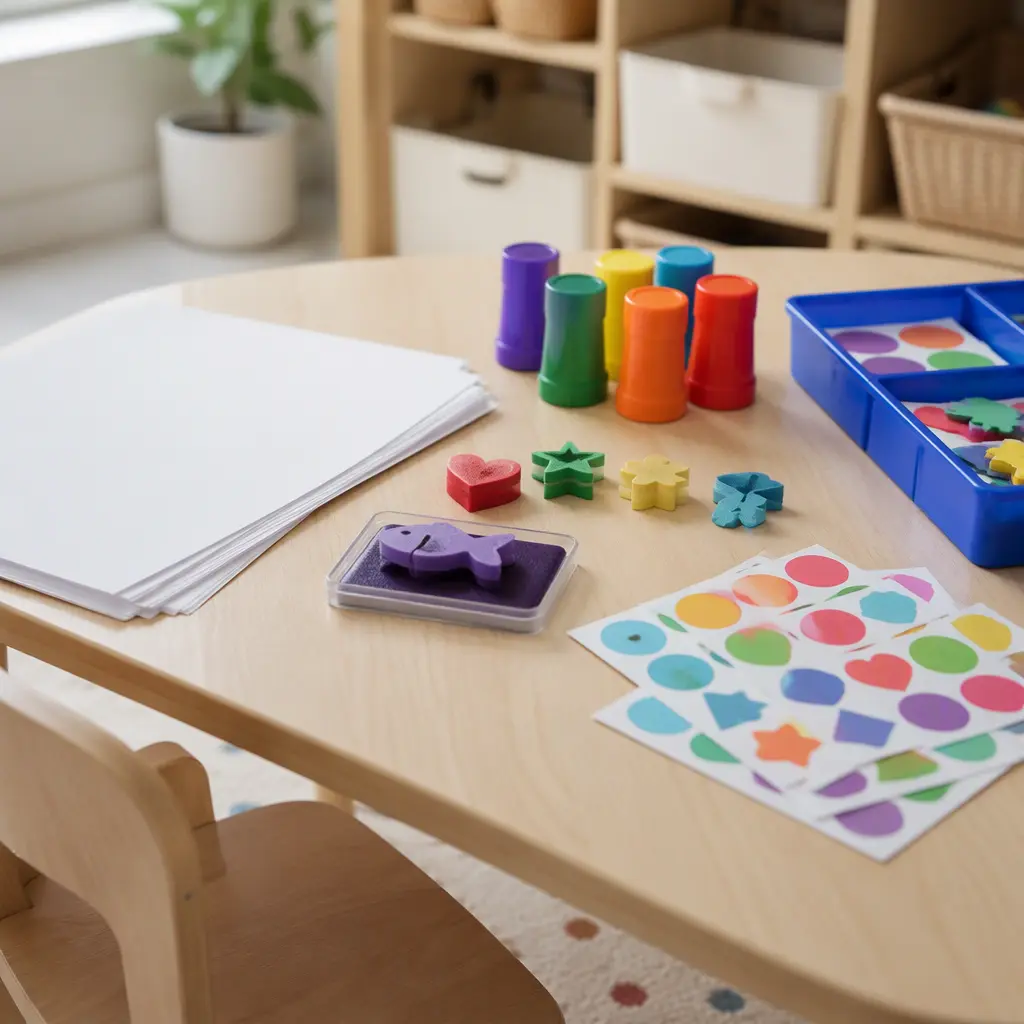
Most washable stamp sets and sticker kits marketed to preschoolers fit within the 3 to 5 year age range, but there are important developmental differences inside that window. Younger three-year-olds often do best with large foam stamps, chunky handles, or reusable vinyl stickers that are easy to reposition. Small paper stickers can be frustrating if fine motor control is still developing. By ages four and five, many children enjoy combining stamps, scenes, and layered stickers into more imaginative projects with less adult help. Families with children who still mouth toys or tear paper frequently may want to delay kits with tiny decorative pieces. Preschoolers who enjoy sensory experiences may prefer stamping because it feels more physical and active, while children who dislike sticky fingers or accidental marks often gravitate toward stickers.
Options compared
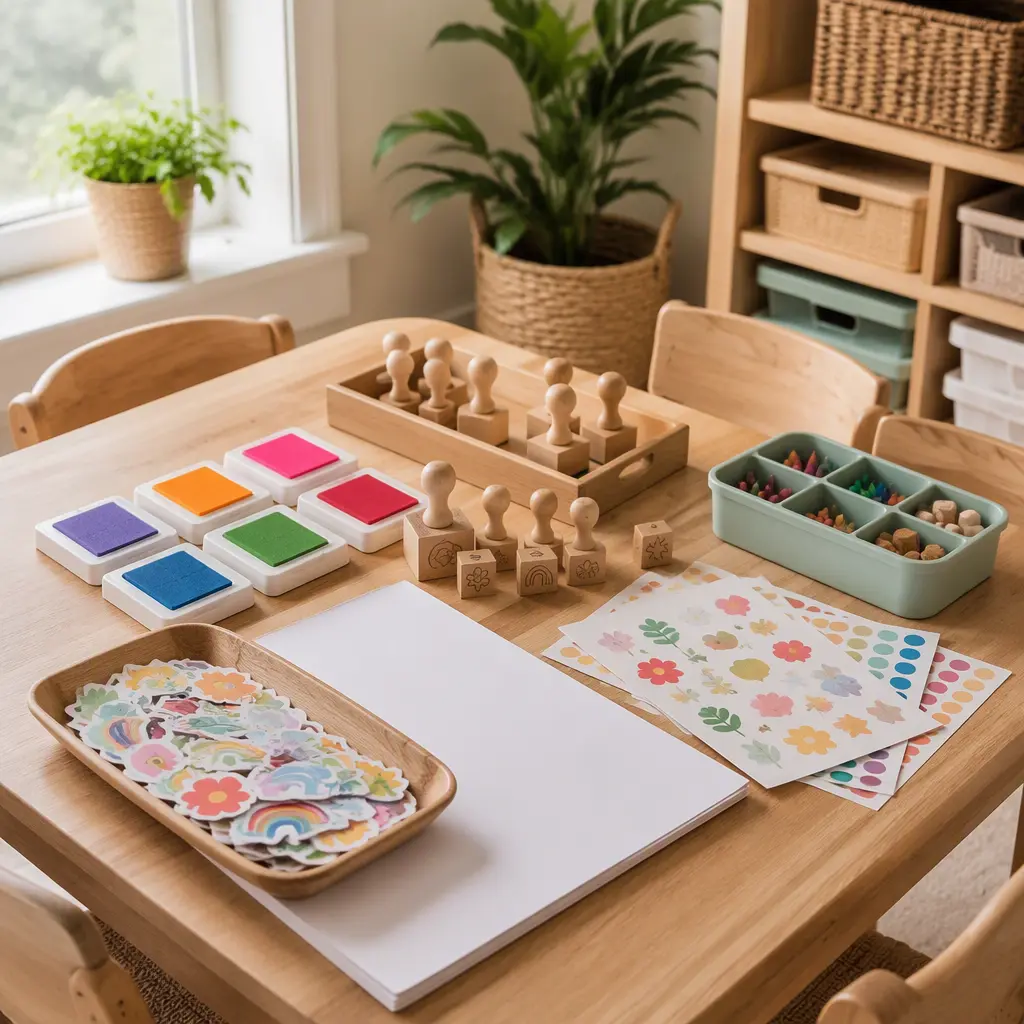
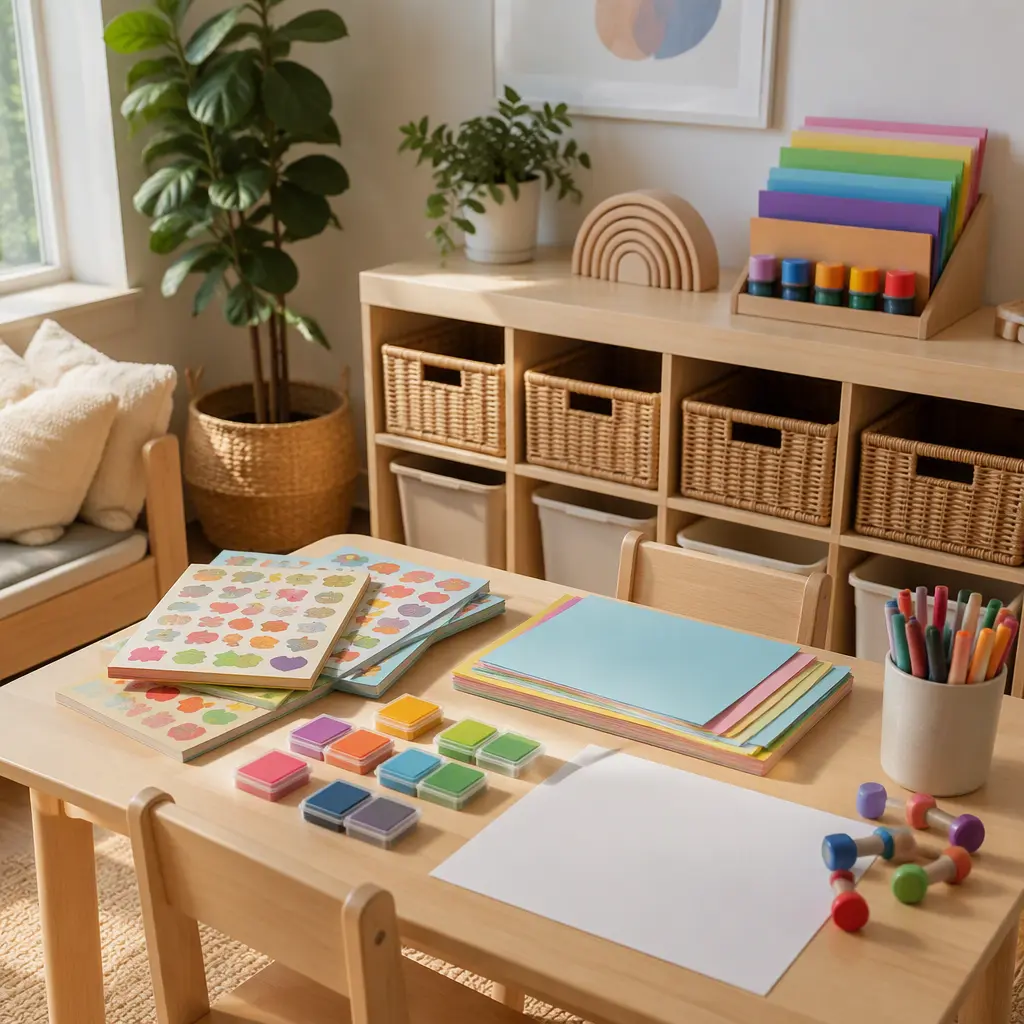
Washable stamp sets usually offer the strongest long-term replay value. Children can create scenes, patterns, pretend mail, cards, or simple storytelling activities repeatedly without needing replacement sheets every session. This makes them appealing for families trying to reduce disposable craft waste. Stamp play can also hold attention longer because children experiment with placement, layering, and color combinations. The trade-off is that even washable ink creates more supervision needs. Ink pads can dry out if left open, stamps may end up on walls or clothing, and cleanup takes longer than simply gathering paper scraps.
Sticker kits are often the easier choice for mess-sensitive households. They are quiet, portable, and usually require almost no setup. Reusable sticker books are especially practical for travel, restaurants, waiting rooms, or shared living spaces where parents want contained activities. They also suit children who prefer structured tasks with a visible finished result. However, sticker play can become repetitive more quickly for some children, and one-time-use stickers create more waste and recurring replacement costs. Small sticker backings also tend to collect under furniture and in carpets unless cleanup happens immediately.
- Washable stamp sets: better for open-ended creativity, longer play sessions, and repeated use at home.
- Sticker kits: better for travel, quick setup, and households highly sensitive to visible mess.
- Reusable sticker scenes: a middle-ground option with lower waste and less cleanup than traditional sticker packs.
- Foam or self-inking stamps: often easier for younger preschoolers than separate ink pads.
- Paper sticker crafts with many tiny pieces: usually better suited to older preschoolers with stronger fine motor skills.
- Large-format sticker books: practical for independent quiet time because pieces stay attached to a single pad.
Frequently asked questions
Are washable stamp sets actually easy to clean?
They are generally easier to clean than permanent inks or paint-based crafts, but washable does not mean completely mess-free. Results depend on the surface, how quickly marks are cleaned, and whether children use the materials appropriately. Covering the table with reusable mats or scrap paper can make cleanup much faster.
Which option works better for independent play?
Sticker kits usually require less supervision once a child understands how to peel and place stickers safely. Stamp sets often need occasional monitoring to prevent ink from spreading to furniture, clothing, or walls. Older preschoolers may manage stamp activities independently for short periods if the setup stays simple.
Do reusable sticker kits hold children's attention?
For many preschoolers, reusable sticker scenes remain engaging because children can rearrange characters and objects repeatedly. However, children who enjoy sensory play or experimenting with art materials may lose interest faster than they would with stamping or drawing activities.
What is the best low-mess option for travel?
Reusable sticker books are usually the most portable and least disruptive option for cars, airplanes, restaurants, or waiting rooms. They are lightweight, silent, and do not require drying time, water, or cleanup materials.
How can parents reduce craft clutter?
Choosing compact kits with built-in storage helps significantly. Limiting the number of active craft supplies available at one time also keeps cleanup manageable. Some families rotate sticker books and stamp sets weekly instead of leaving everything accessible every day.
For families prioritizing minimal cleanup and quick activities, sticker kits are usually the easier fit. For households that can tolerate a small amount of washable mess in exchange for more creative flexibility and longer replay value, stamp sets often provide more depth over time. Reusable versions of either option tend to offer the best balance between convenience, storage, and lasting play for preschool-aged children.