Best No-Battery Toys for Babies 6–12 Months
A buyer-focused guide to simple, no-battery toys that support sensory play and early skills for babies 6–12 months—quiet, durable classics without lights or noise.
Compare prices and availability
Check current prices and availability for this guide on eBay.
As an eBay Partner, we may be compensated if you make a purchase.
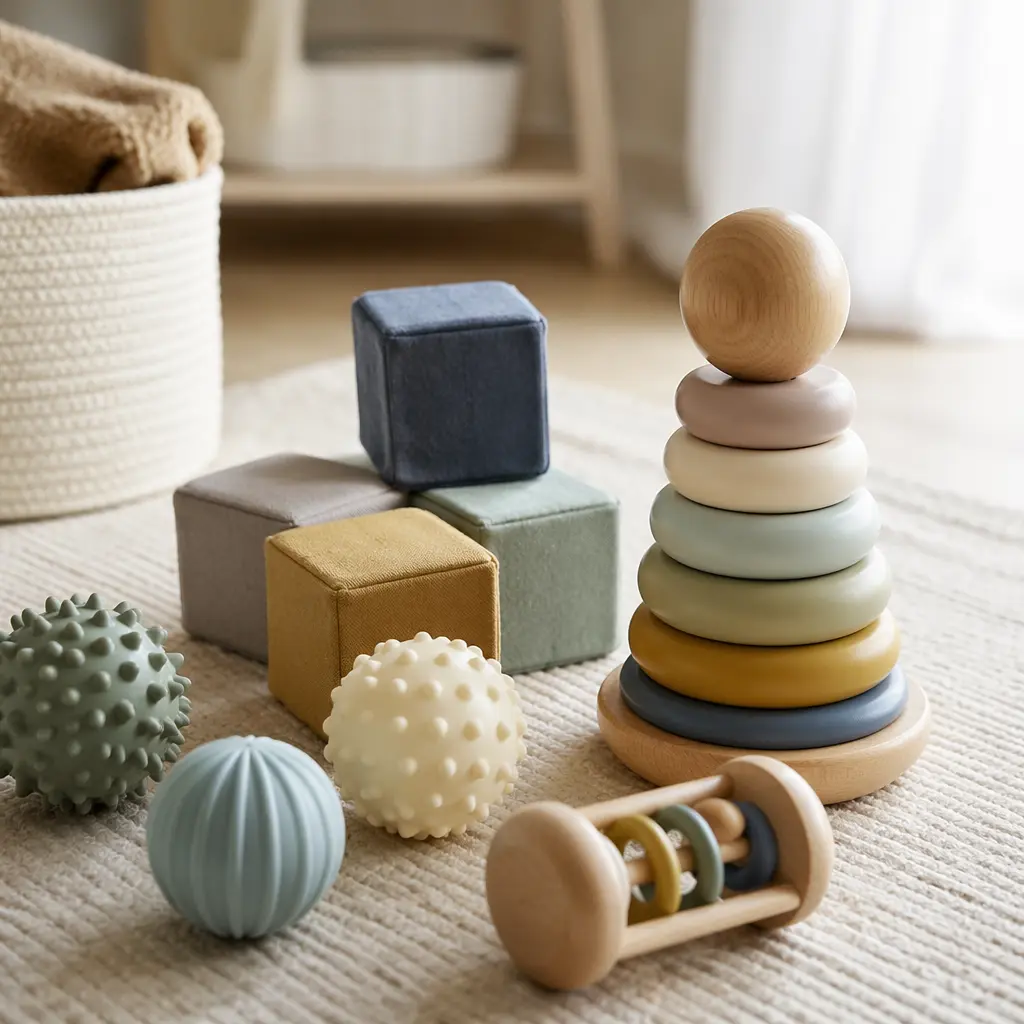
For babies 6–12 months, simple toys often do the most work. At this age, infants are exploring with hands and mouths, practicing sitting and crawling, and learning how cause and effect feels—not how it sounds. No-battery toys keep play calm and focused, encouraging touch, movement, and problem-solving without flashing lights or electronic noise.
What to look for
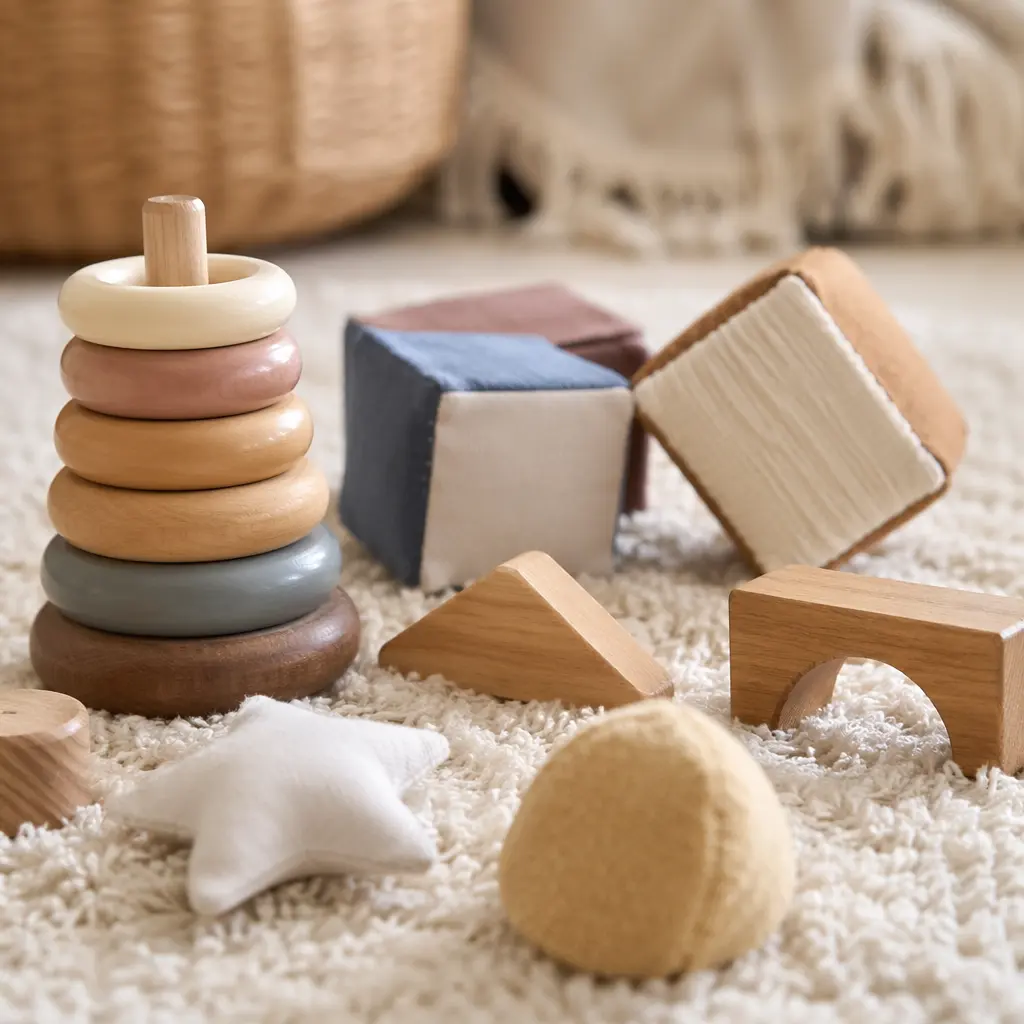
When choosing no-battery toys for this age range, focus on safety, sensory value, and open-ended play. Babies change quickly between 6 and 12 months, so toys that can be explored in more than one way tend to last longer.
- Safe materials: Look for solid wood, food-grade silicone, or tightly woven fabrics with non-toxic finishes.
- Simple interactions: Toys should respond to a baby’s actions through movement, texture, or gentle sound, not electronics.
- Easy to grip: Rings, knobs, and soft edges support developing grasp and hand strength.
- Durability: Items should hold up to mouthing, dropping, and repeated play.
- Washable or wipeable: Cleanability matters during the teething months.
Age suitability
Between 6 and 12 months, babies move from supported sitting to crawling and, for some, early standing. Toys that meet them on the floor—rather than requiring precise hand control—are a good fit. Early in this window, high-contrast textures and soft items encourage reaching and mouthing. As babies approach 9–12 months, they often enjoy toys that stack, roll, or fit together, supporting coordination and curiosity. A single toy may be used very differently over these months, which is a sign it’s doing its job.
Standout categories or types
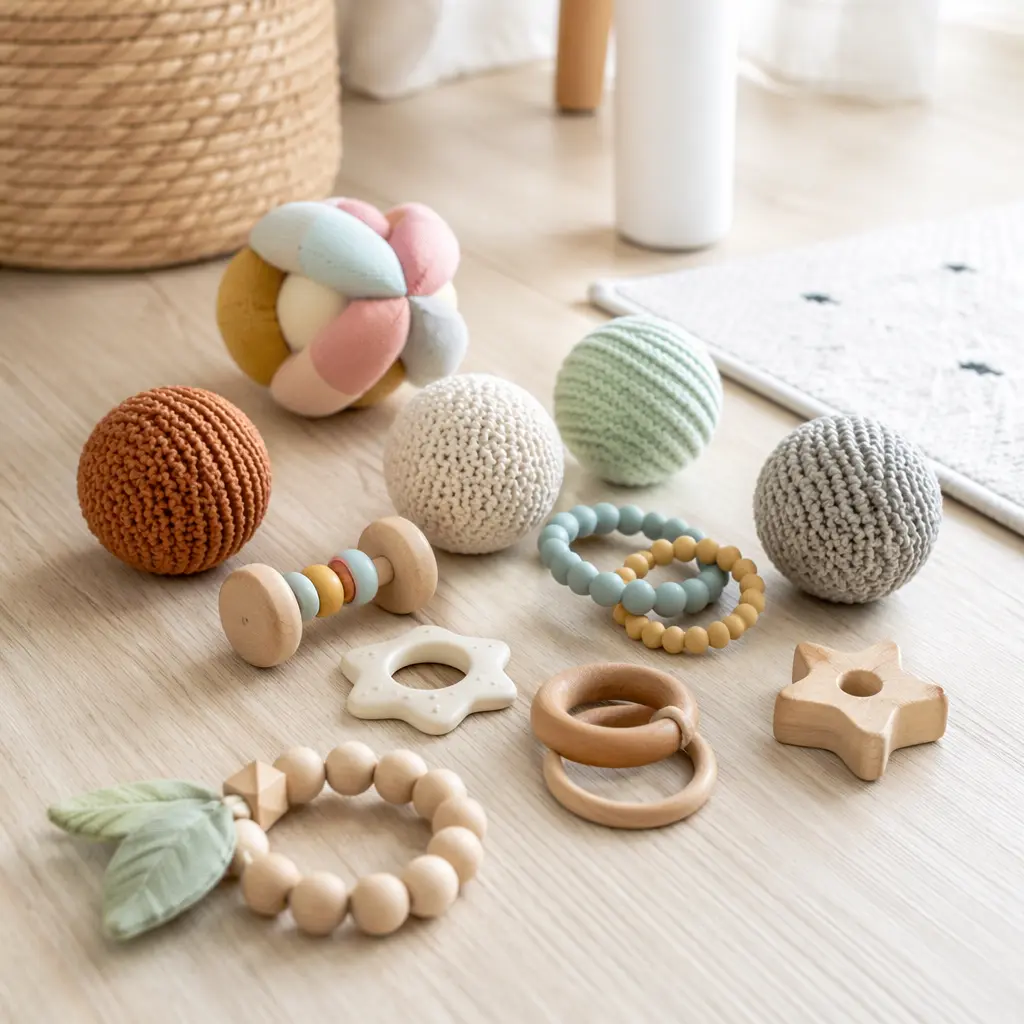
No-battery toys come in many forms, but certain categories consistently support development during the second half of the first year. These classics rely on texture, weight, and motion to keep babies engaged.
- Stacking and nesting toys: Rings, cups, or blocks that can be stacked or fitted together help build hand-eye coordination and early problem-solving.
- Textured balls and rollers: Soft or lightly weighted balls encourage reaching, rolling, and crawling without overwhelming stimulation.
- Simple sound makers: Rattles or shakers with gentle, mechanical sounds introduce cause and effect without electronic noise.
- Soft blocks and shape toys: Fabric or foam blocks are safe for mouthing and support early building and knocking-down play.
- Teething-focused toys: Items designed to be chewed, squeezed, or chilled can soothe gums while keeping hands busy.
Frequently asked questions
Are no-battery toys engaging enough for babies?
Yes. Babies are naturally curious about how things feel and move. Toys that respond directly to their actions—by rolling, stacking, or making a soft sound—often hold attention longer than electronic toys that do the work for them.
How many toys does a baby need at this age?
A small rotation of simple toys is usually enough. Offering a few items at a time can reduce overstimulation and help babies focus on exploring each one more deeply.
What materials are best for mouthing and teething?
Food-grade silicone, unfinished or sealed solid wood, and tightly stitched fabrics are common choices. Avoid toys with paint that can chip or materials that feel brittle after repeated washing.
Can these toys support development without teaching letters or numbers?
Absolutely. At 6–12 months, development is about sensory input, movement, and understanding cause and effect. These foundations support later learning far more than early academic content.
No-battery toys offer a quieter, more flexible way to support play during the busy months from 6 to 12 months. By choosing well-made, age-appropriate classics, parents can create a play environment that grows with their baby and keeps the focus on exploration rather than electronics.