Boon Cogs Bath Toys and the Engineering of Bath Time
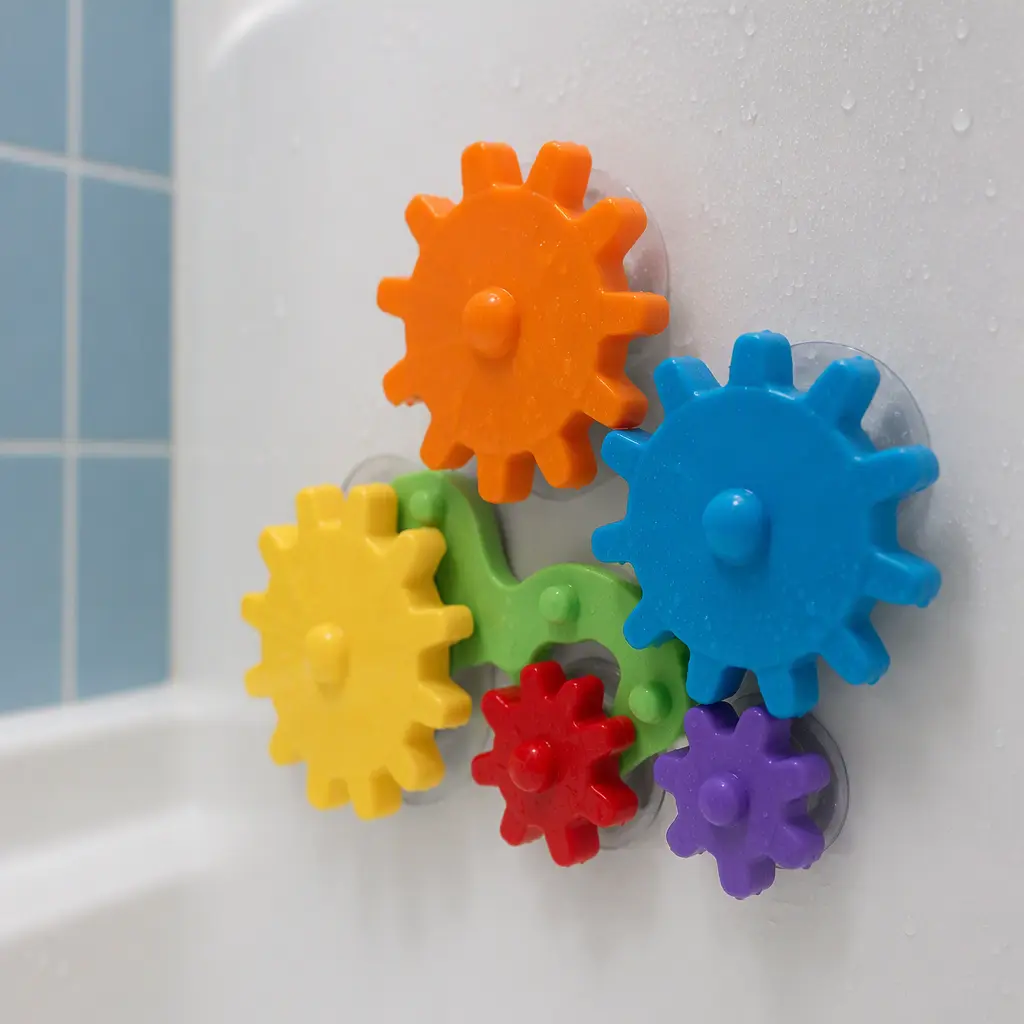
Boon Cogs Bath Toys turned the bathtub wall into a simple machine playground, using spinning suction-cup gears to introduce cause and effect, motion, and problem-solving during everyday play.
Compare prices and availability
Check current prices and availability for this guide on eBay.
As an eBay Partner, we may be compensated if you make a purchase.
Few bath toys have managed to feel both playful and quietly educational in the way Boon Cogs Bath Toys do. Introduced during the rise of design-focused baby products in the early 2010s, the set transformed the side of a bathtub into a simple machine workshop. Children could stick the gears to tile or tub walls using suction cups, pour water over them, and watch linked wheels begin to spin together. The appeal was immediate: bright colors, moving parts, and the satisfying cause-and-effect of water-powered motion. For parents, the toy stood out because it encouraged experimentation without looking overly academic.
Where it came from
Boon launched the Cogs Bath Toys around 2010, during a period when many infant and toddler brands were rethinking how children's products looked and functioned. Rather than producing character-based bath toys or simple floating animals, Boon focused on modern industrial design and open-ended play. The company became known for minimalist baby gear with strong visual appeal, and the Cogs set fit neatly into that approach.
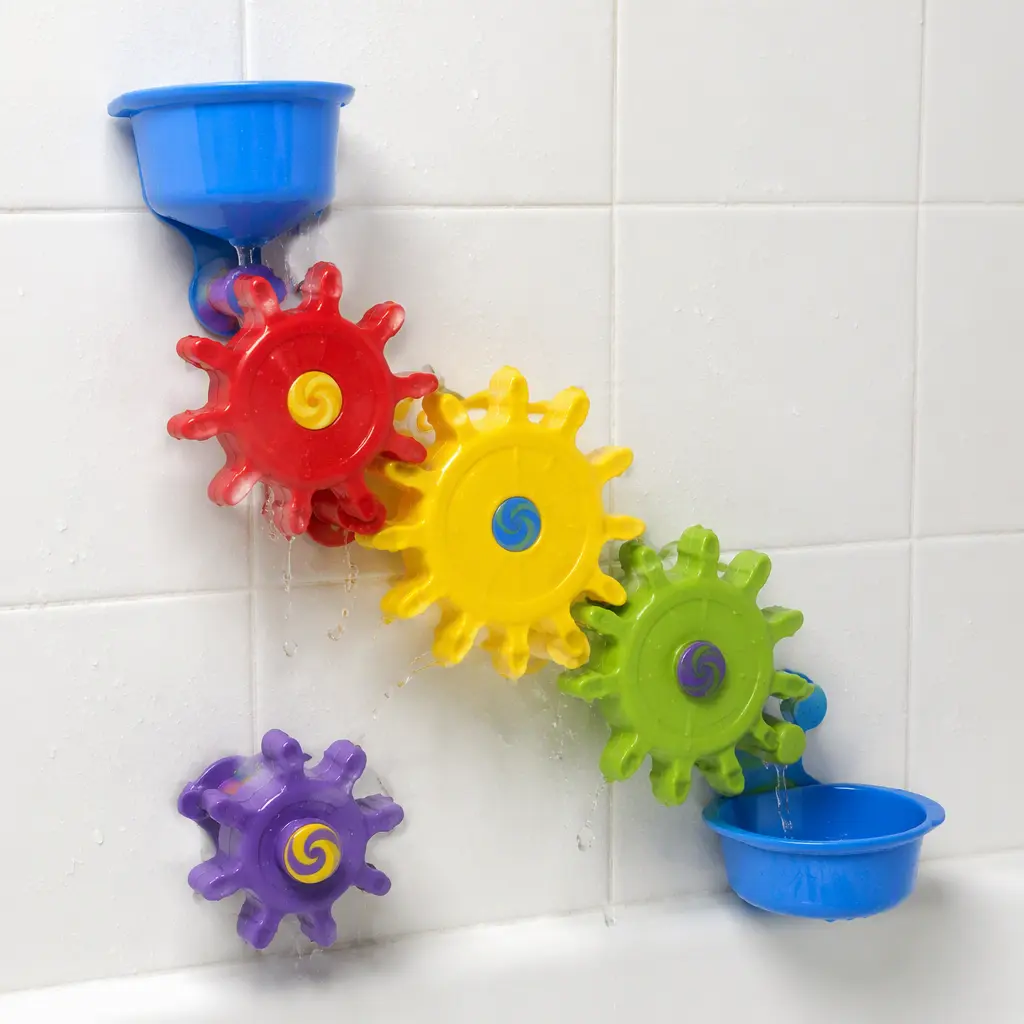
The original idea behind the toy was straightforward but effective: combine suction-mounted gears with water play so children could physically explore movement and connection. Unlike electronic bath toys that relied on batteries or sound effects, Cogs encouraged children to build arrangements themselves. Turning one wheel moved another. Pouring water from above created chain reactions. Even very young children could understand that their actions produced visible results. That simple interaction gave the toy an educational angle without requiring instructions or structured lessons.
Why it works
The success of Boon Cogs comes from how naturally it blends sensory play with mechanical discovery. Toddlers are already fascinated by running water, spinning objects, and repeated movement. The gears combine all three. Because the pieces attach individually, children can experiment with spacing, direction, and combinations. Some setups spin smoothly while others jam or stop, which becomes part of the learning process. The toy rewards trial and error in a way that feels intuitive rather than frustrating.
There is also a tactile quality that helped the toy endure. The gears are large enough for small hands to grip comfortably, and the resistance of the suction cups adds another layer of physical interaction. Water changes the experience too. A gentle pour produces slow movement, while a faster stream can set several wheels spinning at once. The result feels closer to a hands-on activity than a traditional toy with a fixed function.
- Large interlocking gears that demonstrate basic mechanical movement
- Suction-cup mounting that turns the bathtub wall into a play surface
- Open-ended arrangement encourages experimentation and problem-solving
- Water-powered spinning creates clear cause-and-effect feedback
- Bright, high-contrast colors designed for visual engagement in early childhood
Who it's for
Boon Cogs is generally aimed at toddlers and preschool-aged children, especially those beginning to explore fine motor coordination and simple problem-solving. Younger babies may enjoy watching the spinning motion, while older toddlers can start building more complex gear layouts on their own. The toy also developed a following among parents who preferred quieter, screen-free play options that still felt modern and visually appealing. Even adults often find themselves adjusting the gears or testing different water flows during bath time, which speaks to the universal appeal of mechanical play.
Variants and what to look for today
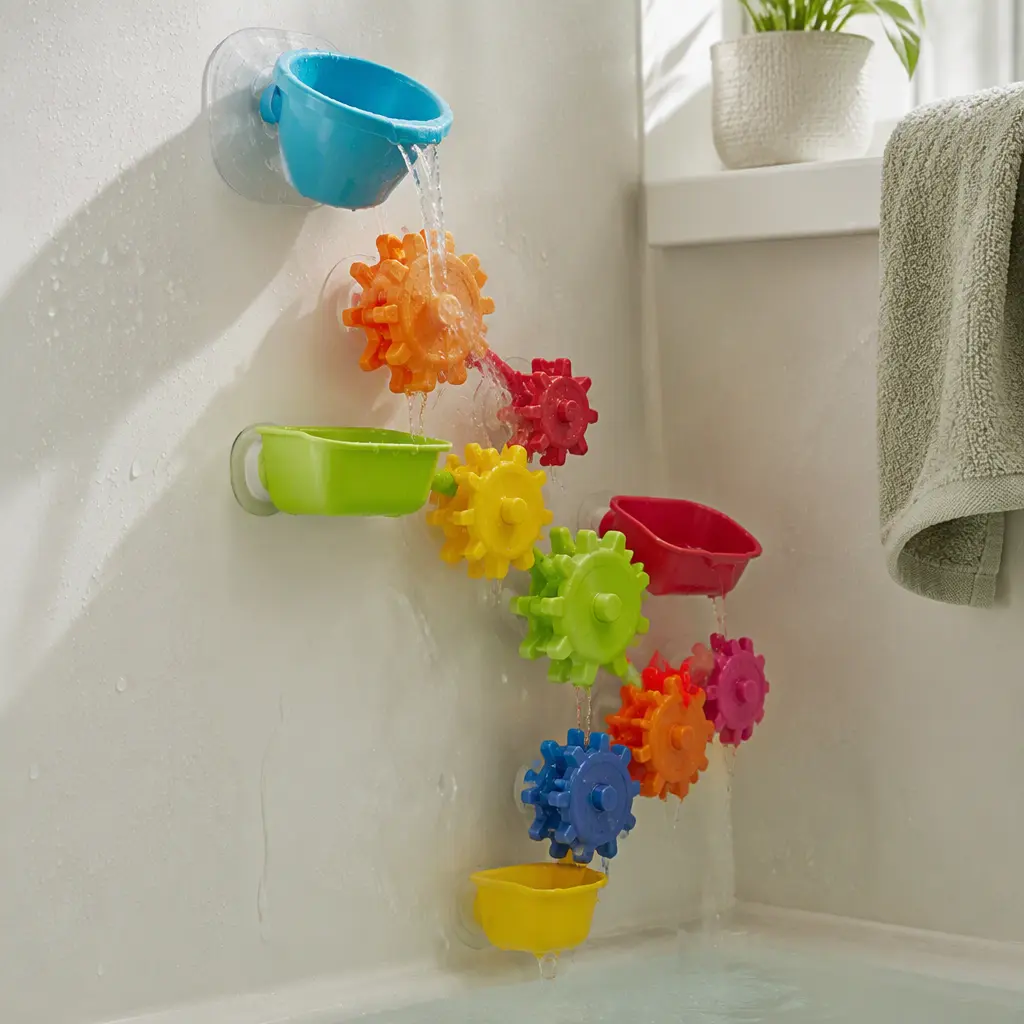
Over time, bath gear toys expanded beyond the original Boon release. Different sets introduced additional wheels, scoops, pipes, and water channels, while competitors created similar suction-based construction toys for the tub. The core concept, however, remained the same: modular pieces that allow children to experiment with movement and water flow. Many modern versions still follow the same design principles established by the original Cogs line.
When shopping today, parents often look for durable suction performance, easy cleaning, and mold-resistant construction. Because bath toys are regularly exposed to moisture, simpler designs with fewer enclosed spaces tend to age better. The original appeal of Cogs came partly from its straightforward structure: large open gears without hidden electronics or difficult-to-clean compartments. Generic versions can sometimes lose suction quickly or use thinner plastic that does not spin as smoothly.
- Look for sets with sturdy suction cups that attach securely to tile and tubs
- Open designs are easier to rinse and dry after use
- Larger gears are usually easier for younger toddlers to handle
- Expansion-style sets can add variety without changing the basic play pattern
- Avoid overly complex battery-powered versions if easy cleaning is a priority
Frequently asked questions
Are Boon Cogs considered STEM toys?
They are often grouped into early STEM or STEAM-style toys because they introduce concepts like motion, force, connection, and cause and effect. The learning is informal and play-driven rather than lesson-based.
Do the gears only work with water?
No. Children can spin the gears by hand as well, but running water adds motion and sensory feedback that makes the interactions more dynamic and engaging.
What age works best for this kind of bath toy?
Most children begin enjoying gear-style bath toys around the toddler years, when they can grip, place, and rotate the pieces independently. Older preschoolers may create more elaborate arrangements and experiments.
Why did these toys become so popular with parents?
The toys arrived during a period when many parents were seeking products that combined developmental play with clean, modern design. Cogs offered a screen-free activity that felt creative, interactive, and easy to integrate into everyday routines.
More than a decade after their introduction, Boon Cogs Bath Toys remain a recognizable example of how simple design can reshape ordinary play. They did not rely on licensed characters, electronics, or complicated instructions. Instead, they turned the bathtub into a place for experimentation and discovery. That balance between playful motion and early engineering curiosity is what gave the toy family lasting appeal.