First Tech Toys for Babies: What Actually Adds Value
A buyer’s guide for parents of babies 0–12 months, explaining which simple tech toys support cause-and-effect learning—and which ones are mostly noise.
Compare prices and availability
Check current prices and availability for this guide on eBay.
As an eBay Partner, we may be compensated if you make a purchase.
Tech toys for babies can be confusing to shop for. Some truly support early learning, while others are little more than flashing lights and loud sounds. For babies under 12 months, the value of a tech toy comes down to one thing: clear cause and effect. When a baby pushes, shakes, or mouths something and sees or hears a predictable result, their brain starts building connections. This guide breaks down which features actually help at this age—and which ones tend to overwhelm without adding much benefit.
What to look for
Babies in the first year are not learning technology in the adult sense. They are learning that their actions matter. The best tech toys are designed around this basic developmental task and stay simple enough for young brains and hands.
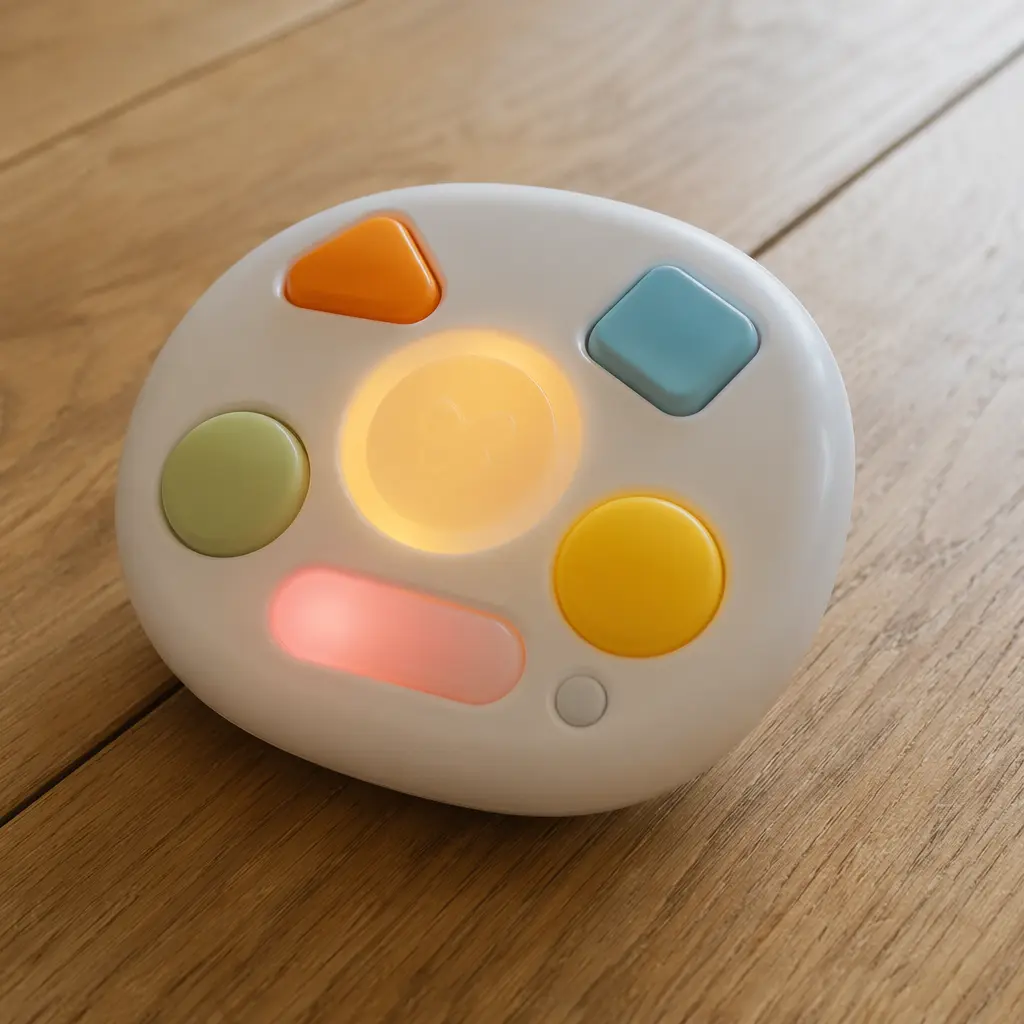
- One action, one response: A press causes a light, a shake causes a sound. Clear feedback helps babies connect cause and effect.
- Gentle sensory output: Soft lights and calm sounds are easier for babies to process than rapid flashing or loud music.
- Physical interaction: Buttons, dials, or motion sensors that require movement encourage motor development.
- Durability and simplicity: Fewer modes and sturdy construction mean the toy works the same way every time.
- Manual control: Toys that respond only when the baby interacts are generally more valuable than those that play automatically.
Age suitability
From birth to about six months, babies benefit most from very simple tech features—such as a single light or sound activated by movement. At this stage, visual contrast and gentle audio cues are enough. Between six and twelve months, babies start experimenting more intentionally. They may press buttons repeatedly, bang toys, or rotate parts to see what happens. Tech toys that grow slightly with these skills, without adding unnecessary complexity, tend to hold attention longer. Always check the recommended age range, but focus more on what the toy actually does than the label on the box.
Standout categories or types
Not all tech toys are equal, even within the baby category. Certain types consistently offer more developmental value than others when chosen carefully.
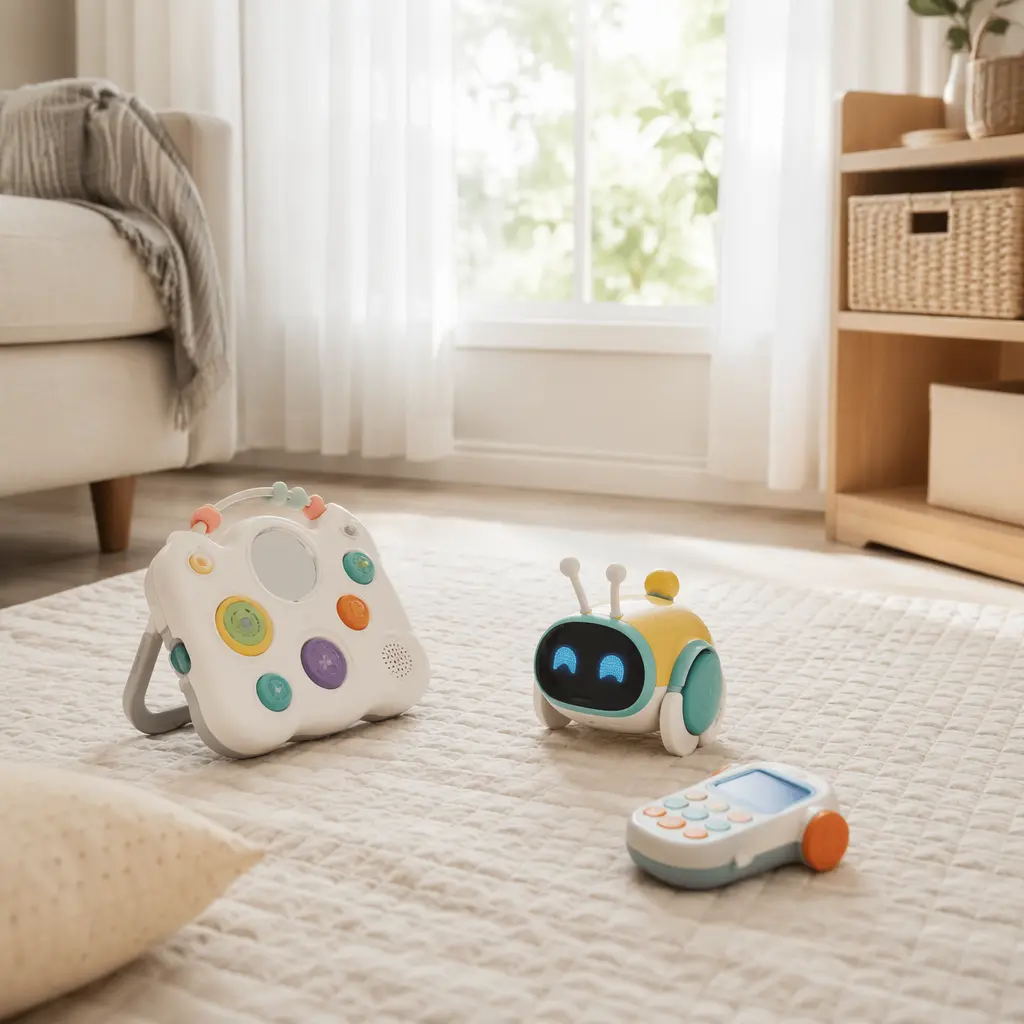
- Cause-and-effect buttons: Toys with large, easy-to-press buttons that trigger a single light or sound help babies learn intentional action.
- Motion-activated toys: Rattles or rollers with subtle electronic responses encourage reaching, grasping, and crawling.
- Interactive soft toys with limited tech: Plush toys that respond only when squeezed or tapped can combine comfort with learning.
- Simple sound exploration toys: Devices that play one tone or animal sound per action support early auditory learning without overload.
On the other hand, toys that cycle through long songs, phrases, or light shows without baby input often become background noise. While they may seem impressive at first, they do less to support active learning and can reduce opportunities for focused play.
Frequently asked questions
Are tech toys necessary for babies?
No. Babies learn well with everyday objects, caregiver interaction, and simple non-electronic toys. Tech toys are optional and should complement, not replace, hands-on play and human interaction.
Can tech toys overstimulate a baby?
Yes. Bright flashing lights, loud sounds, and constant automatic play can overwhelm babies, especially under six months. Choosing toys with gentle output and manual activation helps reduce this risk.
What about language-learning claims?
Babies learn language best from real people. Tech toys that play words or songs do not replace talking, singing, and reading with a caregiver. At this age, language-focused tech should be viewed as exposure, not instruction.
How many tech toys is reasonable?
A small number is usually enough. Rotating one or two well-chosen tech toys alongside non-electronic toys can keep play fresh without overwhelming the baby or the play space.
When shopping for a baby’s first tech toys, simpler is almost always better. Look for toys that respond clearly to a baby’s actions, stay calm in their sensory output, and leave room for curiosity. When tech supports cause and effect—rather than replacing it—it can be a useful addition to early play.