Lamaze Baby Toys: How soft, bright playthings taught babies to focus
Since the 1990s, Lamaze baby toys have used bold contrast, textures, and gentle sounds to help infants learn to see, grab, and explore—one crinkle and clip at a time.
Compare prices and availability
Check current prices and availability for this guide on eBay.
As an eBay Partner, we may be compensated if you make a purchase.
Before babies can stack blocks or push toy cars, they learn by looking, grabbing, and mouthing whatever comes their way. Lamaze baby toys built a reputation by focusing squarely on those first skills. With bold colors, friendly shapes, and plenty to touch, pull, and crinkle, these soft toys became a familiar sight clipped to prams, car seats, and activity gyms around the world.
Where it came from
Lamaze toys trace their roots to the mid-1990s, growing out of the Lamaze method of childbirth education. The idea was simple but ambitious: extend the method’s focus on early development into playthings designed specifically for babies’ earliest stages. In 1996, the first Lamaze-branded toys appeared, aimed at infants from birth through the first year.
At a time when many baby toys were pastel and decorative, Lamaze leaned into research around infant vision and sensory development. Newborns see high-contrast patterns more easily than subtle shades, and they learn through repeated, hands-on exploration. The brand’s early success came from translating those insights into soft, approachable toys that parents could feel good about putting in front of very young babies.
Why it works
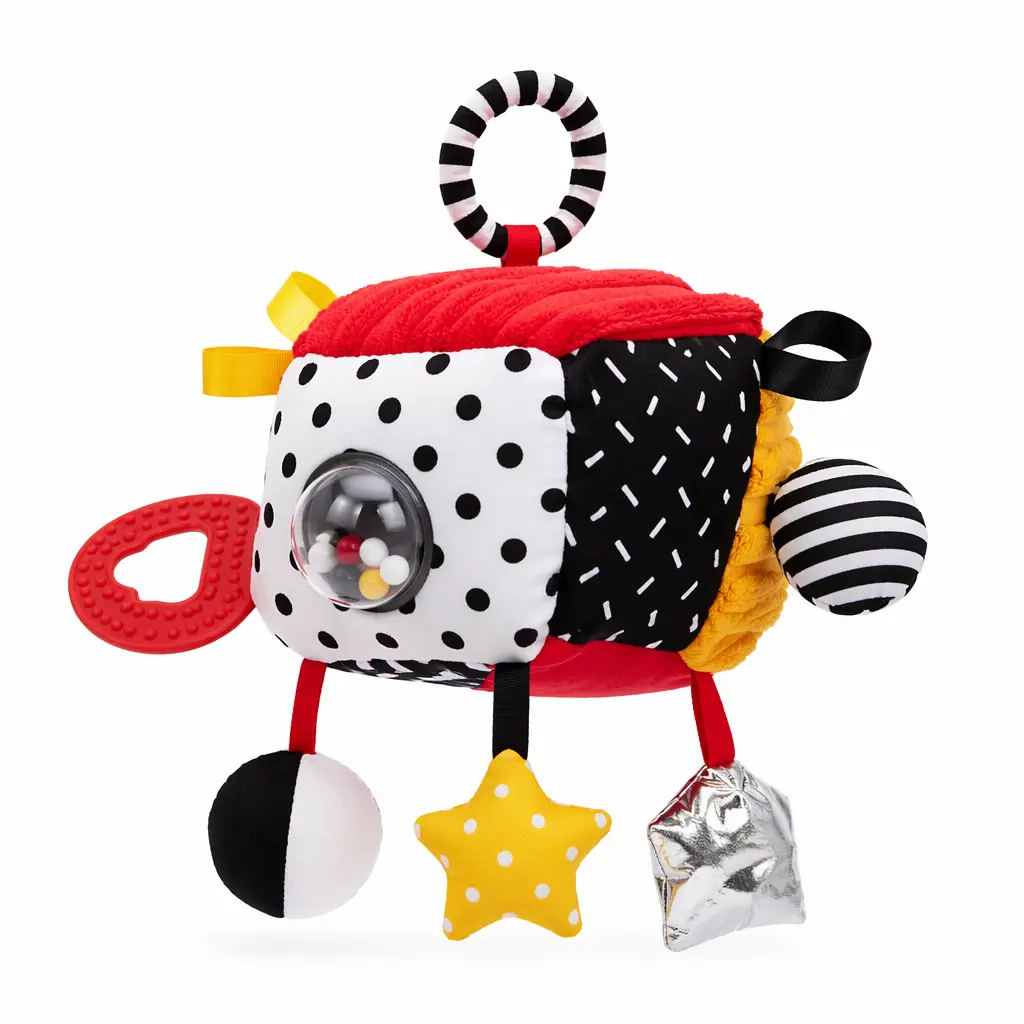
The enduring appeal of Lamaze toys lies in how deliberately they are designed for the way babies actually play. Nothing is accidental: each flap, ribbon, and squeaker invites a small action and a clear response. Babies pull, something crinkles. They squeeze, something squeaks. Over time, those tiny cause-and-effect moments build attention and coordination.
Most Lamaze toys share a common set of features that support early development:
- High-contrast colors and patterns that are easy for young eyes to track
- Multiple textures, from smooth satin to nubby fabric, for tactile exploration
- Gentle sounds like crinkles, rattles, and soft squeaks
- Dangling parts sized for small hands to grab and pull
- Plastic clips for attaching toys to prams, carriers, or play gyms
Together, these elements create toys that feel busy without being overwhelming. Babies can return to the same toy day after day and discover something new as their abilities grow.
Who it's for
Lamaze toys are primarily designed for babies from birth to around 12 months, though many see use well beyond that. Younger infants benefit from visual contrast and sound, while older babies enjoy the challenge of grasping, tugging, and problem-solving. There’s also quiet appeal for adults: these toys are soft, portable, and easy to attach, making them practical companions for everyday outings.
Variants and what to look for today
Over the years, the Lamaze range has expanded to include animal-shaped toys, soft books, activity mats, and bath-friendly options. While the characters and themes change, the core design philosophy stays consistent. When shopping today, look for toys that clearly offer multiple sensory elements rather than just a single sound or texture.
Because the style is so recognisable, many generic high-contrast soft toys borrow heavily from the look. Quality can vary. Well-made options tend to have reinforced stitching, securely attached parts, and fabrics that hold up to frequent washing. If a toy feels flimsy or overly noisy, it may not deliver the calm, repeatable play Lamaze toys are known for.
Frequently asked questions
Are Lamaze toys safe for newborns?
Most Lamaze toys are designed with newborn safety in mind, using soft materials and gentle sounds. Parents should still check age recommendations and supervise play, especially with toys that include clips or dangling parts.
Do babies really notice the high-contrast colors?
Yes. In the first months of life, babies see bold contrasts more clearly than subtle colors. Black, white, and bright primary shades are easier for them to focus on and track.
Can these toys be washed?
Many soft baby toys are designed to be surface cleaned or gently hand washed. Always follow the care instructions, as built-in sound elements can limit washing options.
Are Lamaze toys only for babies?
While they are aimed at infants, some toddlers continue to enjoy the textures and characters. Their main developmental benefits, however, are in the first year.
Nearly three decades after their debut, Lamaze baby toys remain a quiet success story. They don’t rely on screens or gimmicks, just a clear understanding of how babies learn. For many families, that first crinkly toy becomes an early memory of discovery—small hands learning how the world responds.