Oball: How a holey rubber ball solved grasping for babies
Soft, squishy, and full of holes, Oball became a modern baby staple by fixing one simple problem: how tiny hands learn to grab.
Compare prices and availability
Check current prices and availability for this guide on eBay.
As an eBay Partner, we may be compensated if you make a purchase.
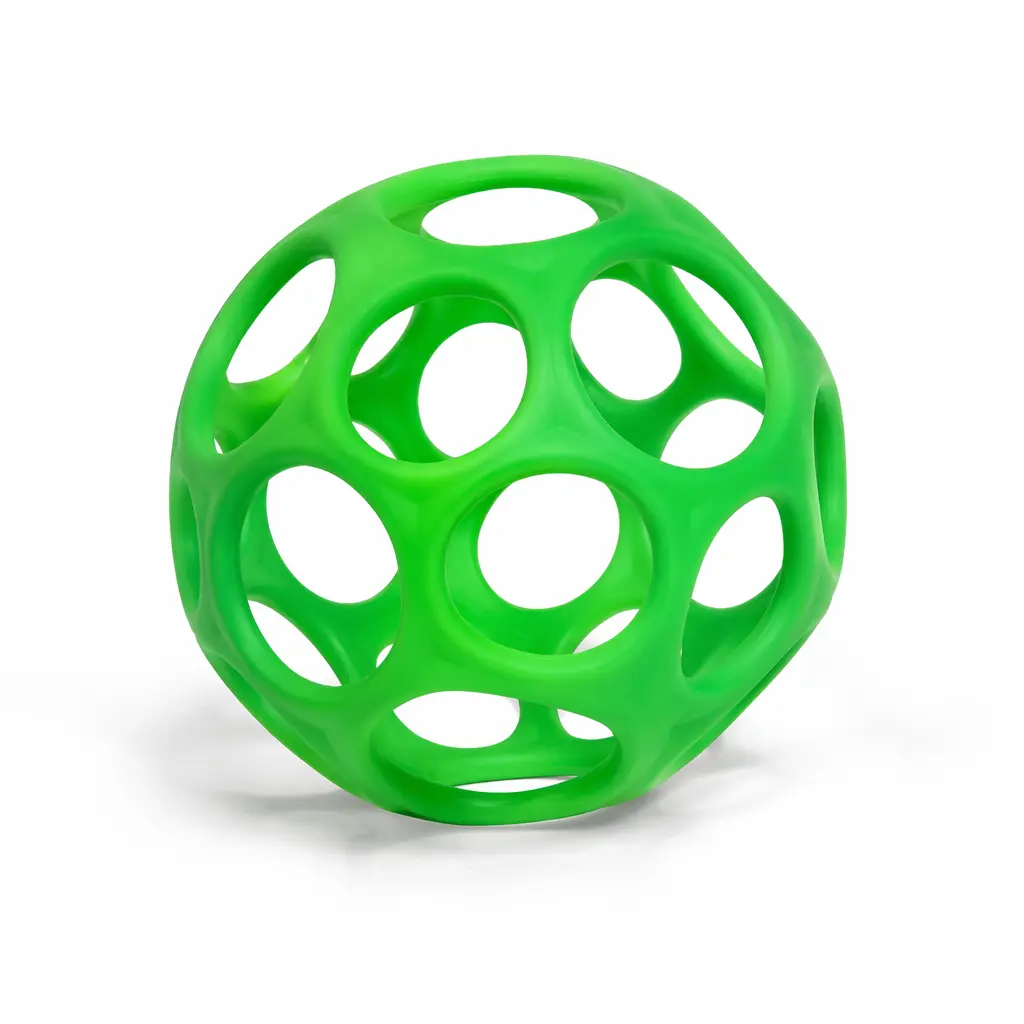
At first glance, Oball looks almost too simple to matter: a lightweight rubber ball riddled with large holes. No buttons. No sounds. No instructions. And yet, since the late 2000s, it has become one of the most recognisable baby toys of the modern era. Its appeal lies in a quiet insight—babies want to grab things long before they can actually hold them.
For parents and carers, Oball often becomes the first toy a baby can truly manage on their own. It rolls, squishes, springs back into shape, and—most importantly—offers dozens of easy grab points. That small design shift turned an everyday ball into a developmental milestone.
Where it came from
Oball was introduced in 2009 by a small toy company focused on infant development rather than novelty. The idea wasn’t to reinvent play, but to remove friction from it. Traditional balls are hard for babies to grasp, especially in the first months when hand strength and coordination are still forming.
By replacing a solid surface with a lattice of smooth-edged holes, Oball gave babies something they could successfully pick up almost immediately. The toy gained traction through word of mouth, baby showers, and nursery recommendations, eventually becoming a fixture in hospitals, childcare centres, and homes worldwide.
Why it works
Oball’s success comes from how well its design aligns with early motor development. Babies don’t need to adapt to the toy; the toy adapts to them. The soft material flexes under pressure, rewarding even weak grips, while the open structure lets fingers slip through from any angle.
There’s also a sensory benefit. The ball’s springy resistance provides gentle feedback, helping babies learn cause and effect as they squeeze, release, and watch it return to shape. It’s simple play, but deeply informative for a growing brain.
- Large holes that are easy for small hands to grab
- Soft, flexible material that compresses and rebounds
- Lightweight design that’s safe for early tossing and mouthing
- Smooth edges that won’t irritate gums or skin
Who it's for
Oball is typically suitable from birth, especially during the first year when grasping skills rapidly develop. Babies benefit most between roughly three and nine months, but many continue to enjoy it well into toddlerhood. Adults appreciate it for different reasons: it’s quiet, washable, and durable enough to survive daily drops, chews, and car-seat escapes.
Variants and what to look for today
Over time, the Oball concept expanded into a small family of toys. You’ll now find larger and smaller versions of the ball, as well as spin-offs that attach rattles, mirrors, or fabric elements. While these additions can add interest, the original ball remains the most universally useful.
When shopping today, look for versions made from BPA-free, phthalate-free materials with smooth, flexible joints. Generic holey balls exist, but not all use the same soft rubber blend. Stiff plastics can undermine the very feature that made Oball successful in the first place.
Frequently asked questions
Is Oball safe for newborns?
Yes, Oball is generally designed to be safe from birth, thanks to its soft material and open structure. As with any baby toy, supervision is recommended, especially during mouthing.
Does it actually help development?
While it’s not a therapeutic device, Oball supports early motor skills by encouraging reaching, gripping, and hand-to-hand transfer—key milestones in the first year.
Can babies chew on it?
Many babies do mouth and chew Oball. Its flexible rubber is designed to withstand this, but it’s not a dedicated teether, so inspect it regularly for wear.
Why do childcare centres use it so often?
It’s durable, easy to clean, and works across a wide range of ages and abilities, making it practical in group settings.
Oball’s legacy isn’t about bells and whistles. It’s about noticing a small, universal challenge and solving it elegantly. In a world of increasingly complex baby gear, this holey little ball remains a reminder that sometimes the smartest designs are the simplest.