Wooden vs Plastic Grasping Toys: Safety for 0–6 Months
A parent-focused guide comparing wooden and plastic grasping toys for babies 0–6 months, with clear advice on materials, finishes, choking risks, and what to check before buying.
Compare prices and availability
Check current prices and availability for this guide on eBay.
As an eBay Partner, we may be compensated if you make a purchase.
Grasping toys are often a baby’s first playthings. For newborns and young infants, these small toys support early hand control and sensory exploration. Parents often face a simple question: is wood or plastic the safer choice? The answer depends less on the material itself and more on how the toy is made, finished, and sized for very young babies.
What to look for
For babies under six months, safety comes down to construction and finishes. At this age, babies explore by mouthing toys, so anything they can grip will likely end up in their mouth. A safe grasping toy should be sturdy, easy to clean, and free from small or sharp components.
- Single-piece or securely fastened construction with no loose parts
- Smooth edges and seams that won’t splinter or crack
- Non-toxic finishes, paints, or dyes suitable for mouthing
- Large enough size to prevent choking or deep mouth insertion
- Lightweight design that’s easy for small hands to hold
Age suitability
While many grasping toys are labeled for 0–12 months, the needs of a newborn differ from those of an older baby. From 0–3 months, babies mainly bat at and briefly hold toys. From 3–6 months, grip strength improves and mouthing becomes more active. Look for toys specifically sized and tested for the youngest age range, rather than toys meant to “grow with” a baby.
Standout categories or types
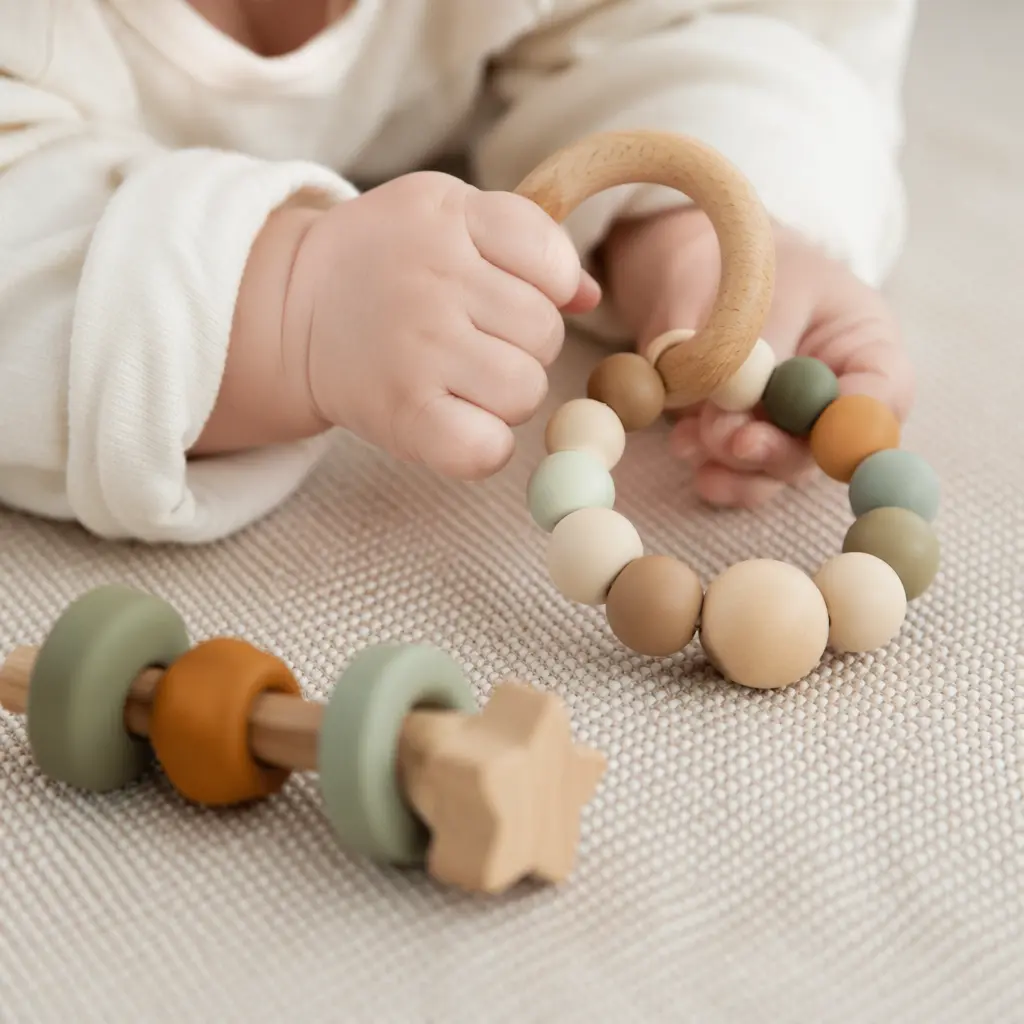
Wooden grasping toys are often chosen for their solid feel and simple design. When well made, they have a reassuring weight and minimal flex, which some parents associate with durability. The key safety factor is the finish: untreated or sealed wood with food-safe oils or water-based coatings is generally preferred for babies who mouth toys.
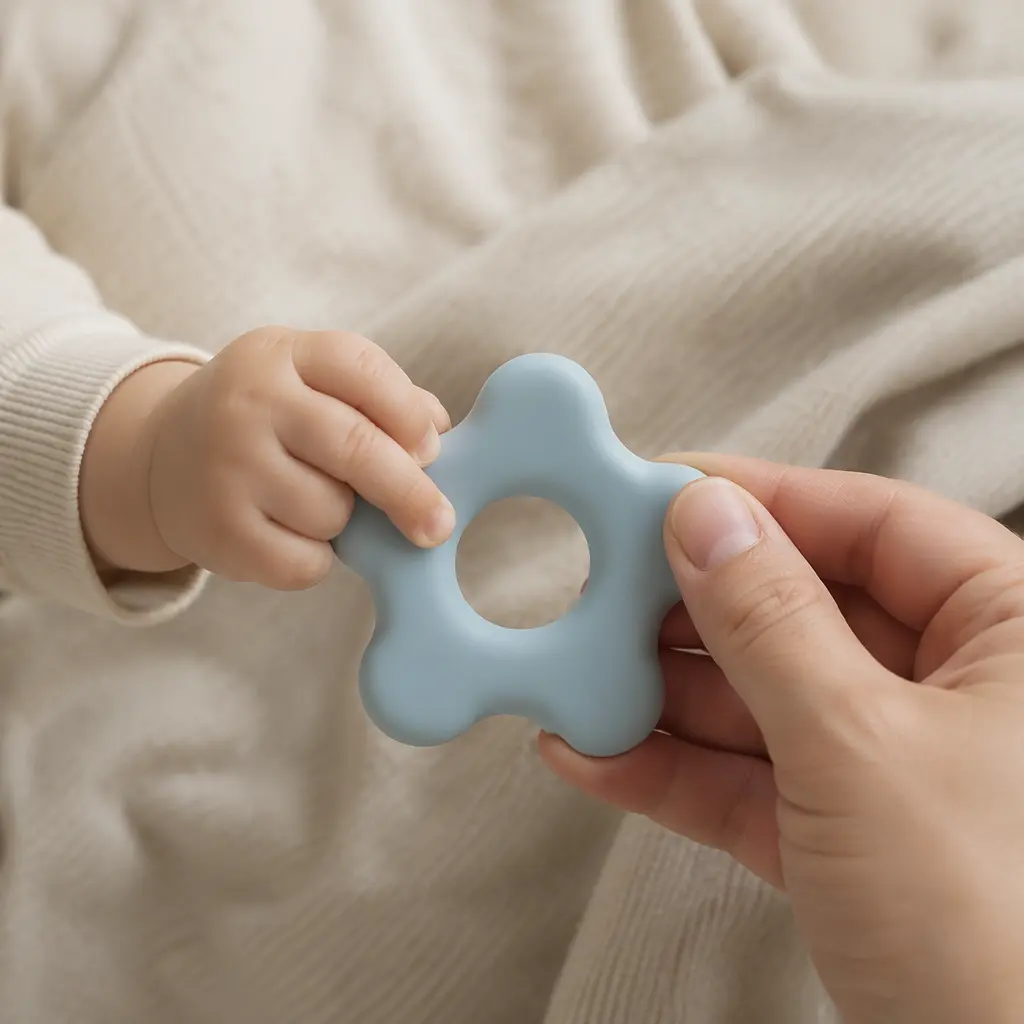
Plastic grasping toys vary more widely. Softer plastics can be gentler on gums and are often lighter, which helps very young babies lift and control them. Look for toys clearly labeled as free from harmful chemicals and designed to withstand repeated chewing without cracking or shedding pieces.
Frequently asked questions
Is wood safer than plastic for newborns?
Neither material is automatically safer. A well-finished wooden toy and a high-quality plastic toy can both be safe. Problems usually come from poor construction, rough edges, or unsafe finishes rather than the material itself.
Can babies chew on wooden toys?
Yes, as long as the wood is sealed with a non-toxic, baby-safe finish and shows no signs of splintering. Regularly inspect wooden toys and stop using them if the surface becomes rough.
What size is safest for a grasping toy?
A safe grasping toy should be too large to fit fully into a baby’s mouth. Rings, bars, or shapes with wider diameters are generally safer than small, compact pieces.
How often should these toys be checked?
Check grasping toys frequently, especially during teething phases. Look for cracks, loose parts, or changes in texture, and remove any toy that shows wear.
When choosing between wooden and plastic grasping toys for babies 0–6 months, focus on safety details rather than trends. Simple designs, baby-safe materials, and careful supervision matter more than the material label. With the right checks, both wood and plastic can be appropriate first toys.