Best Simple Baby Toys Pediatricians Actually Like
A parent-focused guide to simple, doctor-approved baby toys for ages 0–12 months. Learn what to look for, age fit, and safe, low-stimulation options that support early development.
Compare prices and availability
Check current prices and availability for this guide on eBay.
As an eBay Partner, we may be compensated if you make a purchase.
Many pediatricians encourage parents to start with simple toys during the first year. Babies learn best from basic shapes, textures, and movements—not flashing lights or electronic sounds. Well-chosen, low-tech toys can support brain development, motor skills, and early curiosity without overwhelming young senses.
What to look for
Doctor-backed toy recommendations tend to focus less on entertainment and more on how a toy supports natural development. The best simple toys invite babies to touch, mouth, shake, or reach—at their own pace.
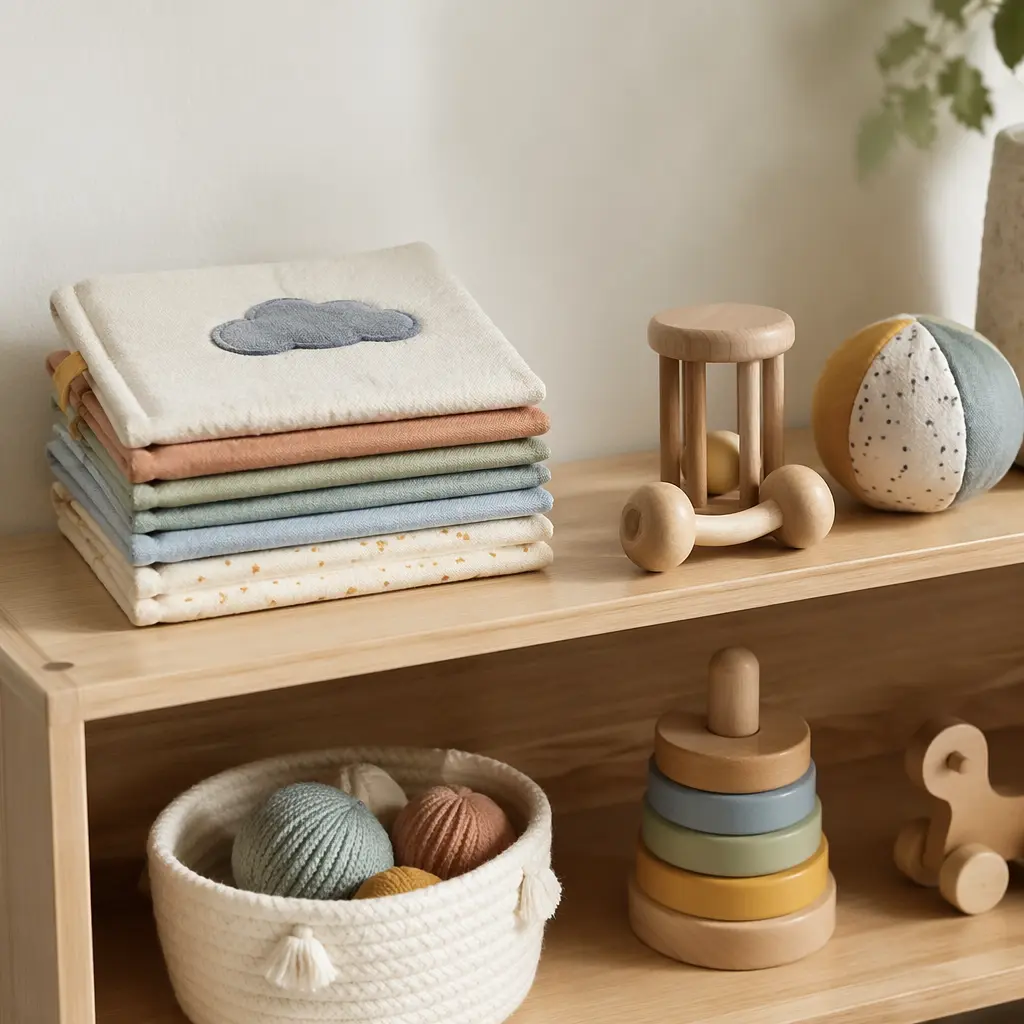
- Open-ended play: Toys that don’t have a single “right” way to use them encourage exploration and problem-solving.
- Safe materials: Look for non-toxic finishes, food-grade silicone, organic fabrics, or unfinished wood.
- Sensory variety: Different textures, gentle sounds, or contrasting colors help build sensory awareness without overstimulation.
- Right-sized design: Lightweight items that are easy for small hands to grasp support early motor skills.
- Durability and washability: Babies explore with their mouths, so toys should be easy to clean and hold up to frequent use.
Age suitability
From birth to 12 months, babies change quickly, and toy needs shift along with them. In the earliest months, toys are mostly about seeing, touching, and listening. As babies gain head control and begin rolling or sitting, they benefit from toys that encourage reaching and grasping. Closer to the one-year mark, simple stacking, dropping, or push-and-pull toys help support coordination and cause-and-effect learning. Age labels are helpful, but watching how your baby interacts with a toy is the best guide.
Standout categories or types
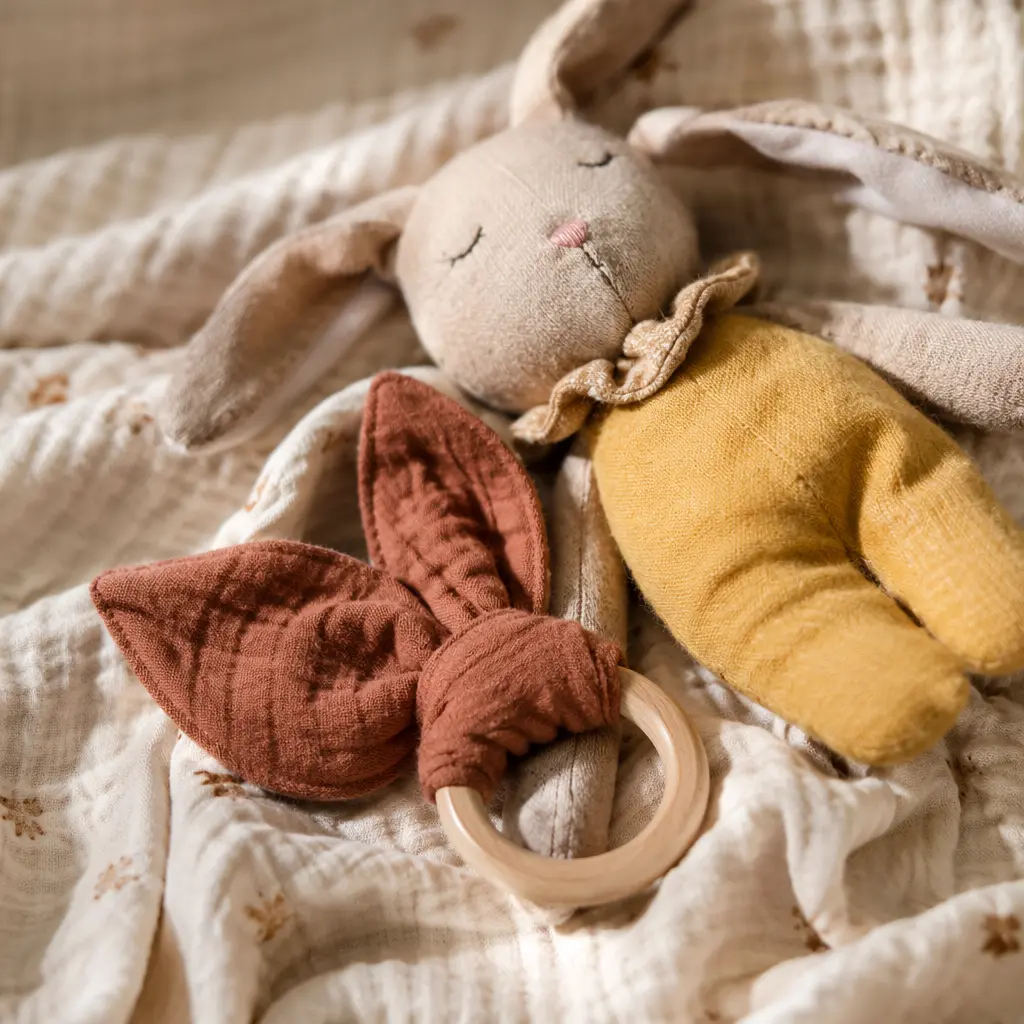
While pediatricians rarely endorse specific products, they often point parents toward certain types of toys that consistently support early development. These categories tend to be quiet, durable, and adaptable across multiple stages.
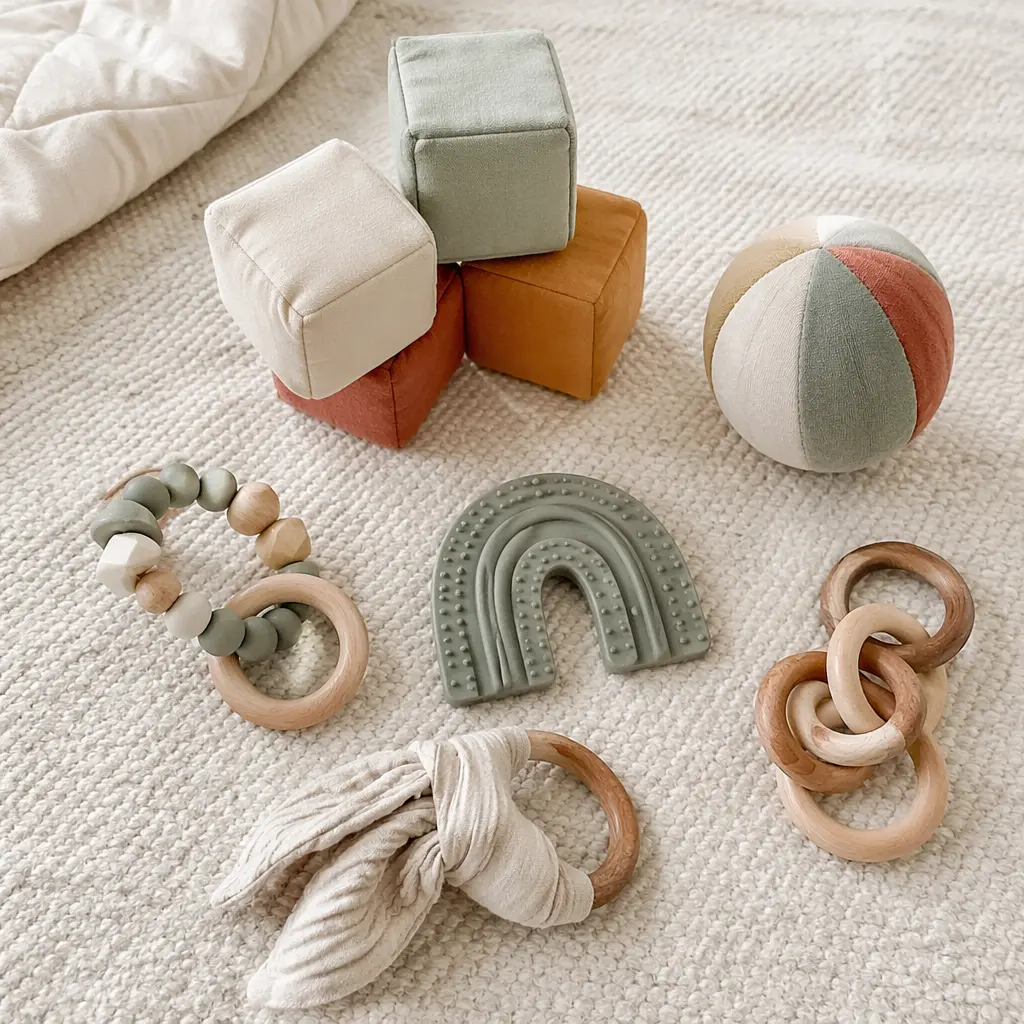
- Soft toys and fabric books: Great for tummy time, early grasping, and visual contrast.
- Rattles and shakers: Gentle sound-makers help babies connect movement with noise and build hand strength.
- Teethers: Simple shapes made from safe materials can soothe gums while offering sensory input.
- Stacking or nesting items: Basic cups or rings grow with a baby and support coordination and problem-solving.
- Balls: Lightweight balls encourage rolling, reaching, and later crawling, without complicated features.
Frequently asked questions
Are simple toys really better than electronic ones?
Research and pediatric guidance suggest that simpler toys promote more active play. Babies tend to explore, experiment, and interact more when toys don’t do all the work for them.
How many toys does a baby actually need?
A small rotation of well-chosen toys is usually enough. Too many options at once can be distracting, while a few familiar items allow deeper exploration and learning.
What colors are best for babies?
High-contrast colors are easier for young babies to see, while softer tones can be calming. A mix is fine, as long as the toy isn’t visually overwhelming.
Do babies get bored with simple toys?
Often, the opposite happens. Simple toys can be used in different ways as babies grow, which keeps them interesting over time.
When should toys be replaced or retired?
Retire toys that show wear, cracking, or loose parts. Even high-quality items should be checked regularly as babies become stronger and more mobile.
Simple baby toys may not look flashy, but they often deliver the most lasting value. By focusing on safety, age-appropriate design, and open-ended play, parents can choose toys that support healthy development throughout the first year—without unnecessary noise or stimulation.