Melissa & Doug Suspend: The balancing game that quietly took off
Melissa & Doug Suspend turned a simple pile of bent metal rods into a family game with surprising tension, skill, and replay value. Its easy setup and physical challenge helped it become a modern tabletop staple.
Compare prices and availability
Check current prices and availability for this guide on eBay.
As an eBay Partner, we may be compensated if you make a purchase.
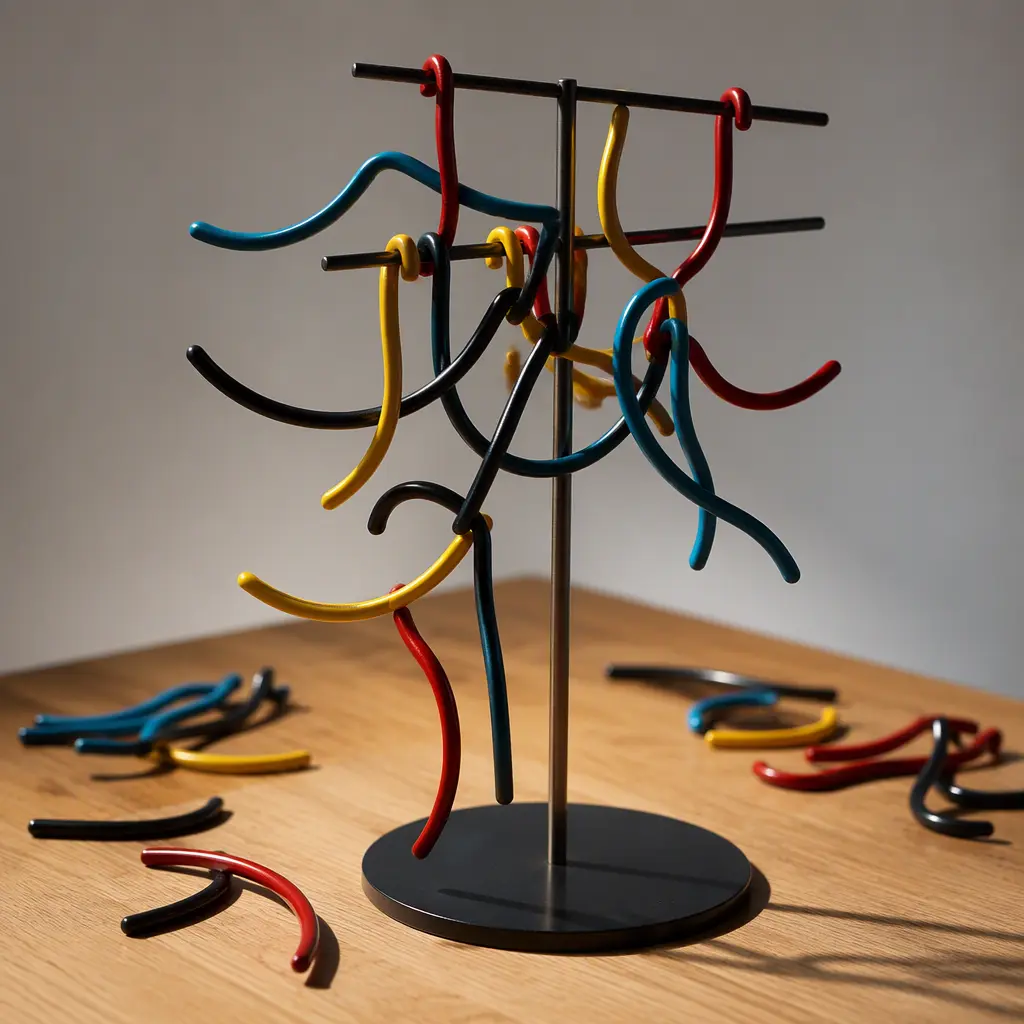
Some family games depend on trivia knowledge or long rulebooks. Melissa & Doug Suspend went in the opposite direction. The game asks players to do one thing: hang curved metal rods from a growing structure without making it collapse. That simple idea turned into one of the more durable modern dexterity games for families, classrooms, and waiting rooms. Since arriving in the early 2010s, Suspend has built a reputation as a game that children can understand almost immediately while still giving adults a genuine challenge.
Where it came from
Melissa & Doug introduced Suspend in 2011 during a period when many families were rediscovering screen-free tabletop play. The company was already known for wooden toys, puzzles, and hands-on preschool products, but Suspend stood out because it appealed across a wider age range. Instead of relying on educational branding or licensed characters, the game focused on physics, coordination, and suspense.
The core idea behind Suspend is older than the product itself. Balancing games have existed for generations, from stacking blocks to tabletop wire challenges. Suspend updated the formula with lightweight curved rods that hook together in unpredictable ways. The unusual shapes create tension in every turn because the structure changes its center of gravity constantly. Players are not just placing pieces; they are reading weight distribution in real time.
Why it works
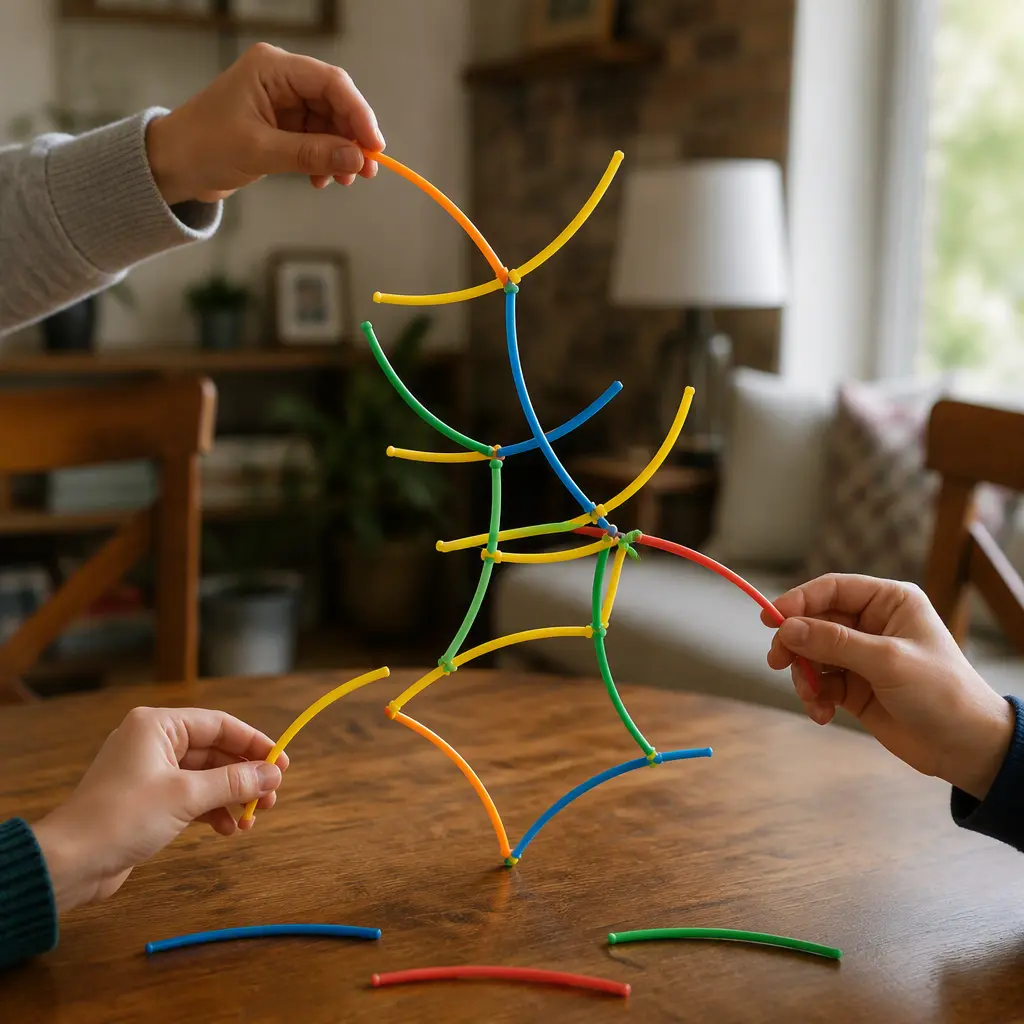
A large part of Suspend's success comes from how quickly people understand it. The setup is minimal, the rules can be explained in under a minute, and every turn creates visible stakes. Even players watching from across the room can instantly understand what is happening. That makes it useful for mixed-age groups where younger children, older siblings, and adults all need to stay engaged at once.
The design also rewards patience and experimentation rather than speed. Each rod has a different curve and balance point, so players start learning tricks naturally. Some pieces stabilize the structure while others make it wobble dramatically. The game creates moments of silence and concentration followed by sudden collapses that reset the energy in the room. Unlike many competitive games, losing often feels funny rather than frustrating because the failure is physical and immediate.
- Curved rods create constantly shifting balance points
- Simple rules make it approachable for younger players
- Physical skill matters more than reading ability
- Compact footprint works well on kitchen tables or classroom desks
- Rounds are short enough for repeat play
- The open-ended structure allows creative house rules and team play
Who it's for
Suspend is commonly recommended for school-age children, but its appeal reaches further than that label suggests. Younger children can participate with some help, especially if adults focus less on strict competition and more on experimenting with balance. Older kids often enjoy the strategic side once they realize certain rod shapes are harder to place than others. Adults tend to appreciate the game because it feels tactile and social in a way many modern party games do not. It also works well in environments where people may join or leave casually, such as family gatherings, after-school programs, therapy offices, or break rooms.
Variants and what to look for today
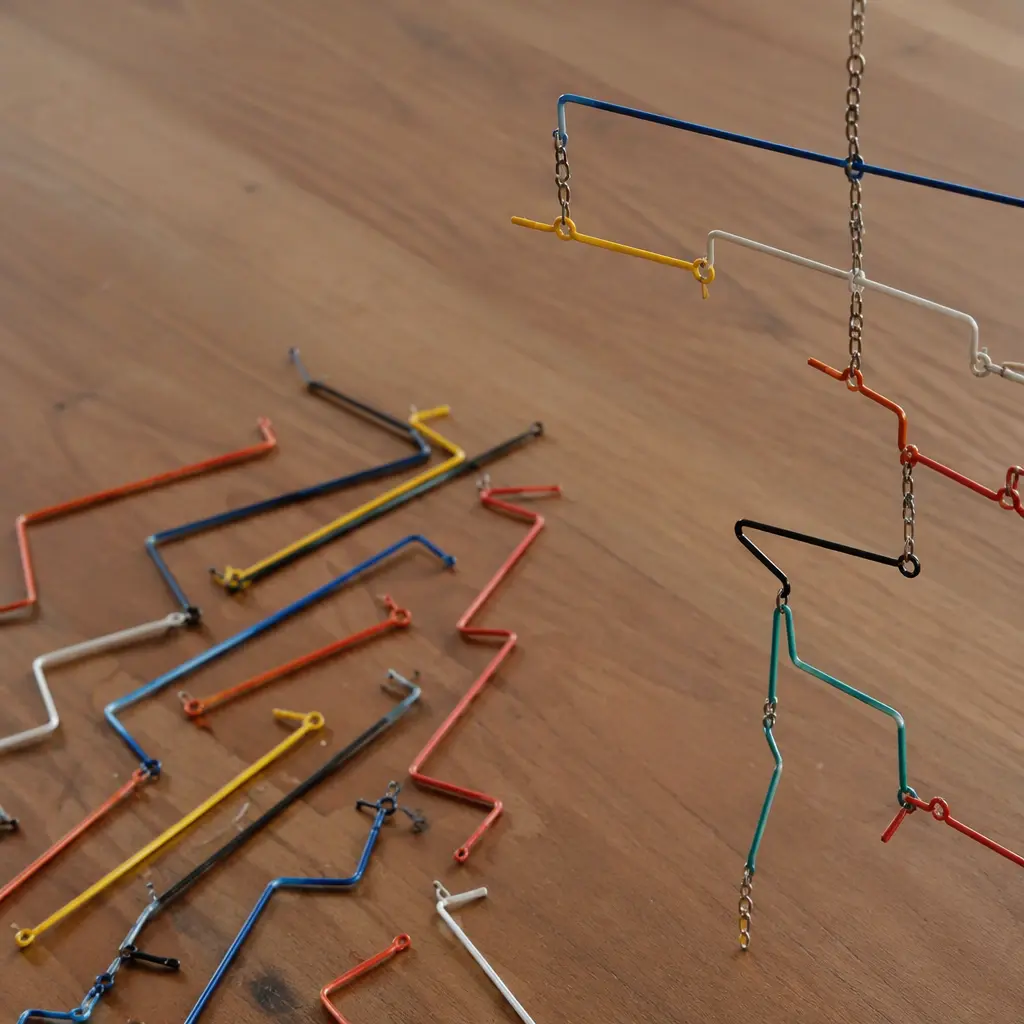
The original Suspend remains the version most families encounter, but the broader balancing-game category has grown considerably since its release. Some editions and inspired products use larger pieces for younger children, while travel-sized versions reduce the footprint for portable play. Other balancing games swap metal rods for wooden pieces, plastic connectors, or magnetic components. The appeal usually stays the same: maintaining control while the structure becomes increasingly unstable.
When shopping today, it is worth paying attention to build quality. Bent rods should feel smooth and evenly coated rather than rough or flaky. Lightweight imitations sometimes lose the delicate balance that makes the original style satisfying. Families with younger children may also prefer sets with sturdier bases and larger components that are easier to grip.
- Look for balanced, evenly shaped rods that connect smoothly
- Compact storage tubes or bags make cleanup easier
- Classroom-friendly sets often emphasize durability
- Oversized versions can help younger players participate
- Avoid poorly finished metal pieces with rough edges or chipped coatings
Frequently asked questions
Is Suspend more luck or skill?
It starts feeling random for new players, but skill becomes more noticeable over time. Experienced players learn how different rod shapes affect the structure and can often predict which placements are safest.
Can younger children actually play it?
Many younger children can participate with guidance, especially in cooperative play. The physical challenge is often easier to understand than games built around reading, math, or long turns.
Does it work well for groups?
Yes. Suspend works best with small to medium groups where everyone can gather around the structure comfortably. It also adapts well to team play, classroom activities, or quick tournament rounds.
Why has the game lasted this long?
Its staying power comes from simplicity. Suspend does not depend on trends, characters, or complicated expansions. The challenge remains understandable and replayable years after players first try it.
More than a decade after its release, Melissa & Doug Suspend still occupies an unusual place in family gaming. It is simple without feeling disposable, skill-based without becoming intimidating, and compact without losing table presence. In an era crowded with heavily themed board games and digital distractions, a bundle of curved rods hanging from a wire frame proved that a strong physical play pattern can still hold attention the old-fashioned way.