Strategy Board Games for Teens Who Love Thinking
A buyer’s guide to modern strategy board games for teens who want depth, challenge, and social play without screens. Learn what to look for, age fit, and game styles that hold attention.
Compare prices and availability
Check current prices and availability for this guide on eBay.
As an eBay Partner, we may be compensated if you make a purchase.
Many teens enjoy strategy video games because they reward planning, problem-solving, and long-term thinking. Modern board games can offer the same mental challenge—plus face-to-face interaction and a break from screens. Today’s strategy games are faster to learn than older classics, yet deep enough to stay interesting after many plays.

What to look for
Not every board game labeled “strategy” will click with teens. The best choices balance depth with accessibility, offering meaningful decisions without overwhelming rules. When comparing options, focus on how the game plays and how it fits your teen’s interests and patience level.
- Meaningful choices: Each turn should involve real decisions, not just luck-driven moves.
- Reasonable playtime: Many teens prefer games that finish in 45–90 minutes rather than all-day sessions.
- Clear win conditions: Goals should be easy to understand, even if the path to victory is complex.
- Player interaction: Look for games where players affect each other’s plans, not just their own boards.
- Replay value: Variable setups, multiple strategies, or modular boards help games stay fresh.
Age suitability
Strategy board games aimed at ages 13 and up typically assume stronger reading skills, abstract thinking, and patience. Teens in this range can handle longer rulebooks and delayed rewards, but individual maturity matters more than the number on the box. If a teen enjoys complex puzzles or tactical video games, deeper board games are often a good fit.
Standout categories or types
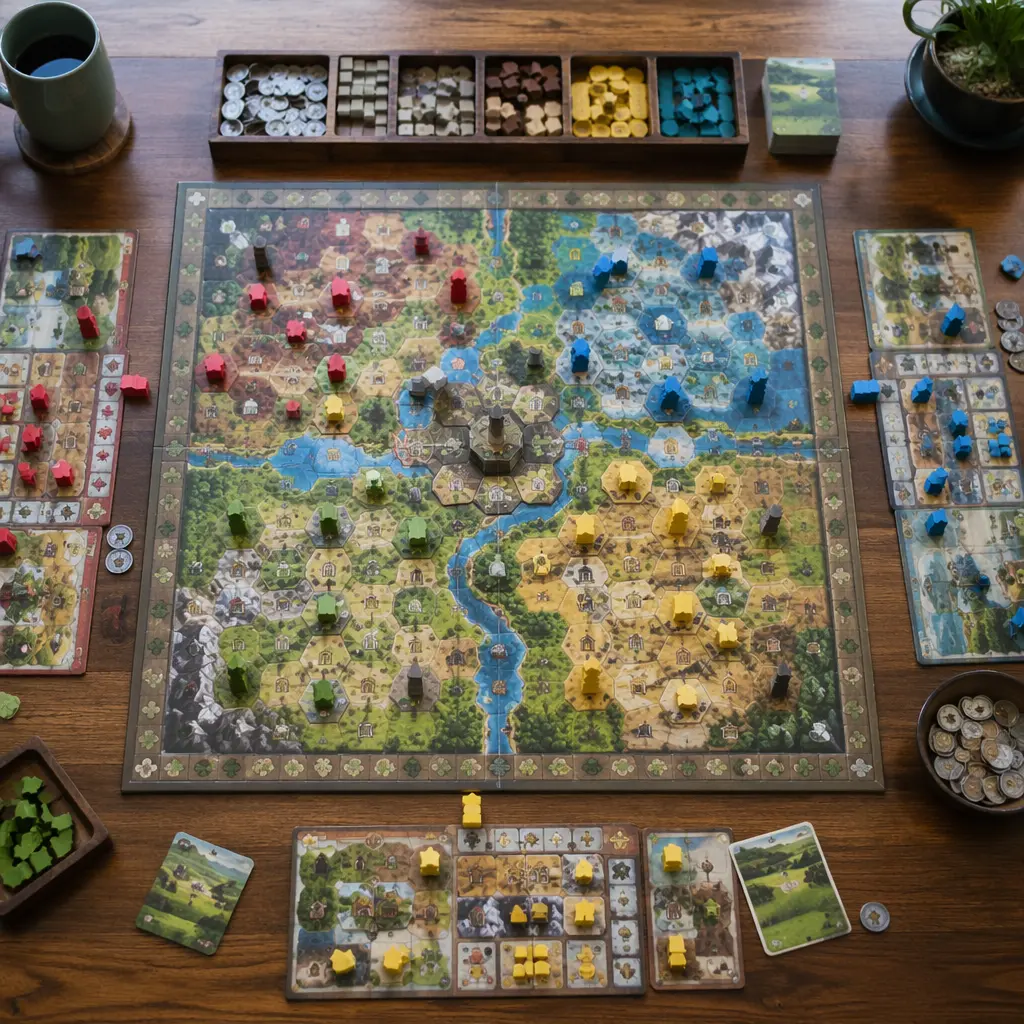
Strategy board games come in several broad styles, each appealing to different types of thinkers. Understanding these categories can help you narrow the field quickly.
- Resource management games: Players collect, trade, or spend resources to build engines or score points over time.
- Area control and conflict: These focus on competing for space or influence on a shared board, rewarding tactical positioning.
- Engine-building games: Early choices create systems that grow stronger, appealing to teens who like long-term planning.
- Deduction and hidden information: Players must infer opponents’ plans or roles, blending logic with psychology.
- Cooperative strategy games: Everyone works toward a shared goal, ideal for teens who prefer teamwork over direct competition.
Frequently asked questions
Do strategy board games really compete with video games?
They can. Modern designs emphasize constant engagement and meaningful choices, reducing downtime. Many teens enjoy the social interaction and tangible pieces, which offer a different kind of immersion than screens.
How hard are the rules to learn?
Rule complexity varies widely. Some strategy games can be taught in 10–15 minutes, while others take longer. Look for clear rulebooks, player aids, or tutorial-style first games to ease learning.
Are these games good for family play?
Many strategy games work well with mixed ages, especially if adults enjoy thoughtful play. Cooperative or team-based options can help balance skill differences between players.
How many players are ideal?
Most strategy games shine with 3–4 players, but some are designed specifically for two. Check recommended player counts, as adding or removing players can change pacing and balance.
For teens who crave challenge and depth, strategy board games offer a screen-free way to think critically, compete, and connect with others. By focusing on the right level of complexity and the style of play your teen enjoys, you can find games that earn a regular spot at the table.