The Wooden Balance Board: A Curved Plank with Endless Play
A simple curved wooden board has become a modern playroom staple. Here’s how the wooden balance board invites movement, imagination, and open-ended play for kids—and adults—today.
Compare prices and availability
Check current prices and availability for this guide on eBay.
As an eBay Partner, we may be compensated if you make a purchase.
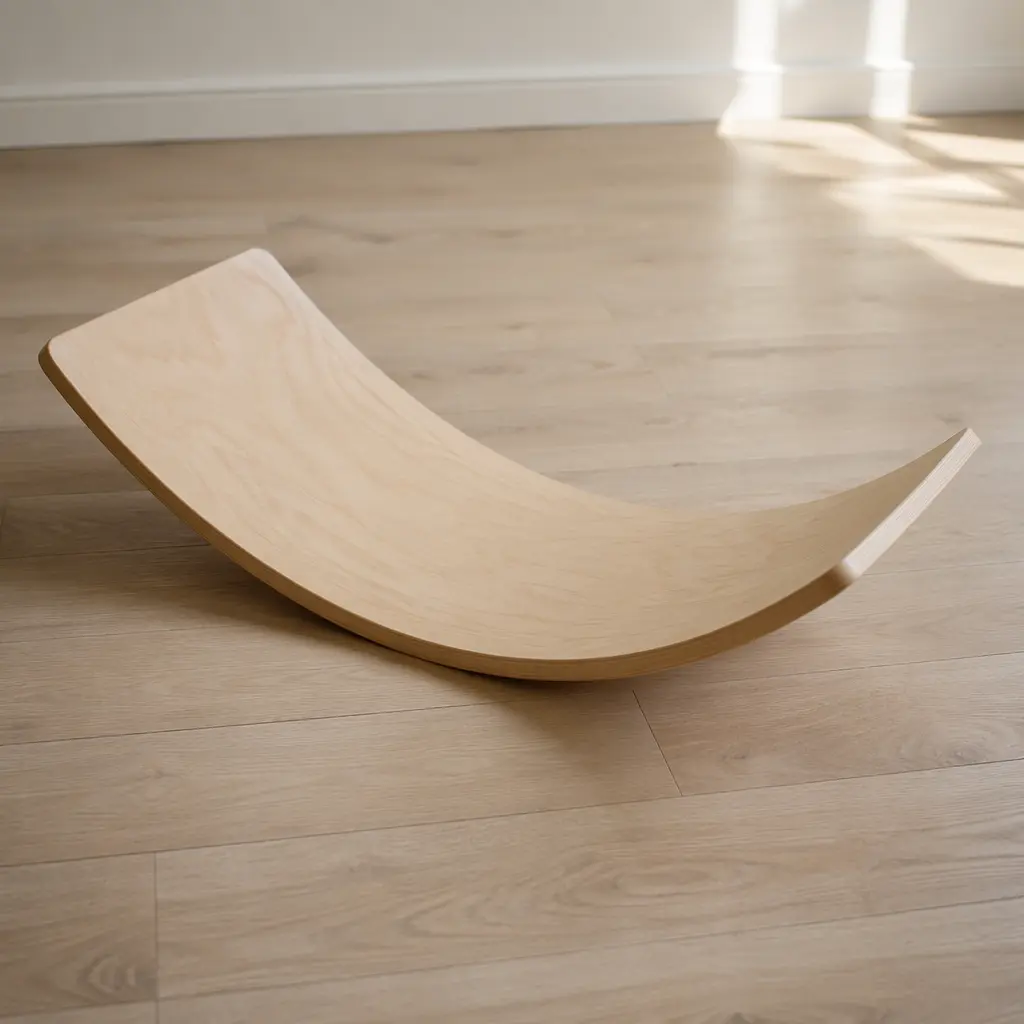
At first glance, a wooden balance board for kids doesn’t look like much—just a smooth, curved plank. No buttons. No bright colors. No instructions. Yet in homes, classrooms, and therapy spaces, this understated toy has become a quiet favorite. Children rock on it, flip it over, turn it into bridges and slides, and invent new uses daily. Its appeal lies in how little it dictates and how much it invites.
Where it came from
The modern wooden balance board draws inspiration from simple physical training tools and early childhood education philosophies rather than from a single inventor. Curved boards have long been used in fitness and rehabilitation to improve balance and core strength. Over time, educators—particularly those influenced by Montessori and Waldorf approaches—recognized their potential as open-ended play objects for children.
As interest in minimalist, movement-based toys grew in the 2010s, the wooden balance board found a new audience. Parents looking for screen-free play options and natural materials embraced the idea of a toy that supports physical development without prescribing how it must be used. What emerged was less a product line and more a category: the simple, sturdy, curved wooden board sized for kids.
Why it works
The balance board works because it meets children where they are physically and imaginatively. Its curved shape encourages rocking, tilting, and shifting weight, which naturally engages the core muscles and challenges balance. At the same time, it’s abstract enough to become whatever a child needs it to be in the moment—a boat, a bridge, a ramp, or a seat.
- A smooth curved profile that supports rocking and balancing
- Solid wood construction that feels stable underfoot
- An open-ended form with no fixed right way to play
- Scales easily from simple movement to complex imaginative play
- Quiet, screen-free engagement that fits into shared spaces
Unlike toys with a single outcome, the balance board adapts as children grow. Toddlers may start by gently rocking while seated, while older kids test their balance standing or combine the board with other toys to build obstacle courses. That flexibility is a big part of its staying power.
Who it’s for
Wooden balance boards are typically used by toddlers through elementary-age children, with adult supervision for younger users. Because the play is self-directed, kids of different ages can use the same board in very different ways. Many adults also find themselves stepping on for a quick stretch or balance challenge, making it a rare kids’ toy that comfortably crosses age lines.
Variants and what to look for today
Today’s balance boards come in a range of sizes, wood types, and finishes, but the core idea remains the same. Some are slightly longer or steeper to offer a bigger challenge, while others are scaled down for younger children. You may also see boards with a felt or cork backing designed to protect floors and soften sound.
When choosing one, focus on overall build quality rather than extras. A well-made board should feel solid, with smooth edges and a stable curve. Be cautious of very thin boards or rough finishes, which can affect durability and comfort. The best versions are the ones that disappear into daily play, not the ones that call attention to themselves.
Frequently asked questions
Is a wooden balance board safe for toddlers?
With supervision and appropriate use, many toddlers enjoy balance boards while seated or with hands on the floor. Look for a board sized for younger children and introduce it slowly.
Does it really help with development?
Yes. Balance boards encourage gross motor skills, coordination, and body awareness. Just as important, they support confidence as children learn to trust their movement.
Is it just a short-term novelty?
For many families, no. Because the play is open-ended, children tend to return to it in different ways as they grow, often rediscovering it months or years later.
Can it be used indoors?
Absolutely. Balance boards are commonly used indoors, especially in playrooms or living spaces, as long as there’s enough room to move safely.
In a world of toys that beep, flash, and instruct, the wooden balance board stands out by doing none of those things. Its quiet confidence comes from trusting children to explore movement on their own terms. That’s why this simple curved plank has earned a lasting place in modern play.