Nerf: How soft foam made rough‑and‑tumble play living‑room safe
Since 1969, Nerf has turned foam and air power into a safer way to throw, shoot and sprint. This profile looks at how a simple idea became a cross‑generational play staple.
Compare prices and availability
Check current prices and availability for this guide on eBay.
As an eBay Partner, we may be compensated if you make a purchase.
Nerf is one of those toy names that slipped into everyday language. Say it out loud and most people picture soft foam darts, friendly indoor battles, and kids burning off energy without broken lamps. The clever part is that Nerf didn’t invent competitive play or toy weapons—it made them safer and more socially acceptable inside the home.
Where it came from
Nerf began in 1969 with something far simpler than dart blasters: a squishy foam ball. Marketed as the world’s first indoor ball, it was designed so children could throw it inside without damaging furniture—or each other. The idea came from a desire to make active play compatible with modern homes, where space was tighter and breakables were everywhere.
The brand expanded through the 1970s and 1980s, gradually applying the same foam concept to new formats. When dart‑firing blasters appeared, they followed the same philosophy: low impact, visible projectiles, and a focus on fun over realism. Over time, Nerf became shorthand for a whole category of soft‑projectile play.
Why it works
At its core, Nerf works because it balances excitement with reassurance. The toys feel energetic and competitive, but parents quickly understand that foam tips and limited range reduce the risk compared with harder plastic or metal toys.
- Soft foam construction that limits impact force
- Bright colours that signal play, not realism
- Simple mechanics—springs or air—kids can understand
- Clear cause‑and‑effect feedback when a dart hits or misses
- Room for imaginative rules and team games
That combination invites active play in places where it might otherwise be banned. Living rooms, basements, and gardens all become acceptable arenas, which helps explain Nerf’s staying power across generations.
Who it’s for
Nerf traditionally targets school‑age children, roughly from early primary years upward, when kids can aim, reload, and agree on basic rules. That said, it’s also a rare toy that routinely pulls adults into play. Parents often recognise the brand from their own childhoods, making it easier to say yes to a family game rather than shutting it down.
Variants and what to look for today
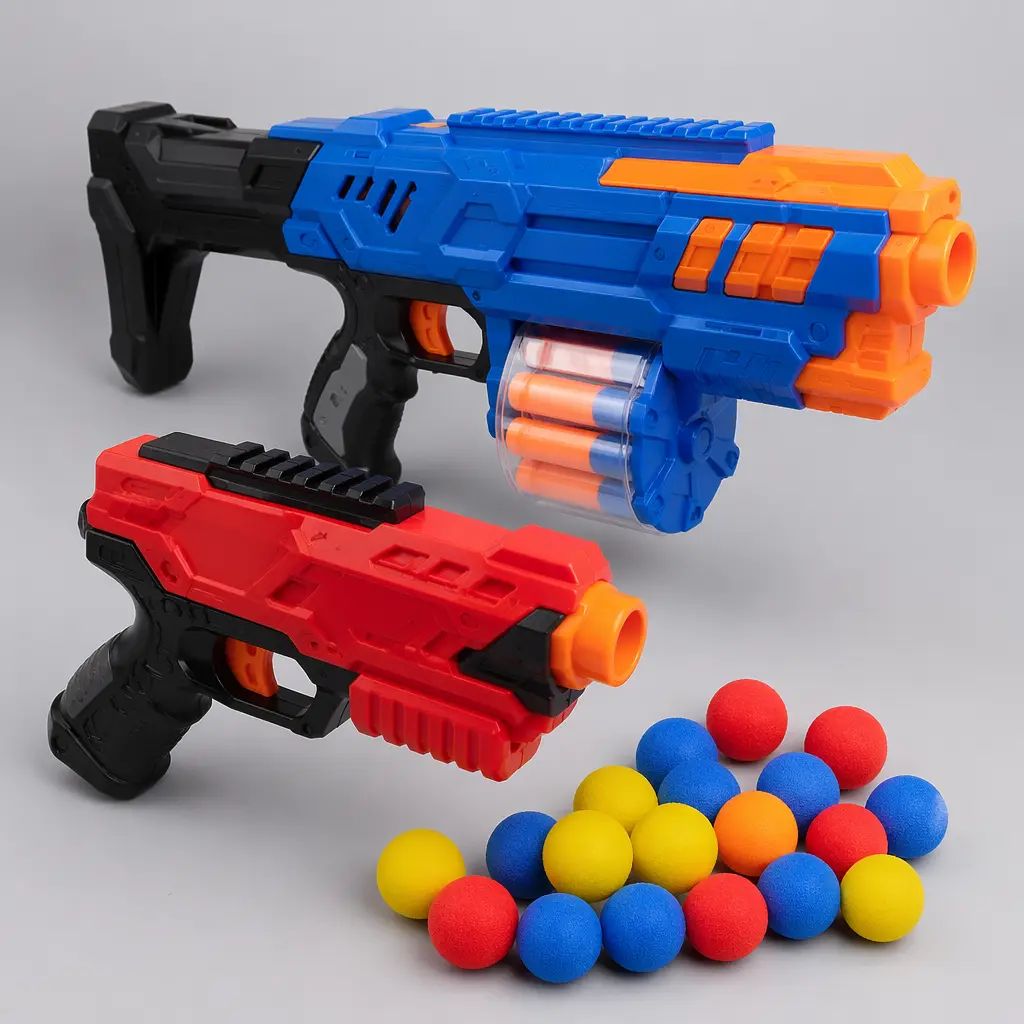
Modern Nerf‑style toys come in many forms, from small single‑shot blasters to larger multi‑dart designs meant for team games. There are also foam balls, discs, and rockets that stick closer to the brand’s original indoor‑friendly idea.
When choosing one today, look for durable foam that springs back after use and blasters that are easy to reload. Poor‑quality knock‑offs often use stiff foam or weak tips that bend quickly. Simpler designs tend to last longer and cause fewer arguments about fairness during play.
Frequently asked questions
Is Nerf safe for indoor use?
Generally, yes. Nerf‑style foam toys are designed for lower impact than hard plastic toys. Clear rules about where and how to play make a big difference.
What age is appropriate?
Most foam dart toys are best for children aged five or six and up, once they can aim responsibly and follow safety rules.
Do they encourage aggressive play?
They can look that way, but many families find Nerf encourages cooperative games, teamwork, and physical movement when rules are clearly set.
Why has Nerf lasted so long?
Because it solved a practical problem—how to play actively without breaking things—and kept refining that solution for new generations.
More than fifty years on, Nerf remains a reminder that good toy design doesn’t have to be complicated. Sometimes all it takes is softer materials, smarter limits, and an understanding of how families actually live and play.