Do Electronic Plush Toys Help or Hinder Sleep?
Electronic plush toys promise calmer bedtimes, but lights and sounds can also stimulate young brains. This guide helps parents weigh soothing features against sleep disruption for ages 1–2.
Compare prices and availability
Check current prices and availability for this guide on eBay.
As an eBay Partner, we may be compensated if you make a purchase.
Many electronic plush toys are marketed as bedtime helpers, promising to soothe babies and toddlers with gentle sounds, lights, or motion. For parents of 1–2 year olds, the question is whether these features truly support sleep or risk doing the opposite. At this age, children are developing sleep routines and learning to self-soothe, so the design of a comfort toy matters more than the claims on the box.
What to look for
Not all electronic plush toys affect sleep in the same way. Some are designed with rest in mind, while others are essentially play toys with added electronics. Focusing on a few practical features can help you judge whether a toy is likely to calm or stimulate.
- Sound type and volume: Steady white noise or soft lullabies are usually less stimulating than songs with lyrics or sudden changes.
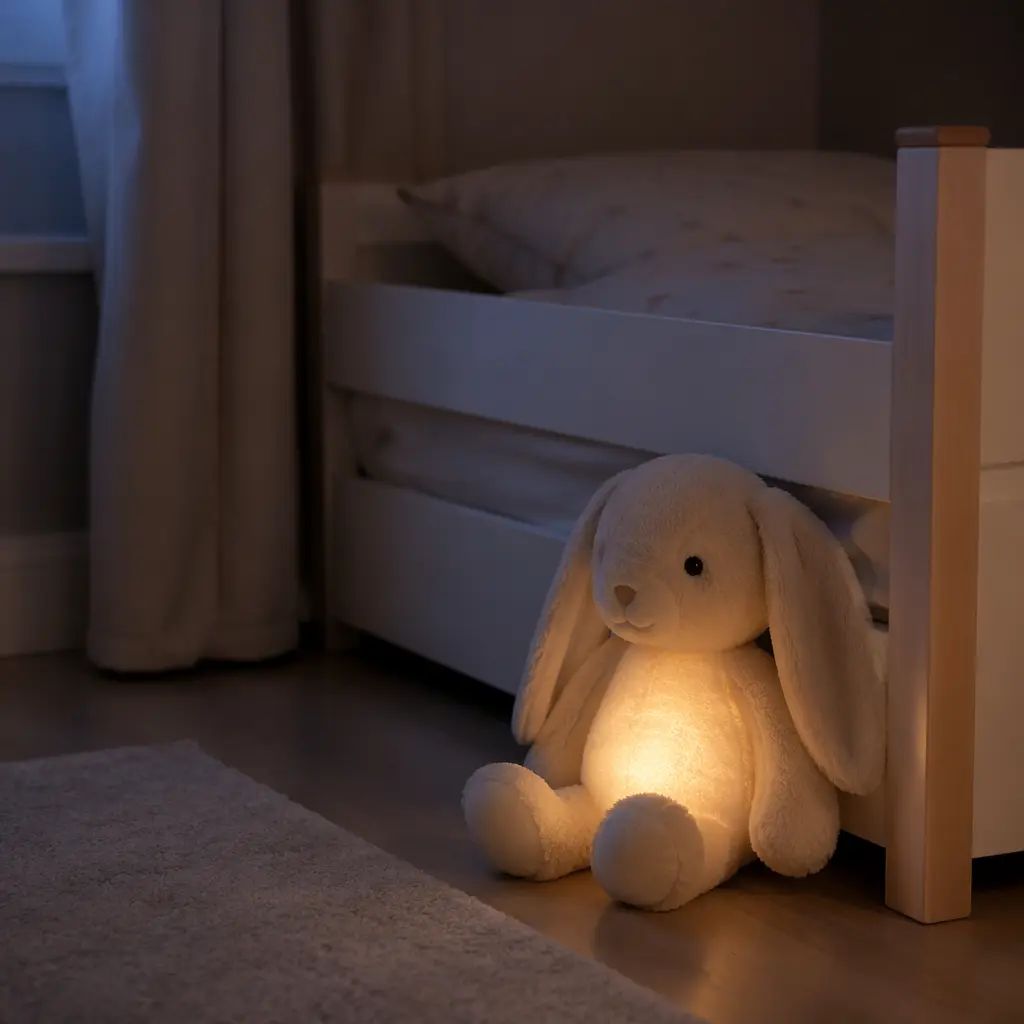
- Light behavior: A constant, dim glow is generally calmer than flashing or color-changing lights.
- Automatic shut-off: Timers that turn the toy off after a set period can prevent ongoing stimulation once a child falls asleep.
- Ease of control: Simple on/off controls reduce the chance of a child activating play mode during the night.
- Washability and build quality: Plush toys used at bedtime should be easy to clean and sturdy enough for nightly handling.
Age suitability
For children aged 1–2 years, sleep patterns are still maturing. Many toddlers at this stage rely on predictable routines and familiar comfort objects. An electronic plush toy can fit into that routine if it behaves consistently. However, toddlers are also more mobile and curious, which means interactive features may invite play instead of rest. Toys that are clearly labeled for sleep or calm time, rather than general play, are usually a better match for this age band.
Standout categories or types
Electronic plush toys aimed at sleep generally fall into a few broad categories. Understanding these can help you decide which, if any, aligns with your child’s needs and your bedtime routine.
- Sound-only plush toys: These focus on white noise, heartbeat sounds, or simple lullabies without lights or movement, often the least stimulating option.
- Light-and-sound comfort toys: Designed with dim lighting and slow sound patterns, intended to mimic a nightlight combined with gentle audio.
- Multi-mode plush toys: Offer both play and sleep settings; useful for daytime but can cause confusion if the sleep mode isn’t clearly distinct.
- Motion-based soothers: Include gentle vibrations or rocking sensations, which some children find calming and others find distracting.
Frequently asked questions
Can electronic plush toys help a toddler fall asleep faster?
They can for some children, especially if the sounds or lights become part of a consistent bedtime routine. The key factor is predictability. If the toy behaves the same way each night and doesn’t require interaction, it may support relaxation.
Do lights in plush toys interfere with sleep?
Bright or changing lights can interfere with sleep by keeping a child alert. Dim, steady lighting is less likely to disrupt rest. If the light draws your child’s attention or encourages play, it may be better to disable that feature.
Is it better to choose a non-electronic plush toy for bedtime?
For many toddlers, a simple plush toy works just as well as an electronic one. Non-electronic options don’t risk overstimulation and can still provide comfort through texture and familiarity.
Should an electronic plush toy stay on all night?
In most cases, no. Continuous sound or light isn’t necessary once a child is asleep and may disturb lighter sleep phases. Timed shut-off features help limit exposure while still offering comfort at the start of the night.
Electronic plush toys are not a universal solution for sleep, especially for 1–2 year olds. Some children respond well to gentle sounds and predictable routines, while others become more alert with added features. When evaluating these toys, focus less on marketing promises and more on how the toy fits into your child’s existing bedtime habits. A calm environment, consistent routine, and age-appropriate comfort matter more than any single gadget.