Mr. Potato Head: The classic toy built from spare parts
First sold in 1952, Mr. Potato Head turned everyday bits into a face. This profile looks at its origins, simple design, and why a box of mix‑and‑match pieces still sparks imagination today.
Compare prices and availability
Check current prices and availability for this guide on eBay.
As an eBay Partner, we may be compensated if you make a purchase.
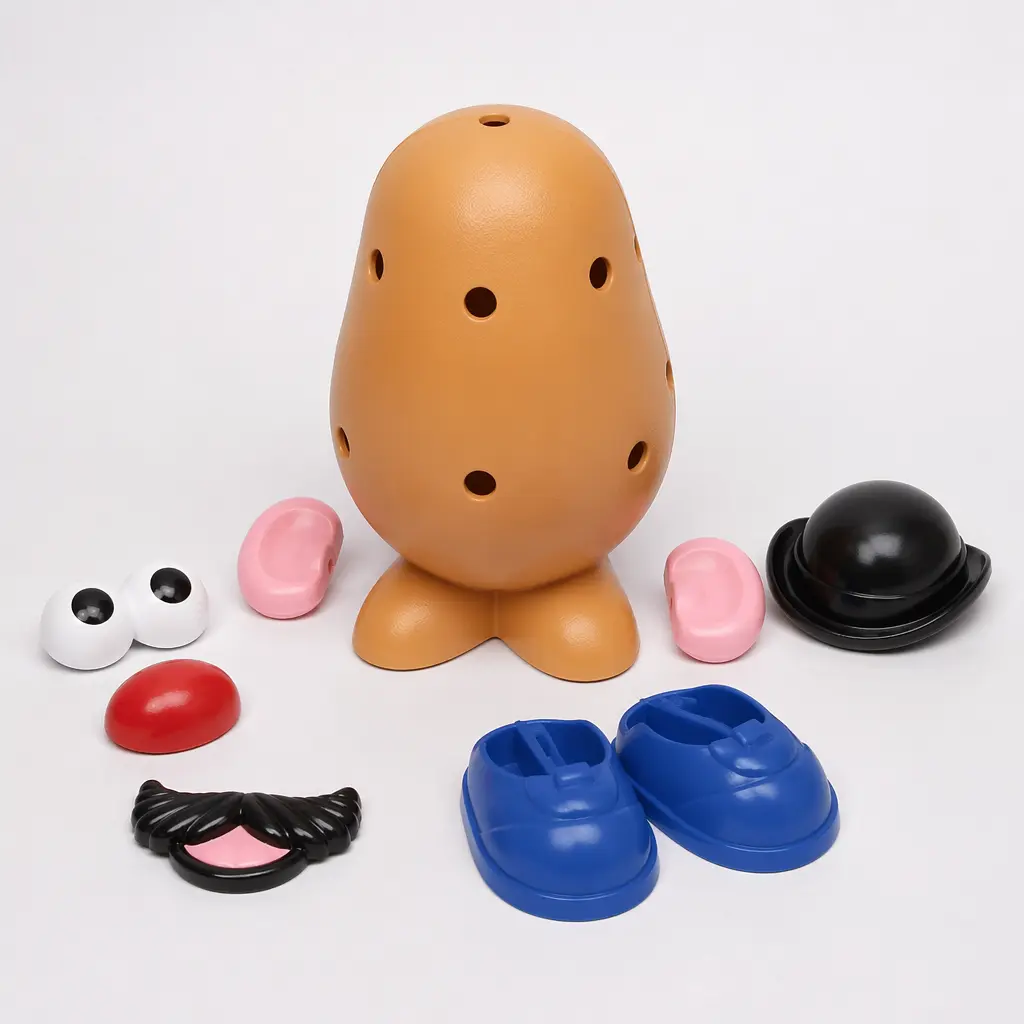
Few toys explain themselves as quickly as Mr. Potato Head. You open the box, dump out a jumble of eyes, noses, mouths, hats and shoes, and start building a face. There are no rules and no wrong answers. That simplicity is exactly why the toy has lasted for generations, even as children’s playrooms have filled with screens and sound chips.
Where it came from
Mr. Potato Head debuted in 1952, originally as a bag of plastic facial features meant to be stuck into real vegetables. The idea came from inventor George Lerner, who had experimented with using household scraps and produce as playthings. At the time, this was a radical shift: most toys were miniatures or mechanical novelties, not open-ended creative kits.
Early marketing leaned into that novelty, encouraging children to raid the kitchen for a potato or carrot to bring their character to life. Practical concerns eventually won out, and within a few years the toy began shipping with its own reusable plastic body. That change helped cement Mr. Potato Head as a stand-alone toy rather than a one-off gimmick tied to the pantry.
Why it works
At its core, Mr. Potato Head is about recombination. A small set of parts can be rearranged endlessly, creating faces that look silly, grumpy, surprised or downright strange. Because the pieces don’t dictate a story or outcome, children supply the personality themselves. One day the character is a pirate, the next a sleepy parent or a monster.
The design also rewards fine motor skills and experimentation. Pushing pieces in and pulling them out is satisfying, and the chunky parts are sized for small hands. Standout features include:
- Interchangeable facial features that fit anywhere on the body
- A durable, rounded form that can be handled roughly
- Humorous parts (like oversized lips or wild eyebrows) that invite laughter
- No batteries, screens, or prescribed sequence of play
Who it's for
Mr. Potato Head is typically aimed at preschoolers, but its appeal stretches wider. Younger children enjoy the physical act of building a face, while older kids use the parts for storytelling and jokes. Adults often connect with it through nostalgia, remembering their own versions from childhood. It’s also a common pick in classrooms and therapy settings because it encourages expression without pressure.
Variants and what to look for today
Over the decades, the Mr. Potato Head family has expanded beyond a single body and bag of parts. Modern sets often include themed accessories, extra bodies, or storage built into the toy itself. While the core idea remains unchanged, materials have improved, with sturdier plastics and smoother edges than early versions.
If you’re shopping today, look for sets that prioritize compatibility and durability. Pieces that work across different bodies make the toy more flexible, especially if you plan to add on later. It’s also worth avoiding very cheap look‑alike sets with loose-fitting parts, which can frustrate younger children and shorten the toy’s lifespan.
Frequently asked questions
Is Mr. Potato Head still the same toy it was in the 1950s?
The basic concept is unchanged, but modern versions are safer and more self-contained. The biggest difference is the inclusion of a plastic body from the start, rather than relying on real vegetables.
Does it have educational value?
Yes, in a quiet way. It supports fine motor development, body-part recognition, and emotional expression, especially when children describe the faces they’ve created.
Are there concerns about small parts?
Some accessories are small, so it’s important to follow the age guidance on the box and supervise younger children, particularly if siblings of different ages play together.
Why has it endured when so many toys fade away?
Because it doesn’t chase trends. The humor of a mismatched face and the freedom to create something personal are timeless, and they don’t rely on technology that can feel dated a few years later.
More than seventy years on, Mr. Potato Head remains a reminder that a toy doesn’t need complexity to be compelling. A handful of parts, a blank canvas, and permission to be silly are sometimes all it takes to earn a permanent place in the toy box.