The Razor Scooter: How a folding ride-on took over pavements
Born around 2000, the Razor Scooter turned simple aluminium engineering into a global playground staple. Here’s how it started, why it lasted, and what to look for if you want one today.
Compare prices and availability
Check current prices and availability for this guide on eBay.
As an eBay Partner, we may be compensated if you make a purchase.
At the turn of the millennium, the Razor Scooter seemed to appear everywhere at once. School runs turned into obstacle courses, driveways became launch pads, and a slim piece of folded metal tucked neatly under arms on buses and trains. It wasn’t the first scooter, but it was the one that made scooting feel modern, portable, and suddenly essential.
Where it came from
The Razor Scooter emerged around 2000 from a California-based company looking to simplify personal transport for kids and teens. Scooters had existed for decades, often as clunky toys or homemade plank-and-wheel contraptions. Razor’s insight was to strip the idea back to essentials and rebuild it with lightweight materials and a folding mechanism that felt satisfyingly clever.
Originally pitched as a fun, affordable ride-on for school-age children, the scooter quickly crossed age boundaries. Its rise coincided with skate culture’s mainstream moment and a growing appetite for compact, urban-friendly ways to get around. Within a year, the scooter wasn’t just a toy—it was a cultural signal of independence.
Why it works
The enduring appeal of the Razor Scooter lies in its restraint. There’s no complicated drivetrain, no batteries to charge, and no learning curve beyond balance and a bit of courage. Push, glide, stop. That simplicity invites repeat play and makes the scooter easy to share, store, and maintain.
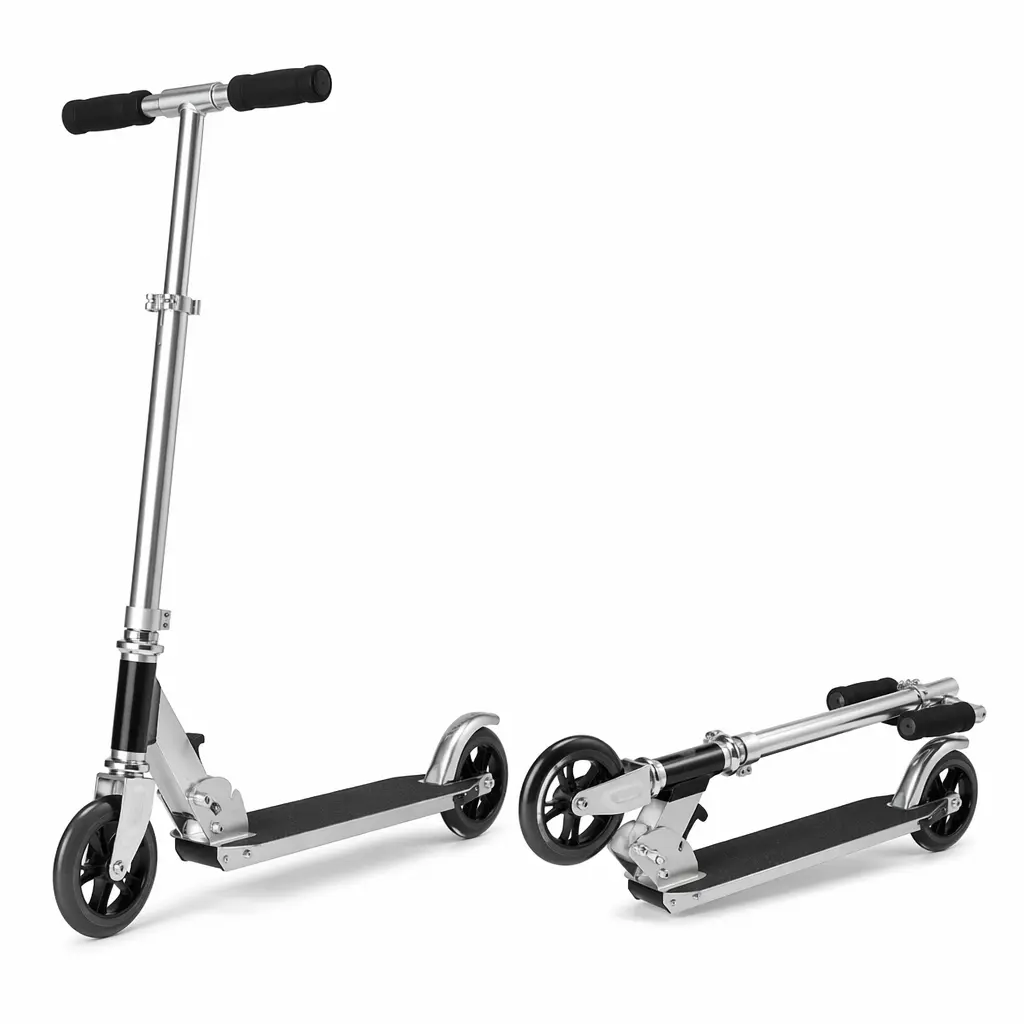
- Lightweight aluminium frame that’s easy to carry
- Folding design for storage and transport
- Low deck height for stable pushing
- Small, hard wheels that reward smooth surfaces and skill
- Rear foot brake that’s intuitive to use
Together, these features create a ride that feels fast enough to thrill but controlled enough to trust. The scooter doesn’t dictate how it’s used—kids decide whether it’s a commute tool, a stunt platform, or just a way to race the dog down the pavement.
Who it’s for
Razor-style kick scooters are typically best suited to children from around 5 or 6 upwards, once balance and coordination are established. That said, their weight limits and sturdy builds have long made them appealing to teens and even adults. Many parents who bought one for their child have found themselves borrowing it for short trips or nostalgic spins.
Variants and what to look for today
Over the years, the Razor Scooter family has expanded to include different sizes, wheel types, and materials. While the classic aluminium kick scooter remains the reference point, today’s versions may offer larger wheels for smoother rides, adjustable handlebars for growing riders, or reinforced decks for heavier use.
When shopping now, focus less on flashy graphics and more on fundamentals: solid folding joints, smooth-rolling wheels, and a brake that feels responsive underfoot. Be wary of ultra-cheap copies that mimic the look but skimp on materials; poor welds and weak clamps can turn a fun ride into a safety concern.
Frequently asked questions
Is a Razor-style scooter a toy or transport?
It sits somewhere in between. For children, it’s primarily a toy that encourages outdoor play. For older riders, it can double as a practical way to cover short distances.
Do these scooters work on rough ground?
They’re happiest on smooth pavements. Small, hard wheels don’t absorb bumps well, so cracked concrete or gravel can be uncomfortable and slow.
Are they easy to maintain?
Yes. Basic maintenance usually involves keeping bolts tight, wheels clean, and the brake free of debris. There’s very little that can go wrong mechanically.
Why did the Razor Scooter last when other fads faded?
Because it solved a real problem—portable, fun movement—without overcomplicating things. Trends changed around it, but the core experience stayed satisfying.
More than two decades on, the Razor Scooter remains a symbol of uncomplicated fun. It’s a reminder that sometimes the best toys aren’t about new technology, but about refining a simple idea until it feels just right.