Toy Soldiers: How Tiny Army Figures Became a Lasting Play Tradition
From hand-painted lead figures to buckets of green plastic troops, toy soldiers have endured for generations by turning simple poses into open-ended imaginative play.
Compare prices and availability
Check current prices and availability for this guide on eBay.
As an eBay Partner, we may be compensated if you make a purchase.
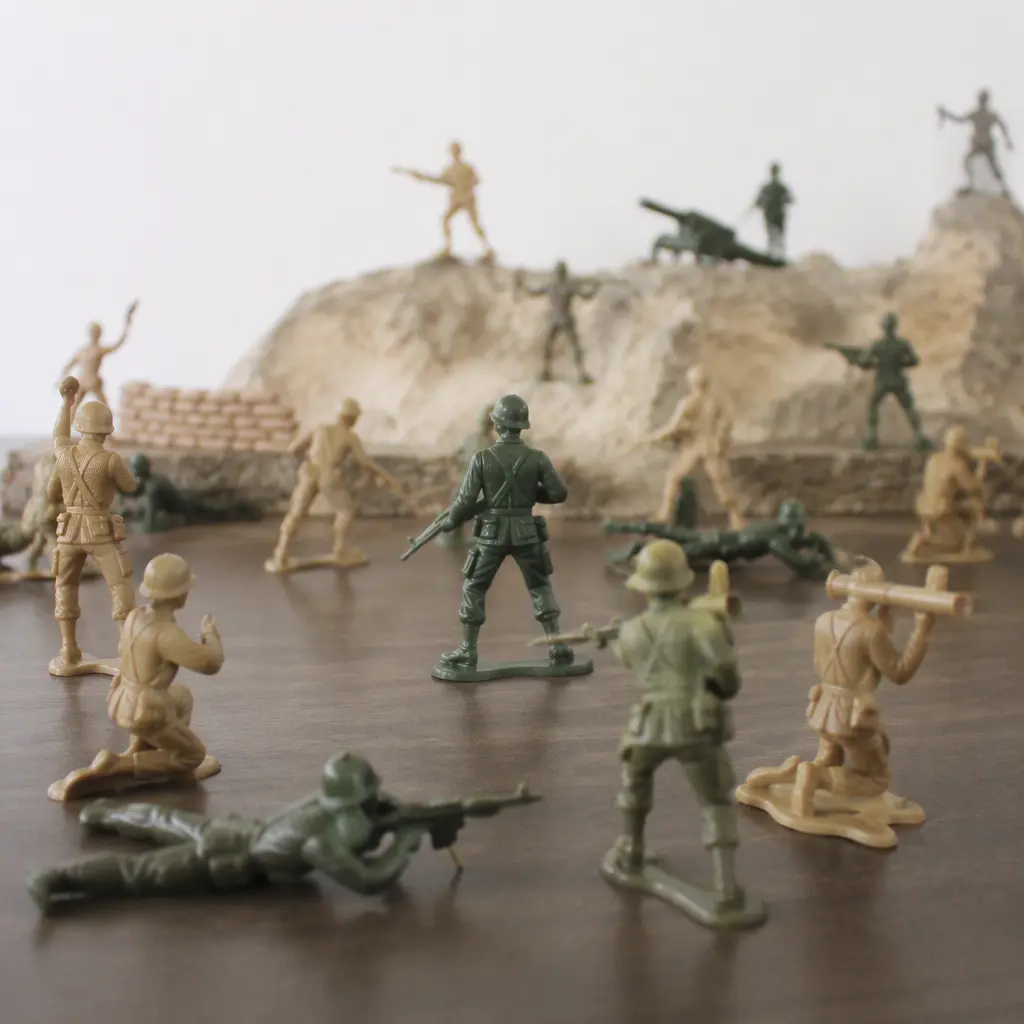
Few toys are as instantly recognizable as the small army figures scattered across bedroom floors, sandboxes, and classroom dioramas for more than a century. Toy soldiers have appeared in metal, wood, and plastic forms, but the core idea has stayed remarkably consistent: a handful of tiny figures can become an entire world of strategy, storytelling, and make-believe. Long before digital battle games and blockbuster movie tie-ins, children were creating campaigns, alliances, rescues, and rivalries with simple figures that often came in a paper bag or cardboard bucket.
Where it came from
Miniature military figures trace back centuries to carved wooden and metal pieces used both as decorations and as teaching tools for military strategy. By the 18th and 19th centuries, painted lead soldiers became popular collectibles across Europe, especially in Germany, France, and Britain. These early figures were often detailed and fragile, aimed more at display than rough play.
The modern version familiar to many families emerged after World War II with the rise of inexpensive molded plastic. Plastic soldiers could be mass-produced cheaply, packed in large numbers, and sold almost anywhere. Companies in the United States and Europe began producing sets featuring infantry, medics, pilots, and vehicles in standardized scales. The famous monochrome green army figures became especially common during the 1950s and 1960s, when postwar manufacturing made durable plastic toys widely accessible. Unlike highly scripted toys, soldiers encouraged children to invent entire narratives from a handful of poses and props.
Why it works
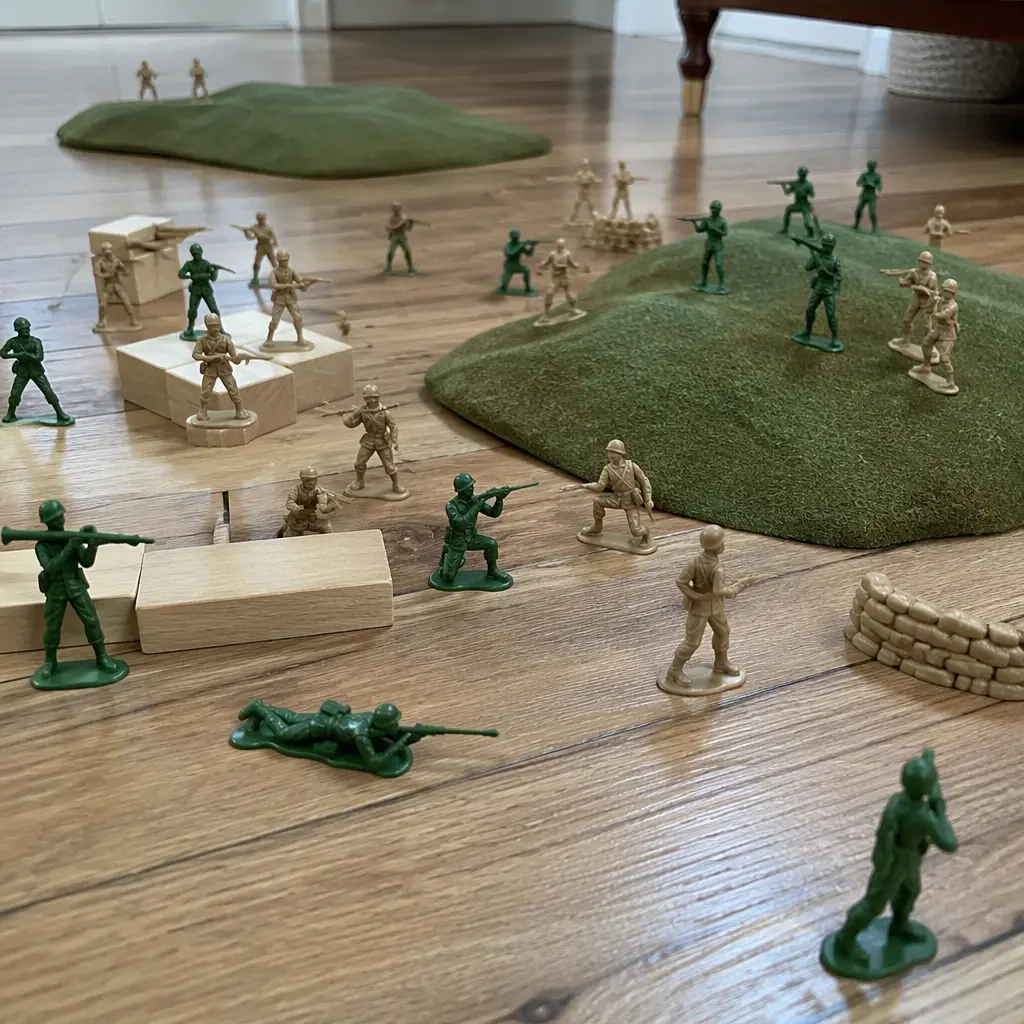
Toy soldiers succeed because they ask very little from the toy itself and almost everything from the player. A figure frozen in a running or kneeling pose becomes whatever the story requires. Children build landscapes from blankets, books, dirt piles, or couch cushions, and the figures instantly turn those spaces into battlefields, rescue zones, or exploration missions. The toys are simple enough to remain flexible, yet distinct enough to suggest action and teamwork.
Another reason for their longevity is scale. Toy soldiers are portable, easy to collect in large numbers, and compatible with homemade terrain, model kits, and other small figures. They can support quiet solo play or group games with elaborate rules. Some adults continue using them for tabletop war gaming, historical reenactment displays, or nostalgia-driven collections.
- Simple poses encourage open-ended storytelling
- Lightweight plastic figures are easy to carry and store
- Large sets allow cooperative or competitive group play
- Different scales support collecting and model building
- Minimal moving parts make them durable for repeated use
Who it's for
Toy soldiers are usually best suited for school-age children who can safely handle small pieces and understand imaginative conflict play. Younger children may still enjoy larger versions under supervision, though traditional small figures can present a choking risk. Adults remain an important audience as well. Many collectors focus on historical accuracy, painting techniques, or vintage plastic and metal sets. Others appreciate toy soldiers as cultural artifacts tied to memories of outdoor play, homemade forts, and pre-digital entertainment. Their appeal crosses generations because the toys leave so much room for creativity instead of prescribing a single way to play.
Variants and what to look for today
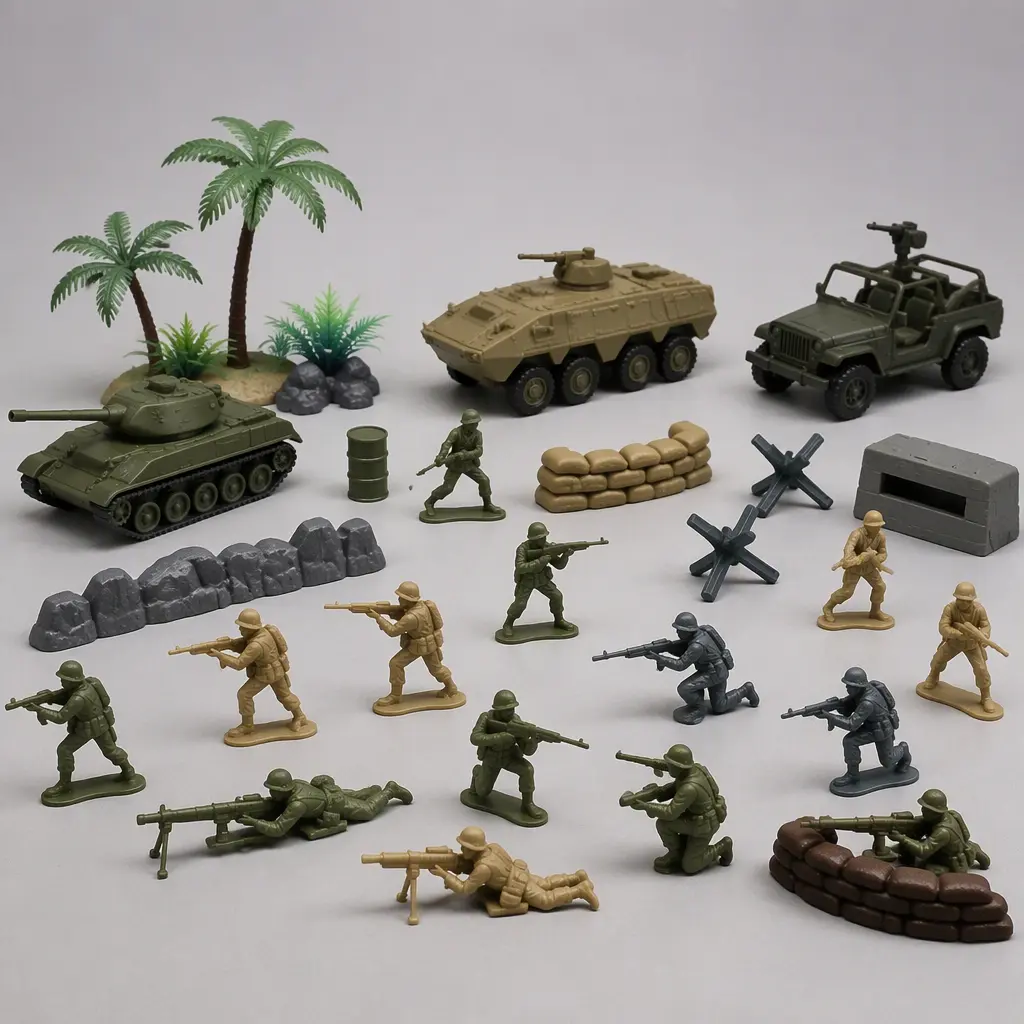
Modern toy soldiers come in far more varieties than the classic green infantry bucket. Some sets focus on historical periods such as ancient armies, medieval battles, or 20th-century conflicts. Others lean toward science-fiction styling with futuristic armor and vehicles. Materials also vary. Traditional hard plastic remains common, while softer flexible plastics are often safer for younger users and less prone to snapping.
Collectors searching for vintage sets often pay attention to condition, paint quality, and whether original accessories survived. For everyday family play, durability matters more than rarity. Figures with balanced bases tend to stand better on uneven surfaces, and larger sets with mixed poses encourage more varied storytelling.
- Look for sturdy molding with figures that stand upright reliably
- Choose larger figures for younger children who still mouth toys
- Mixed poses and accessories usually create more imaginative play options
- Vintage metal figures may require extra care because older paints can contain unsafe materials
- Very low-cost sets sometimes have rough edges or brittle plastic
Frequently asked questions
Are toy soldiers still popular today?
Yes. While they are less dominant than they were in the mid-20th century, toy soldiers continue to sell through hobby stores, educational retailers, and general toy aisles. They also remain popular in tabletop gaming and collecting communities.
Why are many toy soldiers green?
The classic green color became associated with military uniforms and camouflage during the rise of plastic manufacturing after World War II. Using a single color also reduced production costs while making large sets affordable.
Can toy soldiers be educational?
They can support lessons about history, geography, scale, and storytelling when used thoughtfully. Many teachers and parents use miniature figures for dioramas, historical discussions, or creative writing exercises. Context matters, especially when discussing real-world conflicts.
What makes vintage toy soldiers collectible?
Collectors often value age, craftsmanship, rarity, and historical style. Hand-painted lead soldiers from earlier eras can be especially sought after, while mid-century plastic figures attract nostalgia-focused collectors who remember them from childhood.
Toy soldiers have lasted through changing trends because they offer something many toys eventually lose: flexibility. A small figure can become a hero, explorer, defender, or comic side character depending on the imagination behind it. Whether displayed carefully on a collector's shelf or buried in backyard dirt during a summer afternoon, these miniature figures continue to prove that enduring play does not always require electronics, complex mechanics, or a detailed script.