AI Story Cubes: Privacy and Safety Checks for Parents
A parent-focused guide to AI story cubes for ages 6–8, covering microphones, cloud storage, moderation tools, subscriptions, offline play and what to check before buying.
Compare prices and availability
Check current prices and availability for this guide on eBay.
As an eBay Partner, we may be compensated if you make a purchase.
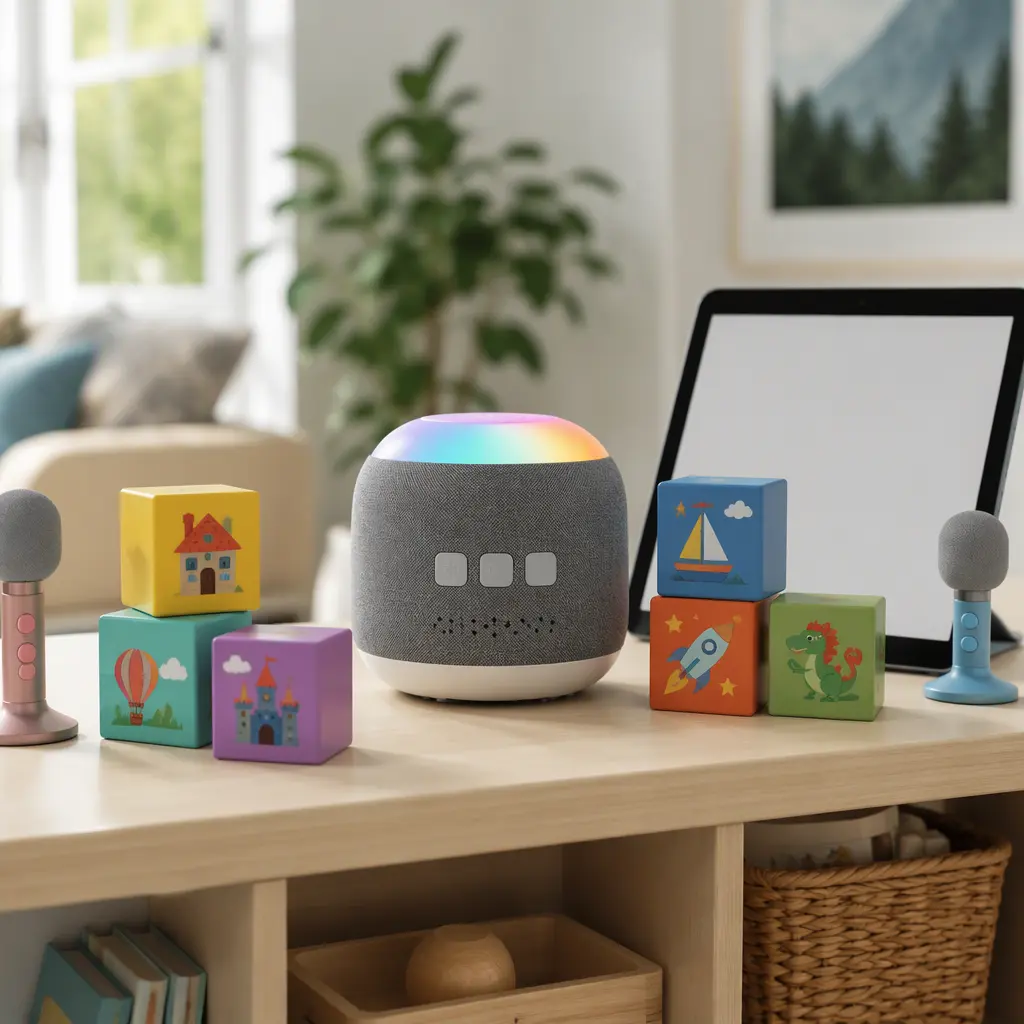
AI story cubes combine traditional storytelling prompts with connected features such as voice recognition, app-generated stories or chatbot-style conversations. For children aged 6 to 8, the appeal is usually the same as classic storytelling games: making up characters, building confidence with language and creating funny stories together. The difference is that many AI versions rely on microphones, cloud processing and companion apps. That changes the buying decision from a simple creativity toy into a broader question about privacy, moderation and long-term support. Parents comparing these toys should focus less on marketing terms like “smart” or “AI-powered” and more on what information the toy collects, where that information goes and whether the toy still works in a useful way without an internet connection.
What to look for
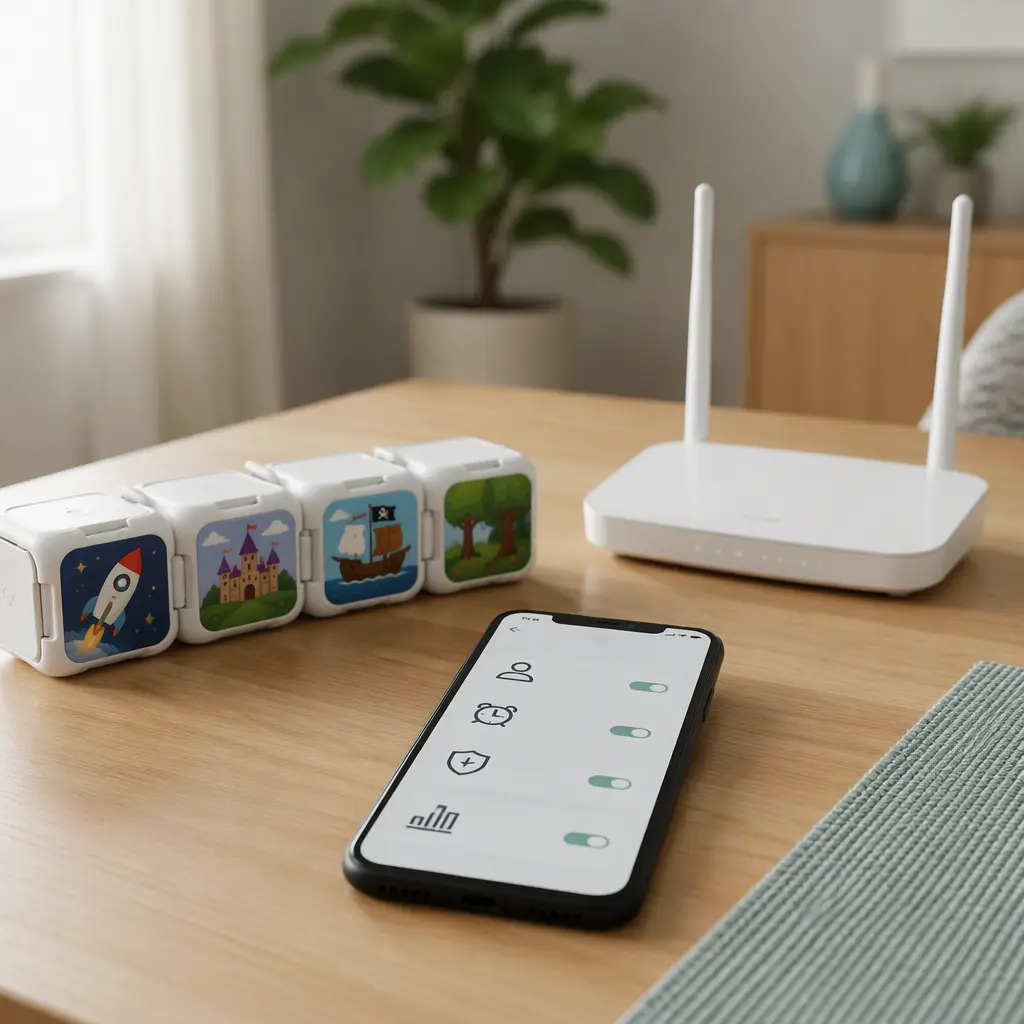
Some AI story toys only use simple sound effects or pre-written prompts, while others actively record speech and send audio to cloud-based AI systems for processing. That distinction matters because cloud-connected toys may store recordings, generate personalized responses or rely on moderation systems that are not always transparent. Manufacturer privacy policies and app store listings can reveal useful details about data collection, parental controls and account requirements. It is also worth checking whether the toy depends on ongoing subscriptions or credits for AI-generated content, since a toy that loses core features without paid access may become frustrating quickly.
- Check whether the toy has an active microphone, camera or both, and whether they can be disabled physically or in settings.
- Look for clear explanations about where voice recordings are stored and how long they are retained.
- See if parental approval is required before children can share recordings, stories or usernames online.
- Check whether stories are generated locally on the device or processed through cloud AI services.
- Find out whether the toy still supports offline storytelling or game play without Wi-Fi.
- Review moderation features for user-generated content, especially if the toy connects children with public communities.
- Confirm device compatibility for apps, including whether a parent phone or tablet is required.
- Watch for subscription fees, token systems or limited free AI prompts after purchase.
- Consider how often the toy needs updates and whether the manufacturer has a history of long-term app support.
Age suitability
Children aged 6 to 8 are usually imaginative enough to enjoy AI-assisted storytelling, but they are not always able to judge what information should stay private. A child may casually mention their school, neighborhood, family routines or passwords while talking to a conversational toy. That makes supervision more important than with traditional offline story cubes. Toys aimed at this age group work best when they keep interactions short, structured and parent-controlled rather than open-ended social chat systems. Families looking for lower-risk options may prefer hybrid products that use AI only to generate prompts or story themes instead of continuous voice conversations.
Options compared
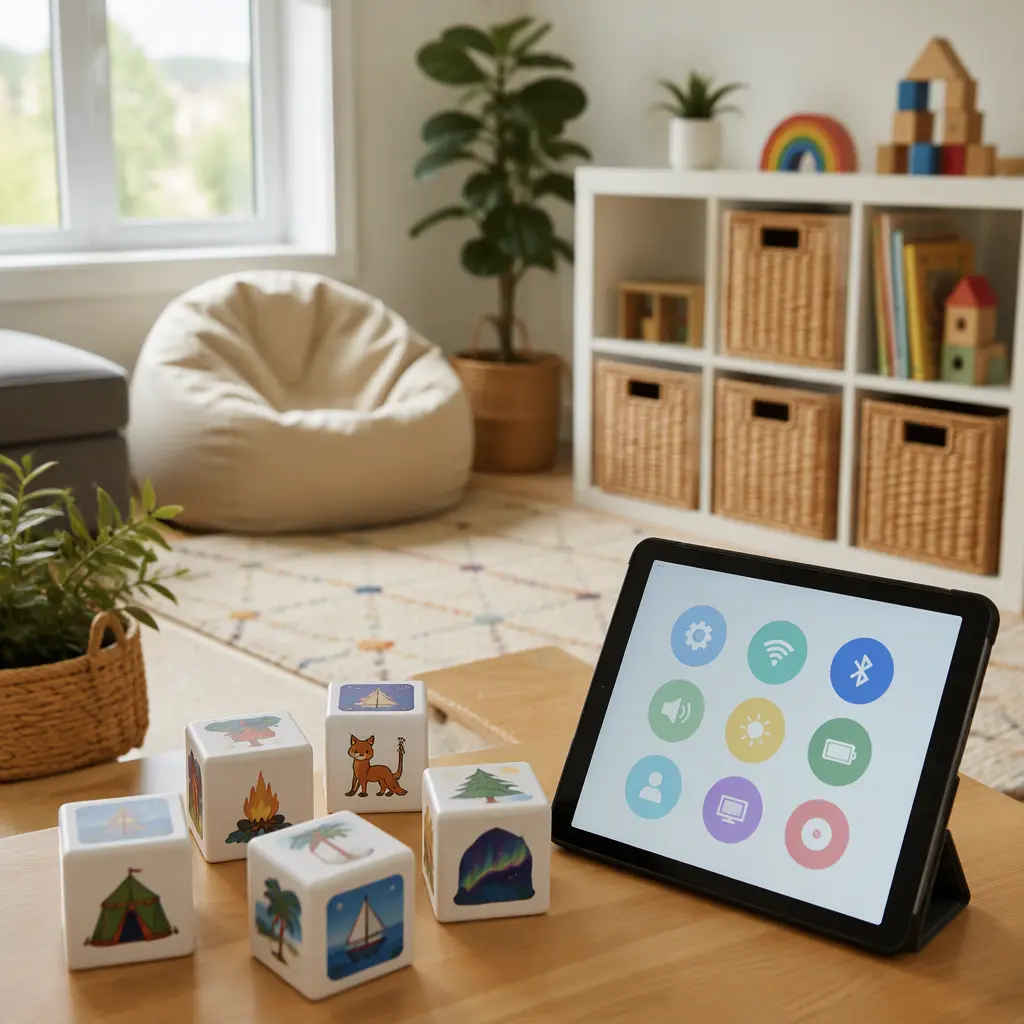
Offline storytelling cubes remain the simplest option for families who mainly want imaginative play without digital concerns. These use printed icons, physical dice or audio clips stored directly on the toy. They typically have lower ongoing costs, no account setup and fewer privacy worries. They also tend to be quieter and easier to store. The trade-off is that they cannot generate endless custom stories or adapt to a child's interests in the way AI-connected toys can.
AI-connected story toys vary widely. Some use limited AI features such as rotating prompts, while others behave more like conversational assistants. Toys with open-ended chat features may feel more engaging initially, but they also raise more questions about moderation, inappropriate outputs and cloud storage. Parents who value convenience may appreciate automatic story generation during travel or quiet time, though internet dependence can become frustrating if servers are unavailable or app support ends. For families wanting a middle ground, look for products that offer optional connected features while still allowing offline storytelling sessions with physical cubes or cards.
- Offline story cubes: best for screen-free family play, minimal privacy concerns and lower maintenance.
- App-assisted storytelling toys: useful for guided creativity and reading practice, but usually require a parent device.
- Voice-interactive AI toys: more dynamic conversations and personalized stories, but higher privacy and moderation considerations.
- Subscription-based AI platforms: broad content libraries and frequent updates, though long-term costs can add up.
- Hybrid toys with offline modes: practical for families wanting flexibility without relying entirely on cloud services.
Frequently asked questions
Do AI story cubes always record children’s voices?
Not always. Some toys only use button inputs or preloaded prompts, while others actively listen for voice commands. Products that process spoken stories through cloud AI systems are more likely to store recordings temporarily or permanently. Parents should check privacy policies and setup permissions carefully.
Are these toys useful without Wi-Fi?
That depends on the design. Some connected toys lose most of their features offline, while others continue to work as physical storytelling games with limited audio or built-in prompts. Offline usefulness matters because app services and servers may not remain available forever.
What kind of parental controls should families expect?
Useful parental controls include the ability to mute microphones, approve contacts or sharing, limit online access, review activity history and manage purchases or subscriptions. Some systems also allow parents to delete recordings or account data.
Can AI storytelling toys expose children to inappropriate content?
AI-generated systems sometimes produce unexpected or unsuitable responses, even with moderation tools in place. Structured prompt systems tend to be more predictable than open-ended chatbot conversations. Shared family use and periodic supervision are still important for younger children.
How important is long-term app support?
Long-term support matters more for connected toys than for traditional games. If a companion app stops receiving updates or cloud servers shut down, some features may stop working entirely. Toys with strong offline functions are generally less affected by support changes.
AI story cubes can encourage creativity, language practice and collaborative play, but connected features introduce practical trade-offs that parents should evaluate carefully. The most suitable option for many families is not necessarily the most advanced AI system, but the toy that balances imagination with manageable privacy settings, clear parental controls and useful offline play. Looking closely at microphones, cloud storage policies, moderation systems and subscription requirements before purchase can help avoid surprises later.