AI Storytelling Toys and Kids Who Overshare
A parent-focused guide to AI storytelling toys for ages 6–8, covering microphones, saved conversations, parental controls, cloud features, subscriptions and privacy trade-offs.
Compare prices and availability
Check current prices and availability for this guide on eBay.
As an eBay Partner, we may be compensated if you make a purchase.
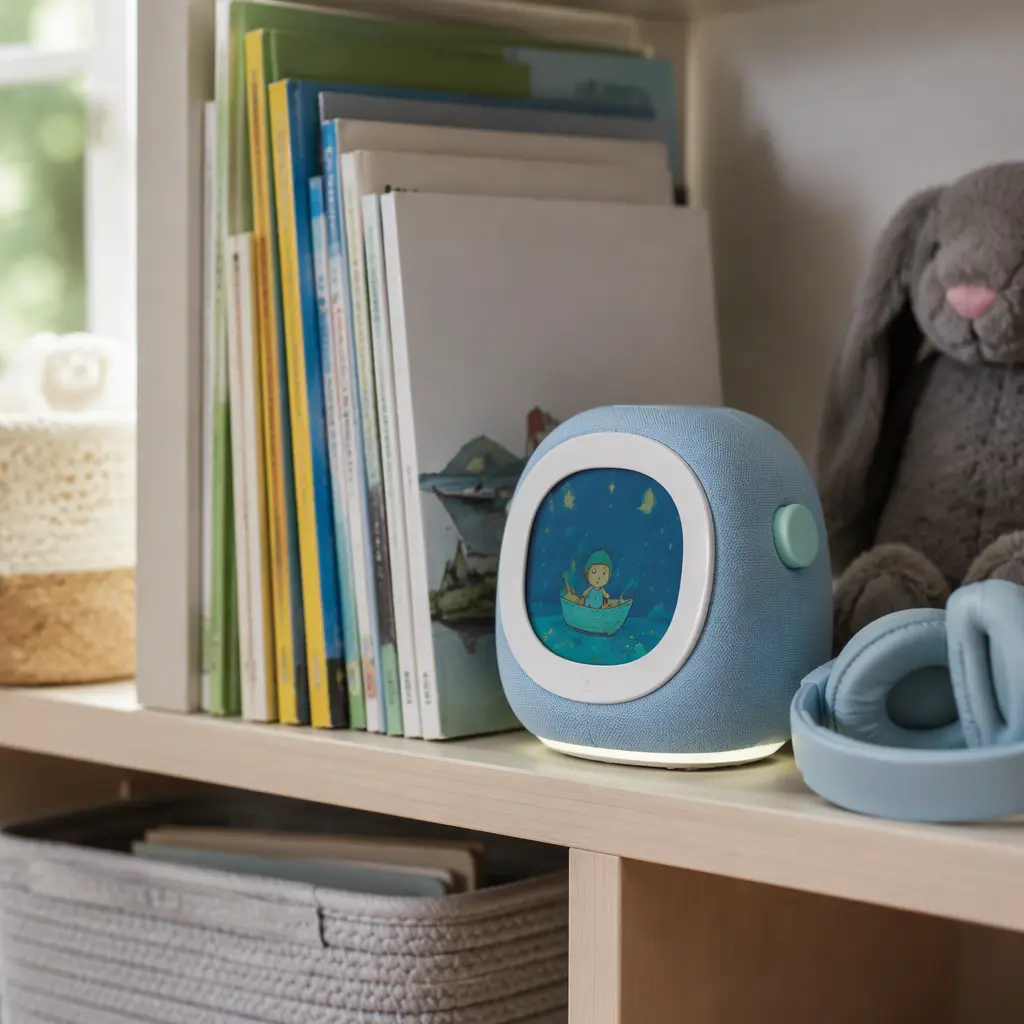
AI storytelling toys are designed to keep children talking, asking questions and building stories through voice interaction. For many families, that can be creative and engaging. For children who naturally overshare personal details, however, these toys raise extra questions about microphones, stored conversations and how much information leaves the home. The biggest difference between AI storytelling toys and older talking toys is that many connected models rely on cloud processing, companion apps or online accounts to generate responses. That means parents are not only choosing a toy, but also choosing a data-handling system and a level of ongoing connectivity.
What to look for
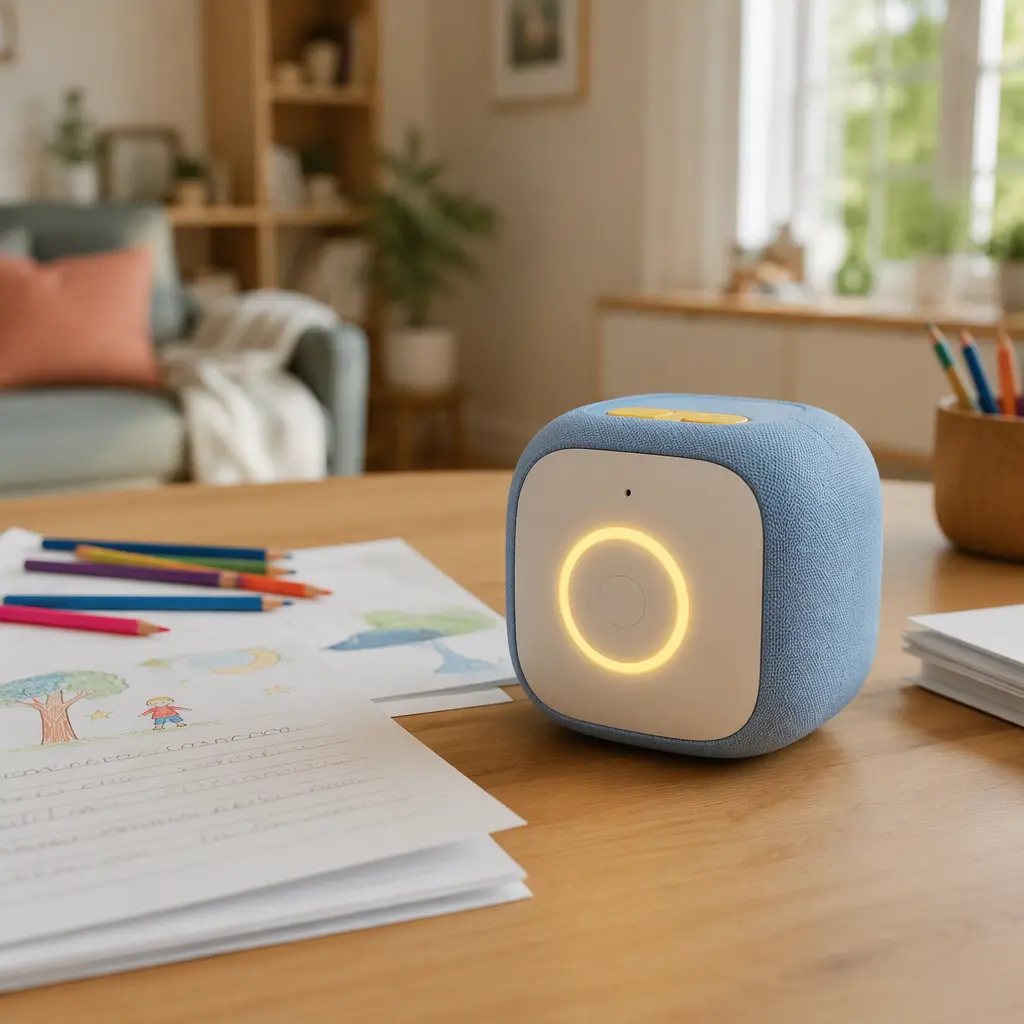
The safest and most practical AI storytelling toys for ages 6–8 tend to give parents clear control over recording features, account settings and internet access. Some products process speech locally on the device for simple interactions, while others send recordings to remote servers for AI-generated storytelling. Manufacturers may describe this as cloud-based AI, voice learning or conversational play. Parents should check whether the toy works meaningfully without an internet connection and whether stored voice clips can be reviewed or deleted.
- Microphone controls: Look for a physical mute switch or visible microphone indicator light rather than app-only controls.
- Conversation storage: Check whether voice recordings are saved, how long they are retained and whether parents can delete them.
- Parental controls: Some toys allow parents to limit contacts, disable open-ended chat features or review activity through an app.
- Offline usefulness: Toys that still offer stories, music or prompts offline are less dependent on servers and subscriptions.
- App and account requirements: Many connected toys require a parent account, Wi‑Fi setup and a compatible phone or tablet.
- Subscription costs: Some AI features rely on monthly credits, premium story libraries or paid cloud access.
- Response filtering: Manufacturer claims about child-safe responses vary widely and are not a substitute for supervision.
- Support life: Connected toys can lose features if servers shut down or apps stop receiving updates.
Age suitability
Children aged 6–8 are often imaginative enough to enjoy collaborative storytelling with AI toys, but they are also still learning what information should stay private. A child in this age range may casually share their full name, school, routines or family details if the toy asks open-ended questions. Kids who already treat voice assistants like conversational companions may need more guidance and boundaries with AI storytelling products than with traditional audio toys. Families looking for lower-risk options may prefer screen-free audio players, record-your-own story devices or non-connected interactive toys that respond with pre-programmed phrases rather than generative AI.
Options compared
AI storytelling toys generally fall into three broad categories. The first includes cloud-connected conversational companions that generate original stories or answer open-ended questions. These offer the most flexible interaction, but also involve the greatest privacy considerations because they often rely on remote servers and ongoing data processing. They may suit families comfortable managing accounts, app settings and supervised online play. They are less suitable for children who impulsively share personal information or for households that prefer minimal connected technology.
The second category includes semi-connected storytelling devices that use AI for limited functions such as creating prompts, remixing stories or selecting content based on preferences. These toys may store less conversational data because interactions are shorter and more structured. For many parents, this can be a middle-ground option that still feels interactive without encouraging constant back-and-forth conversation.
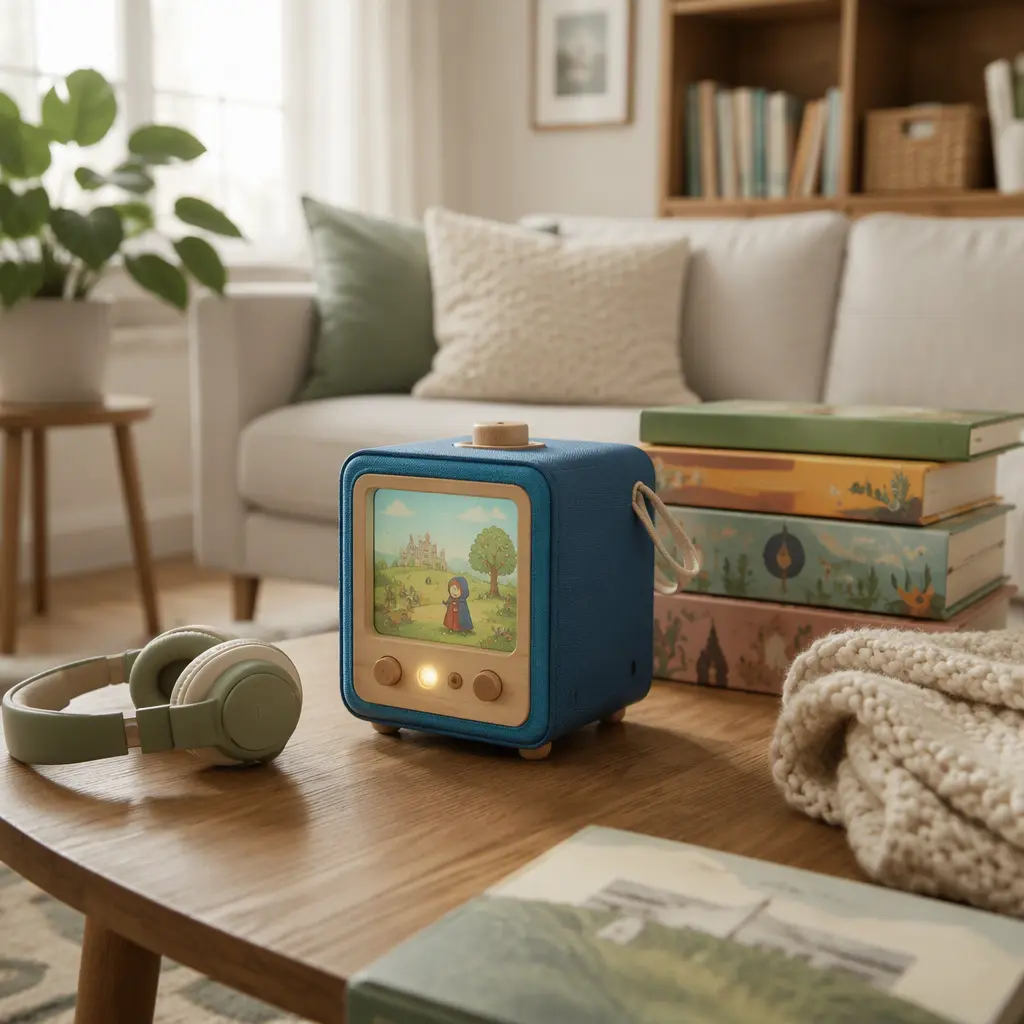
The third category includes non-AI storytelling toys that are sometimes marketed with smart language. These might use buttons, sensors or pre-recorded audio rather than true generative AI. Examples include audio storyboxes, electronic readers and interactive plush toys with fixed responses. They usually offer more predictable behavior, fewer privacy concerns and longer offline usefulness. The trade-off is that conversations feel less dynamic and replay value may depend on expanding a content library through purchased story packs or accessories.
- Cloud-connected AI storytellers: Most conversational and adaptive, but require the most parent oversight and reliable internet access.
- Semi-connected story creators: More structured interaction with fewer open-ended conversations and potentially lower data exposure.
- Offline electronic storytelling toys: Predictable and simpler to supervise, but less flexible and less conversational.
- Screen-free audio players: Strong option for families prioritizing privacy, quiet play and easy travel use.
- App-heavy smart toys: Useful for customizing content, though setup and ongoing compatibility can frustrate some households.
Frequently asked questions
Do AI storytelling toys always record children?
Not always, but many connected voice toys process spoken input through microphones. Some manufacturers state that recordings are temporarily stored to improve responses or safety systems. Others may retain clips longer for account history or training purposes. Parents should read the privacy policy and device settings before setup.
Are these toys safe to use without supervision?
For most children aged 6–8, occasional supervision is still sensible. AI systems can misunderstand requests, produce inaccurate information or encourage extended conversations. Shared spaces make it easier for parents to notice what kinds of questions the child is asking and what details they reveal.
What parental controls matter most?
The most useful controls are usually microphone muting, conversation history deletion, restricted contact features and limits on open internet access. A strong parent dashboard is often more valuable than extra entertainment features. Some products also allow parents to disable personalized memory functions.
Do AI storytelling toys work without Wi‑Fi?
It depends on the product. Some toys can still play downloaded stories or basic activities offline, while others lose most interactive features without internet access. Parents who travel frequently or want a toy for quiet offline use should confirm this before buying.
Are simpler storytelling toys a better choice for privacy?
For families concerned about oversharing, simpler offline storytelling toys are often easier to manage. Recordable story devices, audiobook players and non-connected interactive toys typically collect far less data because they do not rely on cloud-based conversations. They may not feel as personalized, but they usually involve fewer ongoing privacy decisions.
AI storytelling toys can be imaginative tools when families understand how the connected features work and set realistic boundaries around them. For children who talk freely with devices, the best choice is often the toy that gives parents the clearest controls and the least unnecessary data collection rather than the one with the most advanced AI features. A quieter, more limited storytelling device may ultimately fit family life better than a highly conversational toy that depends heavily on cloud services and constant interaction.