Best AI Toys With Physical Off Buttons for Kids
A parent-focused guide to AI and connected toys for ages 6–8 that include clear microphone or camera off controls, with practical advice on privacy, offline play and app dependence.
Compare prices and availability
Check current prices and availability for this guide on eBay.
As an eBay Partner, we may be compensated if you make a purchase.
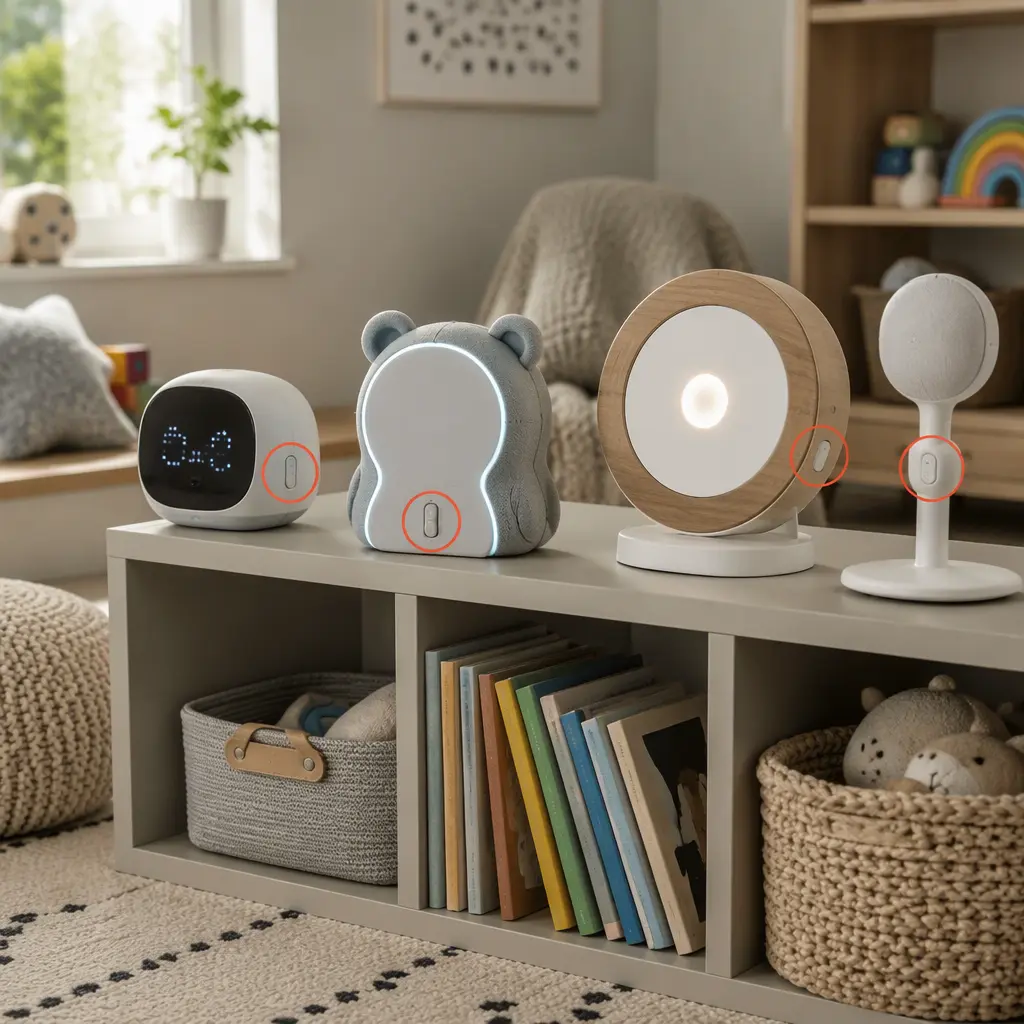
Parents looking at AI or connected toys for ages 6–8 often want the interactive features without creating a device that is always listening or always online. A physical microphone or camera off switch can make a real difference because it gives children and adults a clear, visible way to disable recording features without digging through an app menu. The most useful options still offer worthwhile play when those features are turned off, whether that means offline games, programmable movement, storytelling, music, coding activities or animatronic responses stored on the device itself. The challenge is separating genuine AI features from simpler voice triggers or pre-programmed sensors, while also checking how much the toy depends on cloud services, subscriptions or a companion app.
What to look for
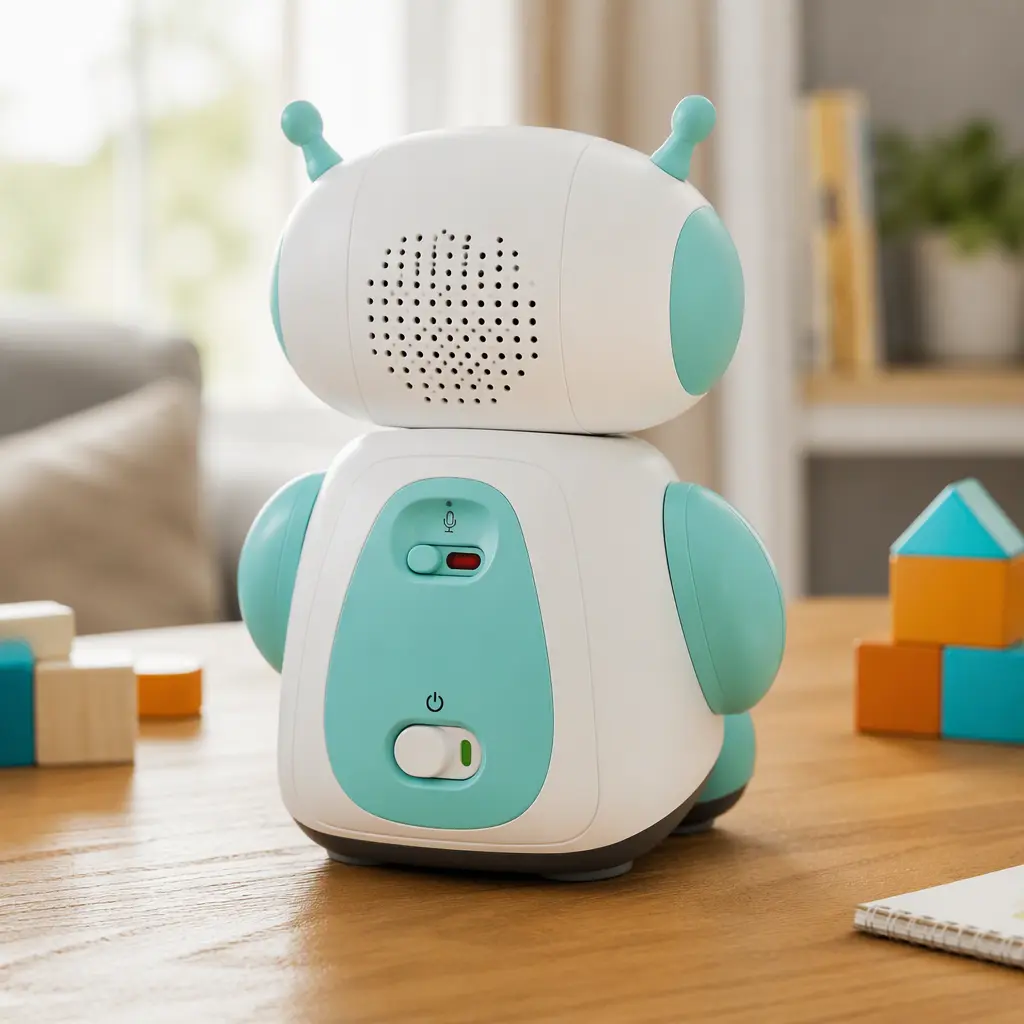
Not every connected toy handles privacy and offline use the same way. Some toys only use local processing for simple commands, while others send recordings or prompts to cloud services. For children in the 6–8 range, toys work best when they balance independence with straightforward controls that parents can verify at a glance. Physical switches matter because they are easier for children to understand than software-only privacy settings. It is also worth checking whether the toy still functions as a game, robot or creative tool when the smart features are disabled.
- Look for a dedicated hardware mute switch or sliding camera cover rather than app-only controls.
- Check whether the toy still works offline for core play activities such as coding, movement, storytelling or puzzles.
- Read how the manufacturer describes data storage, cloud processing and parental controls.
- Confirm device compatibility if the toy needs a phone or tablet for setup or updates.
- Consider whether ongoing subscriptions, credits or accounts are required for advanced AI features.
- Pay attention to noise levels, especially with voice assistants, robot pets and talking companions.
- Think about charging habits and storage space because larger connected toys often need docking stations or cables.
Age suitability
Children aged 6–8 are usually ready for connected toys that involve simple coding, conversational prompts, creative storytelling or interactive games, but they still benefit from clear boundaries around online access and recording features. Many children in this range enjoy robot companions and AI-enhanced building kits because they can explore cause and effect without needing constant adult help. Simpler physical controls are especially important here because younger children may not reliably navigate privacy menus or account settings. Families who prefer lower-tech play may find that programmable robots with offline modes are a better fit than cloud-dependent conversational toys. Children who become frustrated by setup delays or Wi-Fi interruptions may also prefer toys that continue functioning normally without internet access.
Options compared
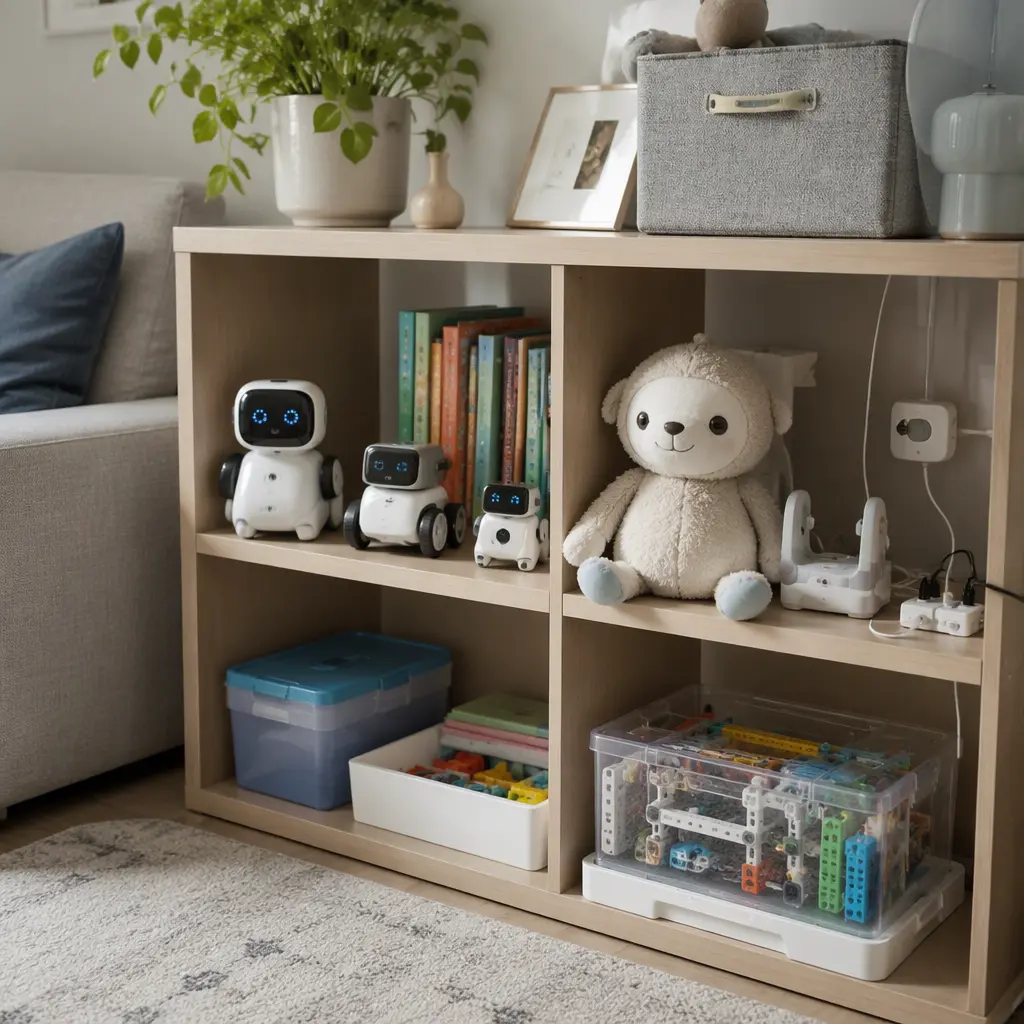
Programmable robots are often the strongest choice for families who want AI-adjacent features without heavy cloud dependence. Many coding robots for children use local processing for movement, obstacle detection or simple voice responses, and several include clear hardware power switches or mute controls. These suit children who enjoy building challenges, sequencing and hands-on problem solving. They also tend to remain useful even if app support changes later because the core play pattern is based on movement and coding rather than online conversation.
Interactive companion toys and AI chat-style toys are more mixed. Some include physical microphone toggles and continue offering music, lights or pre-loaded games offline, while others lose most functionality without an internet connection. These toys can appeal to children who enjoy imaginative role-play and conversation, but parents should look carefully at how recordings are processed and whether conversations are stored. Cloud-reliant products may also face shorter support lifespans if servers or apps are discontinued.
- Coding robots: Best for STEM-focused families, quieter independent play and longer offline usefulness. Usually less dependent on subscriptions.
- Interactive plush or companion robots: Better for children who enjoy emotional engagement and storytelling, but often rely more heavily on microphones and cloud features.
- Smart building kits: Good balance between physical play and app interaction. Storage space and setup time can be higher.
- Voice-assistant-style toys: Convenient for music and questions, but typically less appealing for families prioritizing minimal data collection.
- Animatronic pets with limited AI: Often marketed as AI toys even when responses are mostly sensor-based. Easier to use offline but sometimes repetitive over time.
Frequently asked questions
Do physical mute switches really improve privacy?
They can help because they provide a direct hardware control that visibly disables microphones or cameras. However, the level of protection depends on the product design and how clearly the manufacturer explains the feature. Parents should still review app permissions, account settings and update policies.
Are AI toys useful without internet access?
Some are. Coding robots, sensor-driven interactive toys and downloadable activity kits often continue working offline for core play. Conversational AI toys that depend on cloud processing may lose major features when disconnected. Checking offline functionality before buying can prevent disappointment later.
What is the difference between AI toys and regular electronic toys?
Many products marketed as AI toys actually use simple programmed responses, motion sensors or voice triggers rather than advanced AI systems. True AI-enabled toys may adapt responses, process speech through cloud services or generate dynamic interactions. The distinction matters because more advanced features often involve greater internet dependence and data handling.
Should parents avoid toys with cameras?
Not necessarily, but camera-equipped toys deserve closer review. A physical lens cover or hardware camera switch is preferable to software-only controls. Parents should also check whether images stay on the device, upload to cloud storage or require account sharing.
How long do connected toys usually stay supported?
Support periods vary widely. App updates, cloud services and compatibility with newer devices can change over time. Toys with strong offline play value generally age better because they continue functioning even if online features become limited later.
For most families with children aged 6–8, the safest buying approach is to prioritize connected toys that remain fun when microphones or cameras are switched off. Physical privacy controls are most useful when they support, rather than replace, solid offline play. Coding robots and smart building kits usually offer the best balance between interactive features, longevity and manageable privacy trade-offs, while heavily cloud-based companion toys may require more ongoing oversight from parents.