Beginner Electronic Toys That Teach Cause and Effect
A parent-friendly guide to screen-free electronic toys for ages 1–2 that respond to actions with lights, sounds, and motion, helping toddlers learn cause and effect safely.
Compare prices and availability
Check current prices and availability for this guide on eBay.
As an eBay Partner, we may be compensated if you make a purchase.
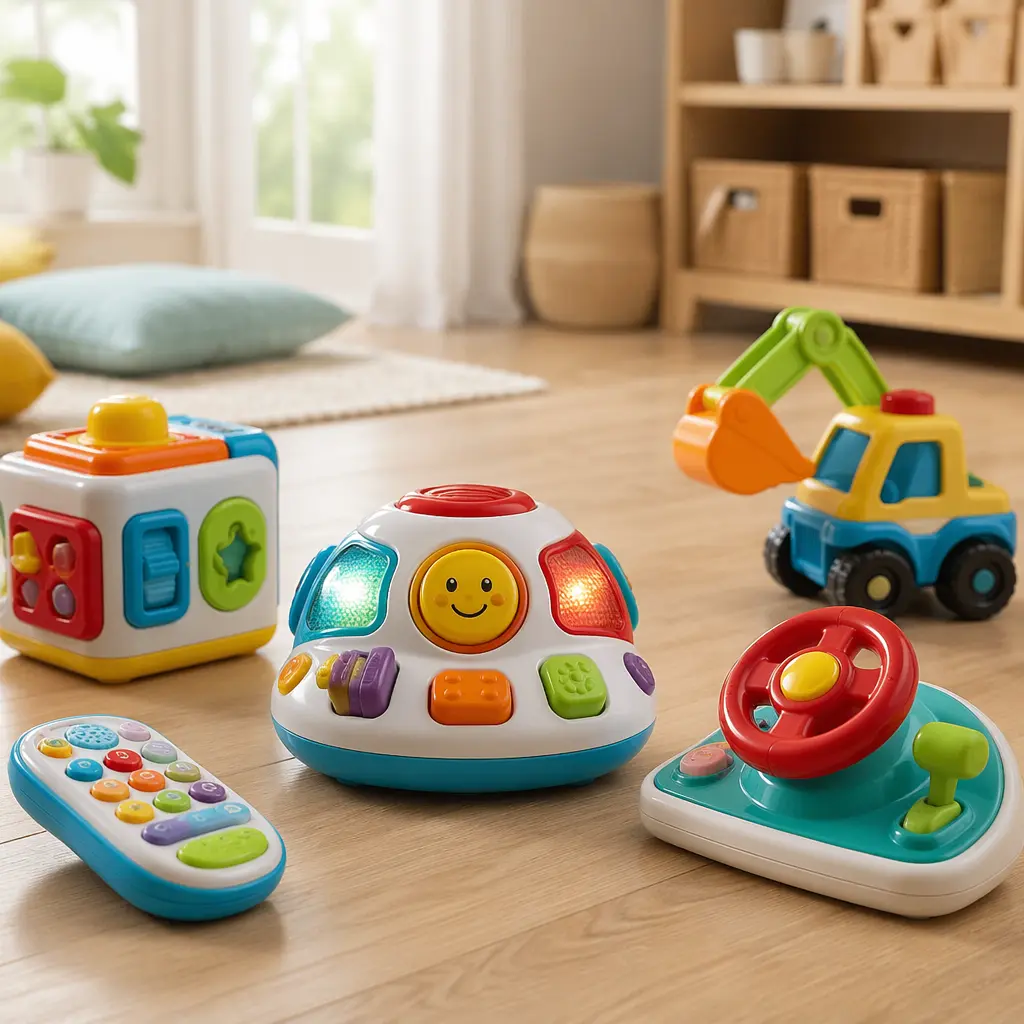
Cause and effect is one of the first big ideas toddlers learn: press a button and something happens; shake a toy and it responds. Beginner electronic toys can make this connection clear and rewarding without using screens. For children ages 1–2, the best options are simple, sturdy, and predictable, offering lights, sounds, or movement in response to an action they control.
What to look for
Not all electronic toys are equally helpful for early learning. At this age, the goal is to make the connection between action and result obvious, while keeping play calm and developmentally appropriate.
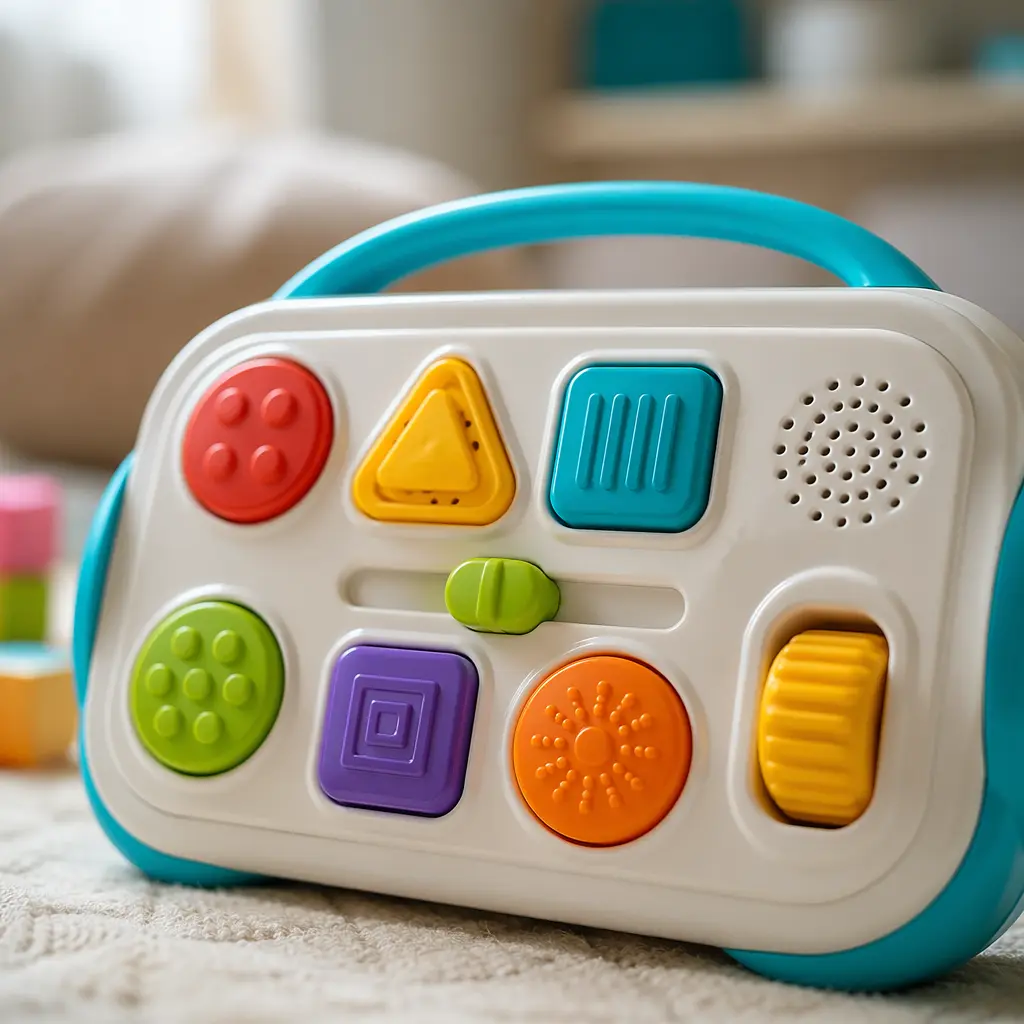
- Clear responses: One action should trigger one result, such as a light turning on or a sound playing.
- Large, easy controls: Big buttons, switches, or knobs that work with developing fine motor skills.
- Limited stimulation: A few sounds or lights are better than constant noise or flashing.
- Durable design: Thick plastic or sealed components that can handle drops and mouthing.
- Volume control: Adjustable or naturally soft sounds to protect sensitive ears.
- Battery access safety: Secured compartments that require a tool to open.
Age suitability
For children between 12 and 24 months, electronic toys should match short attention spans and emerging motor control. Younger toddlers benefit from toys that respond instantly to simple actions like pressing or tapping. Closer to age two, children may enjoy toys with two-step interactions, such as pressing a button to activate a moving part. Avoid toys designed for older preschoolers, as complex sequences can frustrate rather than teach.
Standout categories or types
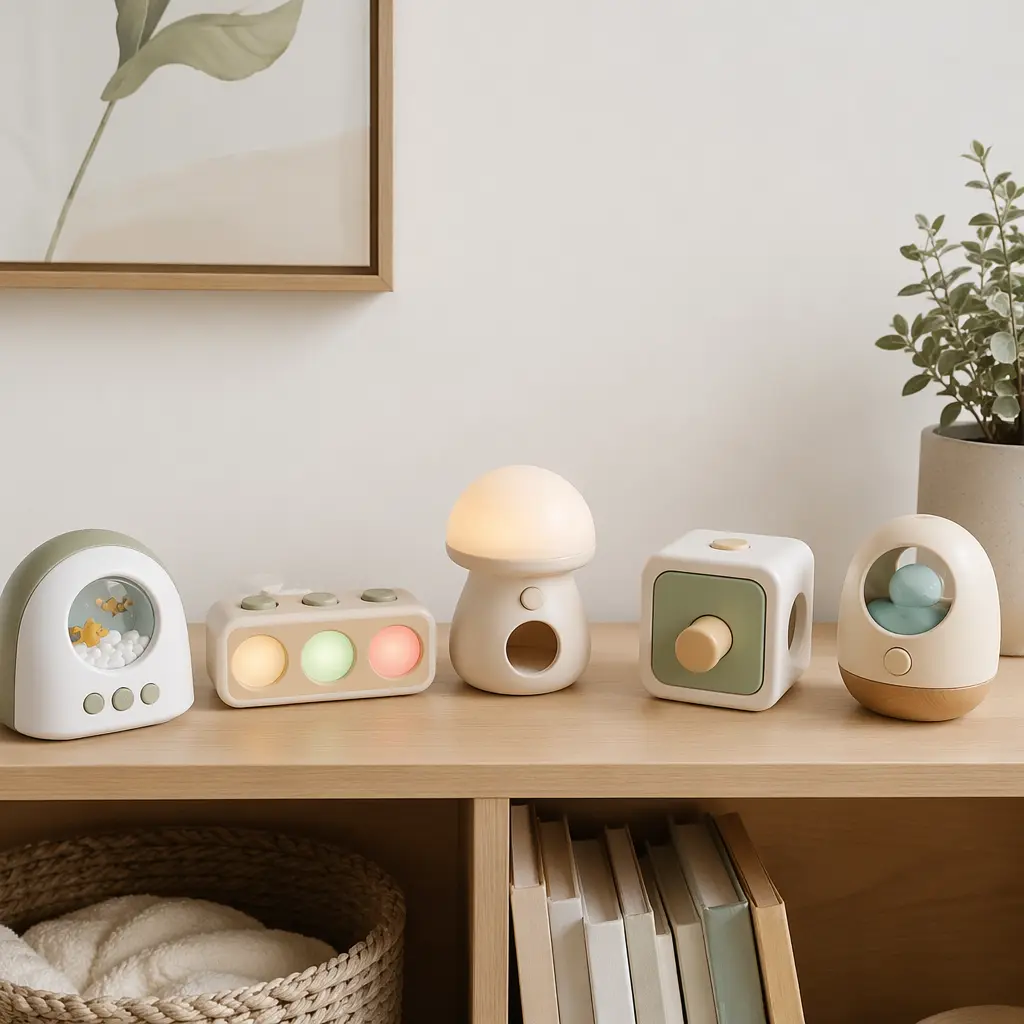
Beginner electronic toys come in a few broad categories, each offering a slightly different learning experience. Choosing a mix can help keep play varied without overwhelming your child.
- Button-and-light toys: Pressing a button turns on a light or plays a short sound, reinforcing direct cause and effect.
- Motion-activated toys: Rolling, shaking, or tipping the toy triggers a response, encouraging movement and exploration.
- Pop-up or action toys: An electronic cue causes a door to open or a figure to move, adding visual surprise.
- Musical response toys: Simple notes or rhythms play when a child interacts, supporting early auditory learning.
- Everyday-object toys: Toy phones, remotes, or switches that mimic real actions without screens.
Frequently asked questions
Are electronic toys okay for toddlers?
Yes, when chosen carefully. Simple electronic toys that respond to a child’s actions can support learning without replacing hands-on play. The key is avoiding screens and overly complex features.
How are these different from screen-based toys?
Screen-free electronic toys use physical interaction—pressing, shaking, or moving—to trigger responses. This keeps the focus on motor skills and real-world cause and effect rather than passive watching.
What sounds or lights are best for this age?
Short, gentle sounds and steady lights work best. Loud music or rapid flashing can be overstimulating and make it harder for toddlers to understand what action caused the response.
How many electronic toys should a toddler have?
A small number is usually enough. Rotating toys in and out of play keeps them interesting while leaving room for non-electronic toys like blocks and books.
Beginner electronic toys can be a helpful part of a toddler’s play environment when they are simple, screen-free, and thoughtfully chosen. By focusing on clear cause-and-effect responses and age-appropriate design, parents can support early learning while keeping playtime engaging and manageable.