Best UK AI Desk Robots for Teens With Small Bedrooms
A practical guide to AI desk robots for UK teens, comparing footprint, charging, noise, privacy and offline use to help families decide which gadgets earn their desk space.
Compare prices and availability
Check current prices and availability for this guide on eBay.
As an eBay Partner, we may be compensated if you make a purchase.
AI desk robots are becoming more common in teen bedrooms, blending elements of smart speakers, digital pets and programmable gadgets into devices designed to sit permanently on a desk or shelf. For families dealing with limited bedroom space, the main question is not just which robot looks interesting, but whether it earns the room it takes up. The practical differences matter: some rely heavily on cloud services and constant app connections, while others work more like animated companions with limited offline features. Charging methods, fan noise, camera placement, subscription costs and storage footprint can make one model easy to live with and another frustrating in a small shared home.
What to look for
The biggest mistake buyers make with AI desk robots is focusing only on personality features or animations. In a small bedroom, practical considerations quickly become more important than novelty. Some robots need permanent docking stations, while others can be picked up and moved easily between a desk, bedside table or living room. Devices marketed as AI companions also vary widely in what “AI” actually means. Some use cloud-based conversational systems with microphones and app accounts, while others mainly rely on pre-programmed responses, motion sensors or simple voice commands.
- Desk footprint matters more than height. Wide charging docks and cable routing can take more usable space than the robot itself.
- Check whether the robot works without Wi-Fi. Some lose most features when offline, while simpler models still function as timers, alarms or programmable gadgets.
- Look for microphone and camera controls. Physical mute switches and visible camera shutters are easier for families to manage than app-only settings.
- Consider charging habits. Robots that need frequent docking may become awkward in crowded study areas with laptops, lamps and gaming accessories.
- Noise levels vary. Small wheel motors, cooling fans and voice responses may become distracting in shared bedrooms or during homework.
- App dependence differs by brand. Some robots require regular phone app interaction, account creation or cloud logins just to access core features.
- Subscription fees or AI credits can affect long-term value. A lower upfront price does not always mean lower ongoing cost.
- Regional support matters in the UK. Some connected gadgets launch in North America first, with delayed features, limited voice support or uncertain replacement parts in Britain.
Age suitability
Most AI desk robots marketed toward teens suit older secondary-school ages better than younger children. The appeal usually comes from customisation, coding features, conversational AI or productivity functions rather than active toy play. Teens interested in robotics, programming or smart-home technology may get more long-term use from these devices than those mainly seeking entertainment. Small bedroom setups also favour compact stationary robots over larger rolling models designed to patrol floors. Families should also consider whether the robot is genuinely independent hardware or essentially a smart speaker with moving parts. In many cases, a teen already using a phone, laptop and headphones may not benefit much from another connected device unless it offers a specific creative or educational use.
Options compared
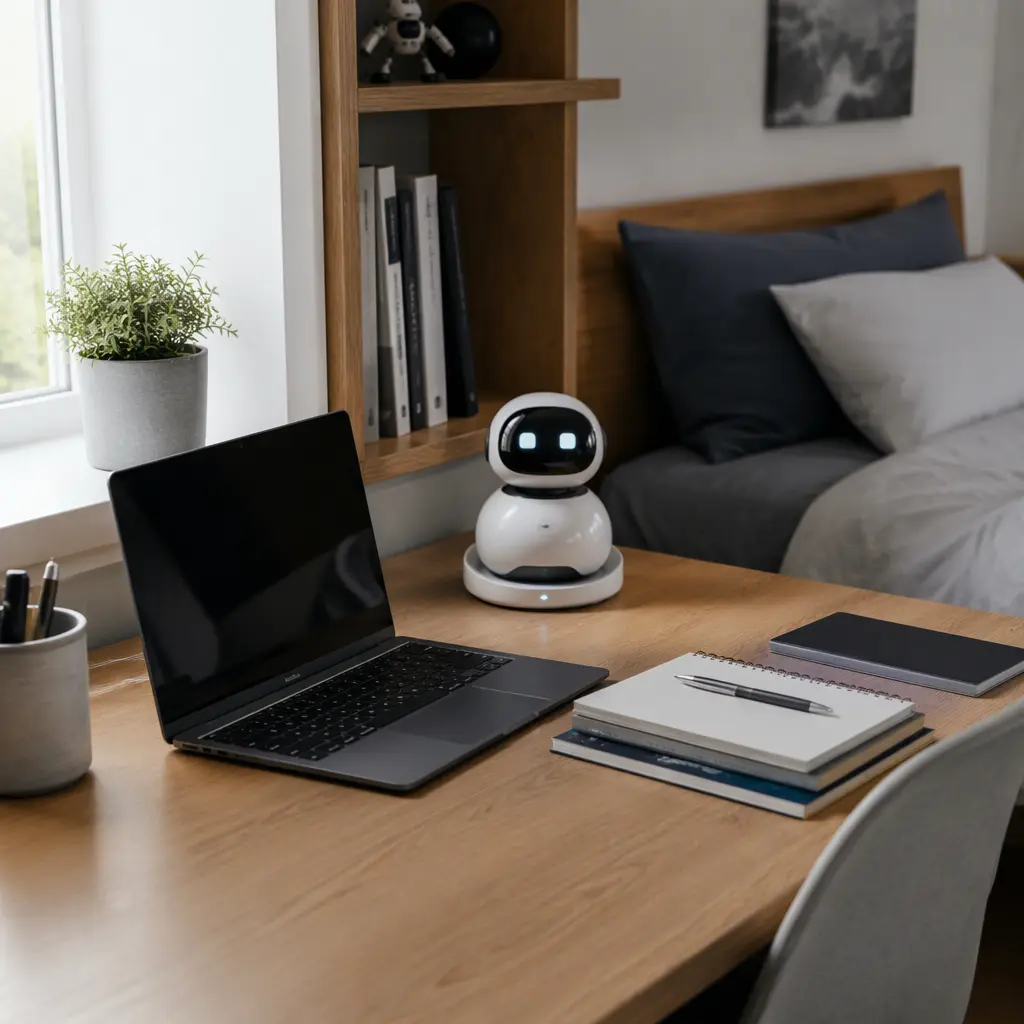
The smallest category includes stationary desktop companions roughly the size of a smart speaker or alarm clock. These usually fit best in tight bedrooms because they need minimal floor space and can sit beside monitors or books without dominating the desk. Products in this group often focus on conversational AI, reminders, music control or animated expressions. Their main trade-off is dependence on cloud services and apps. If servers change or support ends, features may shrink significantly over time.
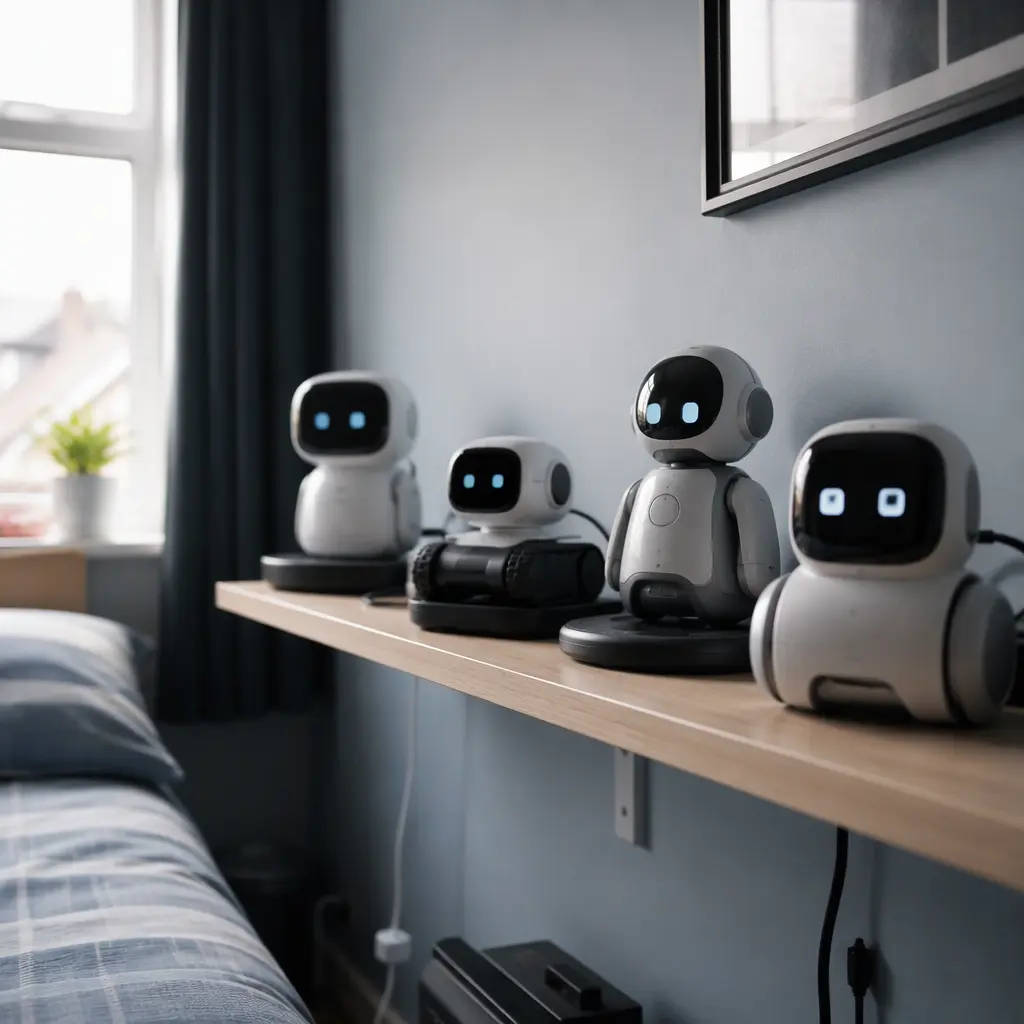
Mid-sized interactive robots add wheels, arms or expressive movement. Popular examples in the wider consumer robotics market include companion-style robots similar to Vector or EMO. These can feel more engaging because they react physically to voices, touch or nearby movement. However, they often require dedicated charging pads and clear desk edges to avoid falls. In small bedrooms, cable clutter and docking placement become important. Motion also increases noise, which may not suit shared rooms or late-night study sessions.
- Stationary AI companions: Best for limited desk space, lower noise and casual interaction. Less physically interactive and often heavily cloud-dependent.
- Programmable coding robots: Better for STEM-focused teens who want scripting or robotics learning. May require laptops, accessories or extra workspace.
- Mobile companion robots: More expressive and entertaining but usually noisier, larger and harder to position safely on crowded desks.
- Smart-speaker hybrids with screens: Useful for alarms, calendars and music, but they may overlap heavily with functions already available on phones or tablets.
- Subscription-based AI devices: Potentially more advanced conversations and updates, but long-term costs and service lifespan should be considered before buying.
Frequently asked questions
Do AI desk robots work without internet access?
Some do, but functionality varies widely. Offline features may include simple movement, timers, alarms or pre-loaded responses. More advanced conversational systems usually depend on cloud processing and may lose key features without Wi-Fi.
Are AI desk robots useful for studying?
A few models include reminders, scheduling tools, coding exercises or voice assistants that can support organisation. However, many are primarily novelty gadgets. Families should compare the robot’s functions against devices the teen already owns, such as a phone or smart speaker.
How much desk space do these robots really need?
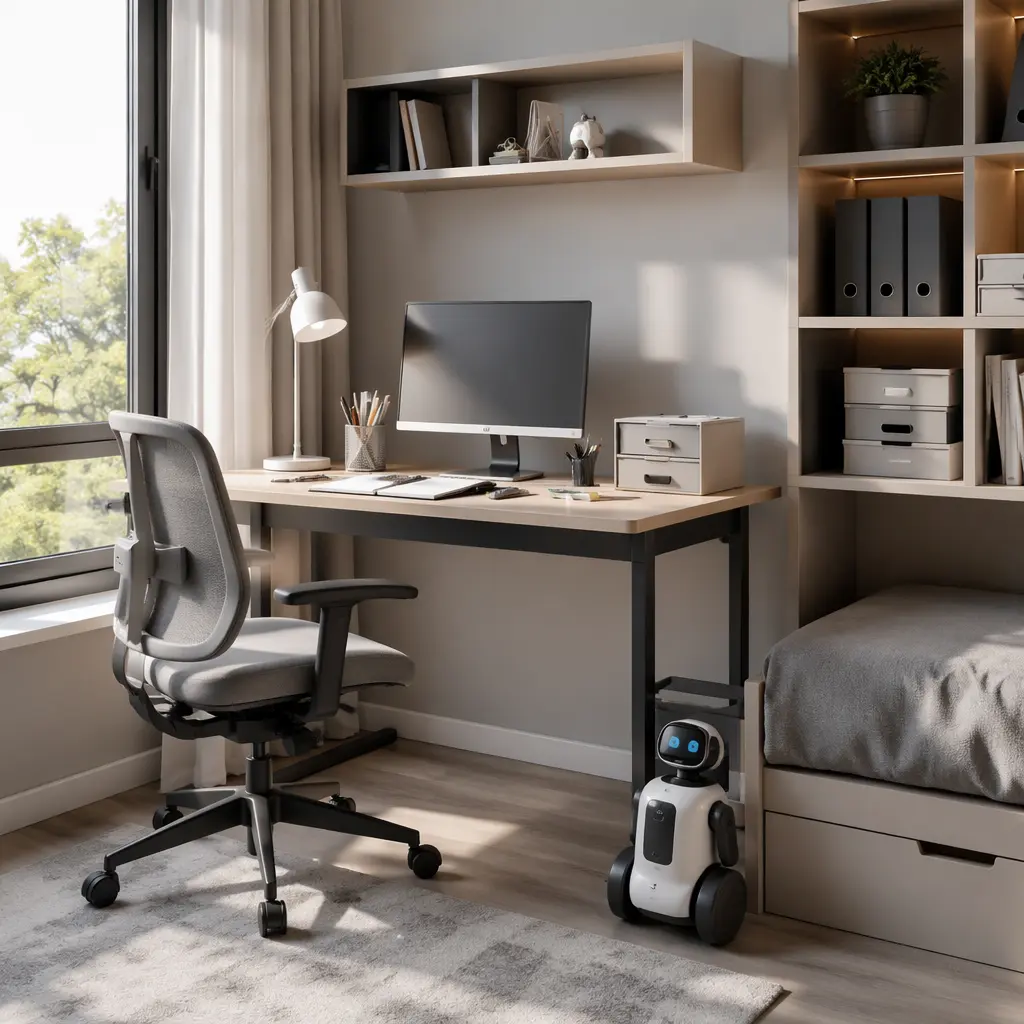
The charging dock and clearance area are often more important than the robot itself. Wheeled robots may need protected edges and open movement space, while stationary models can fit into much tighter setups beside monitors or bookshelves.
Are desk robots noisy?
Noise levels differ significantly. Voice responses, wheel motors, cooling fans and charging chimes can become noticeable in small bedrooms. Stationary robots are usually quieter than mobile ones, especially during overnight charging.
Do AI desk robots raise privacy concerns?
Potentially, yes. Many include microphones and sometimes cameras for interaction features. Buyers should check whether recordings are stored in the cloud, whether voice data can be deleted and whether the device includes hardware mute controls.
For teens with small bedrooms, the best AI desk robot is usually the one that fits naturally into an existing study setup without creating extra clutter, noise or subscription costs. Compact stationary models often make more sense than larger roaming robots, especially where desk space is already shared with schoolwork, gaming or art supplies. Families comparing options should treat these devices as long-term connected electronics rather than simple toys, paying close attention to privacy controls, support life and how useful the robot remains once the novelty wears off.