Yoto Mini 2026 vs Toniebox Lite for Bedtime Independence
A parent-focused comparison of Yoto Mini 2026 and Toniebox Lite for bedtime independence, covering easy controls, charging, story selection, offline use, subscriptions and overnight practicality.
Compare prices and availability
Check current prices and availability for this guide on eBay.
As an eBay Partner, we may be compensated if you make a purchase.
For many families, bedtime audio players are less about entertainment and more about reducing repeated trips into a child’s room. The key question is whether a preschooler can start, stop and switch stories alone without needing help with menus, charging cables or apps. Yoto Mini and Toniebox Lite approach that goal differently. Yoto Mini uses cards, buttons and a small display, while Toniebox Lite relies on placing character figures on top of a padded speaker box. Both are designed for young children, but they suit different levels of independence, household routines and tolerance for connected features.
What to look for
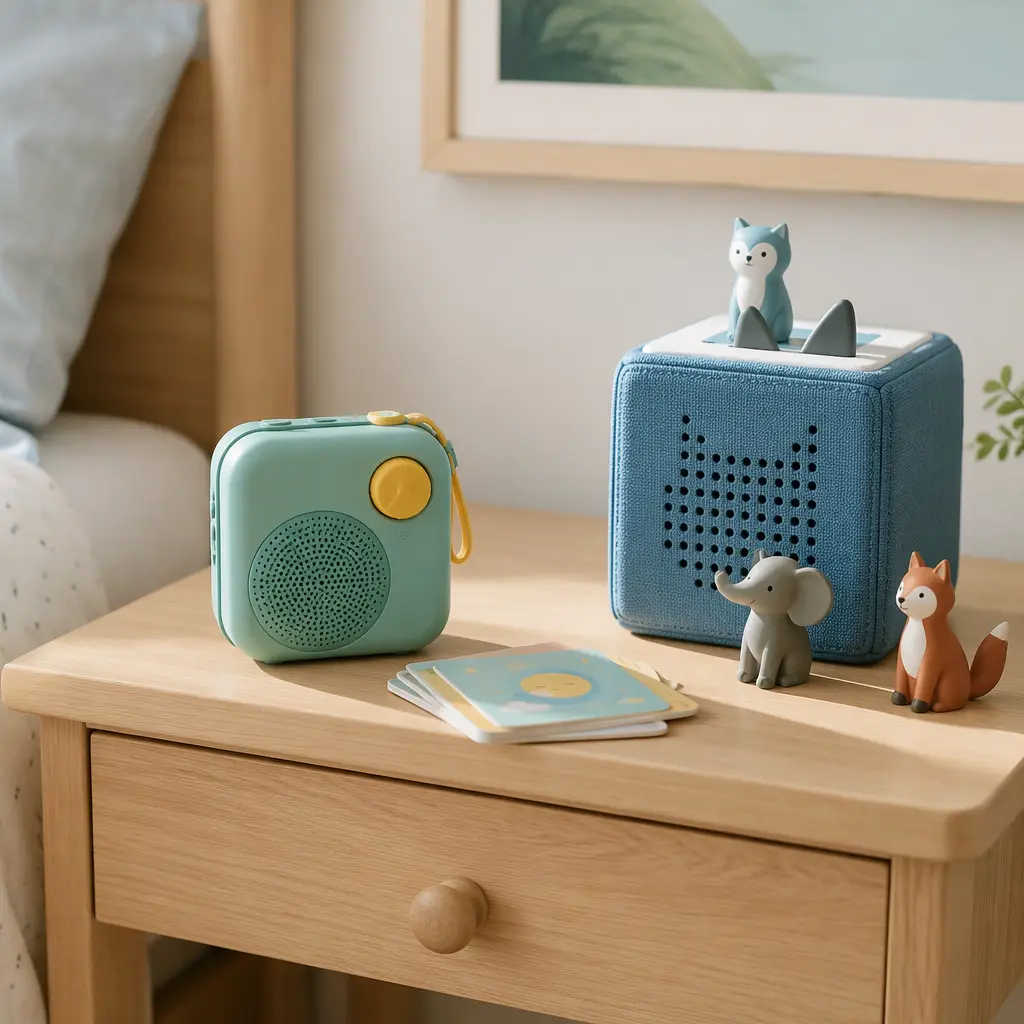
For bedtime independence in the 3 to 5 age range, the easiest systems are the ones that reduce fine-motor frustration and decision overload. Preschoolers often manage large physical controls more confidently than touchscreens or voice assistants. Parents should also think about what happens at 2 a.m. when a device stops charging, loses Wi‑Fi or cannot find the right story. Connected audio toys vary widely in how much they still work offline after setup.
- Simple physical controls that can be used in the dark without reading
- Charging methods that preschoolers can manage safely, such as magnetic docks over loose cables
- Offline playback after content is downloaded, especially for travel or unreliable Wi‑Fi
- Durable construction that tolerates drops from beds or bedside tables
- Clear volume limits and headphone compatibility for shared bedrooms
- Story selection that avoids frustration from tiny cards, fiddly figurines or crowded shelves
- Parental app controls for setup, but minimal need for ongoing adult intervention
- Storage needs for cards or figurines, since missing pieces can derail bedtime routines
Age suitability
Both Yoto Mini and Toniebox Lite target younger children, but their independence curve differs slightly. Many 3-year-olds can quickly understand Tonie-style figure placement because the interaction is highly physical and visible. Picking up a figure and placing it on top of the box is usually easier than inserting cards carefully. Yoto Mini may suit older preschoolers within this age band, especially children already comfortable with matching cards or navigating simple button controls. The Yoto approach can also scale more naturally as children grow into longer stories, music and educational audio. Families wanting one system to last beyond preschool may prefer that flexibility, while families prioritizing the simplest possible bedtime interaction may lean toward the figure-based system.
Options compared
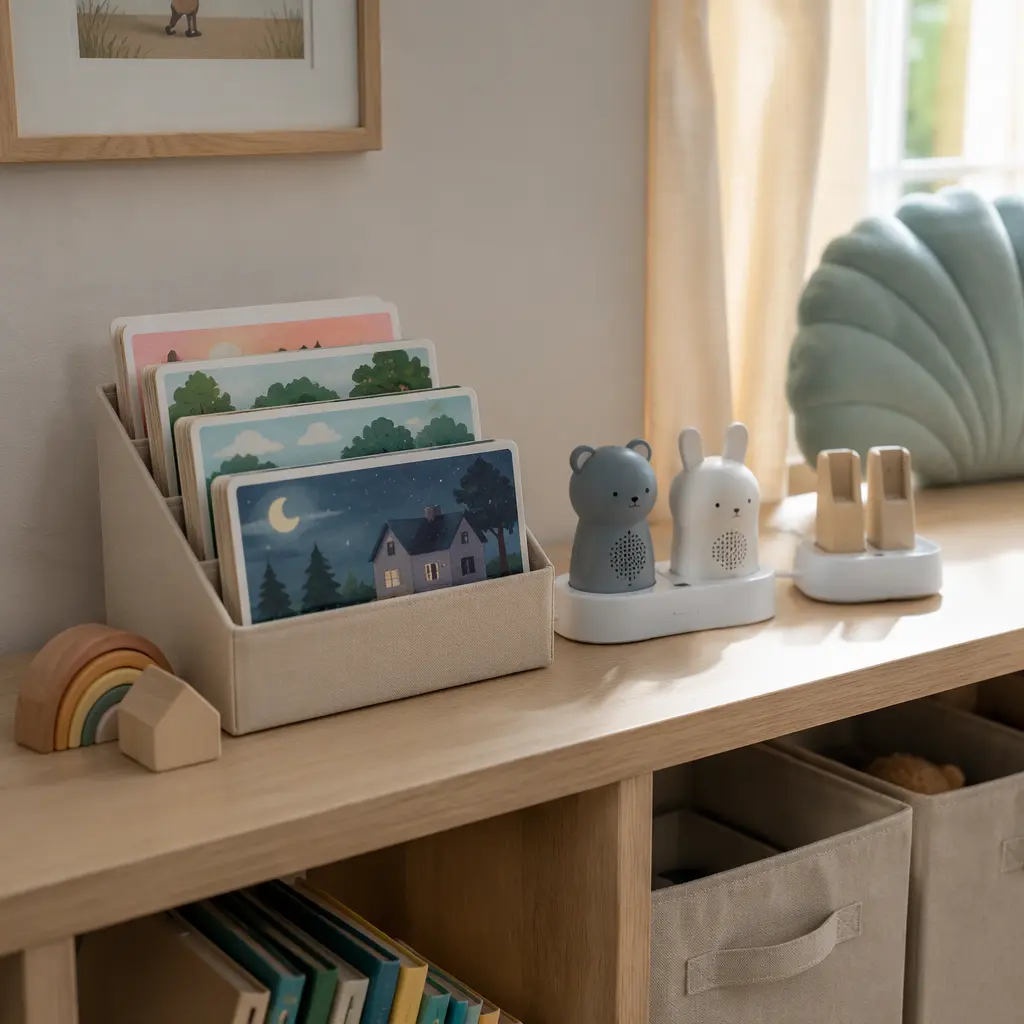
Yoto Mini focuses on portability and compact controls. Children insert physical cards to start audio, and the player can continue working offline once content has been downloaded through the companion app. For bedtime independence, the biggest advantage is predictable playback: a child can often swap cards without needing a phone nearby. The trade-off is that cards are easy to misplace, and younger preschoolers may struggle with insertion alignment in low light. Charging can also require more adult involvement if the child is not using a dock-style accessory. The smaller size is useful for travel, but it can slide off beds more easily than a heavier speaker box.
Toniebox Lite-style systems prioritize tactile interaction over compactness. A child places a figurine on the box and audio starts automatically. For many 3-year-olds, that is the simplest independent interaction available in a connected audio toy. The padded exterior also tends to suit rougher handling and accidental drops. However, figurines take up more storage space than cards, and bedtime routines can become frustrating if the desired character is missing. Families should also consider long-term costs, since expanding the library usually means buying additional physical figures. Compared with Yoto, the system may feel less portable and less adaptable for older children wanting broader audio choices.
- Choose Yoto Mini if your child enjoys selecting from a wider range of stories, music or educational content and can manage cards independently.
- Choose Toniebox Lite if your main priority is the simplest possible bedtime controls for younger preschoolers.
- Yoto Mini generally fits smaller bedrooms and travel bags more easily.
- Tonie-style systems may work better for children who are hard on electronics or dislike precise button controls.
- Families wanting less shelf clutter may prefer cards over larger figurines.
- Families trying to avoid ongoing purchases should compare how each platform handles included content, subscriptions and add-on audio.
Frequently asked questions
Can preschoolers really manage these players alone at bedtime?
Many can, but success depends on the child’s motor skills and the bedroom setup. Tonie-style figure placement is often easier for younger children, while Yoto’s card system may require slightly more coordination. Keeping stories organized and chargers accessible matters as much as the device itself.
Do these audio toys need Wi‑Fi every night?
Most connected audio systems download content during setup and can then play it offline. Parents should still check manufacturer guidance because some features, updates or new content may require internet access. Offline playback is especially important for travel and overnight reliability.
Which option is quieter for shared bedrooms?
Both systems include speaker playback, and some versions support headphones. For siblings sharing a room, look for easy nighttime volume adjustment and stable low-volume playback. Large physical controls are usually easier for children to manage quietly in the dark.
Are there privacy concerns with connected audio toys?
Parents should review what information is collected through companion apps and whether cloud accounts are required. Some systems store listening libraries and user settings online. Checking privacy policies, parental controls and support commitments is worthwhile before building a large content library.
Which system travels better?
Yoto Mini is generally more compact for car trips and flights, especially if a child only needs a few cards. Tonie-style systems are bulkier because of the figurines, although some children find the larger controls easier to use away from home.
The better bedtime audio player is usually the one a child can operate consistently without adult troubleshooting. Families prioritizing maximum simplicity for younger preschoolers may prefer the figure-based approach of Toniebox Lite, while families wanting portability and broader long-term flexibility may find Yoto Mini more practical. Looking beyond the story library to charging habits, storage space, offline reliability and app dependence will lead to a smoother bedtime routine.