Curio AI Bear vs Yoto Mini for Bedtime Anxiety
A parent-focused comparison of Curio AI Bear and Yoto Mini for younger children with bedtime anxiety, including offline use, microphones, routines, privacy and sleep-friendly trade-offs.
Compare prices and availability
Check current prices and availability for this guide on eBay.
As an eBay Partner, we may be compensated if you make a purchase.
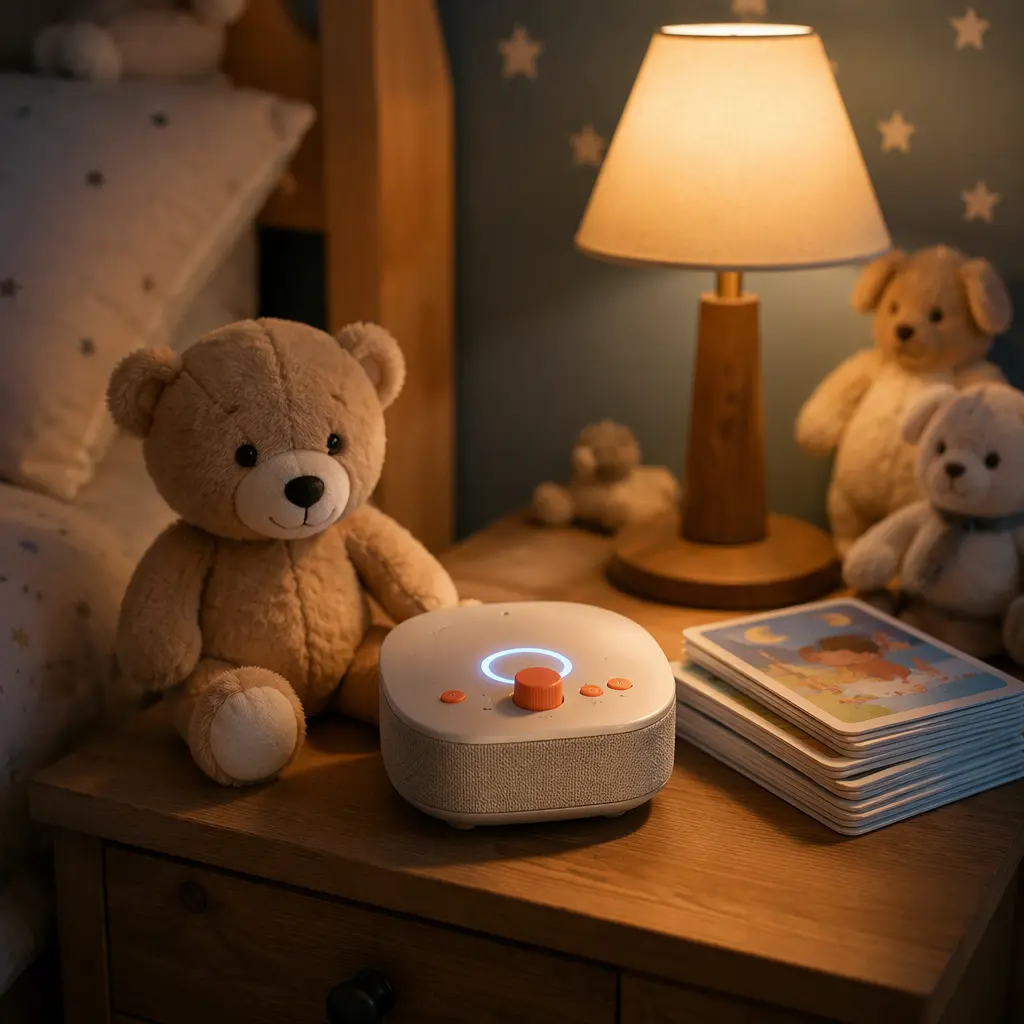
For children aged 3 to 5, bedtime anxiety often shows up as repeated requests, resistance to sleeping alone, or difficulty settling after lights-out. Audio toys can sometimes help by creating predictable routines and offering familiar voices, stories or calming sounds without introducing a bright screen. Curio AI Bear and Yoto Mini approach this in very different ways. Curio AI Bear is built around conversation and responsive interaction, while Yoto Mini is primarily an audio player with simple controls and optional connected features. Choosing between them depends less on novelty and more on how your child responds to stimulation, routine and independence at bedtime.
What to look for
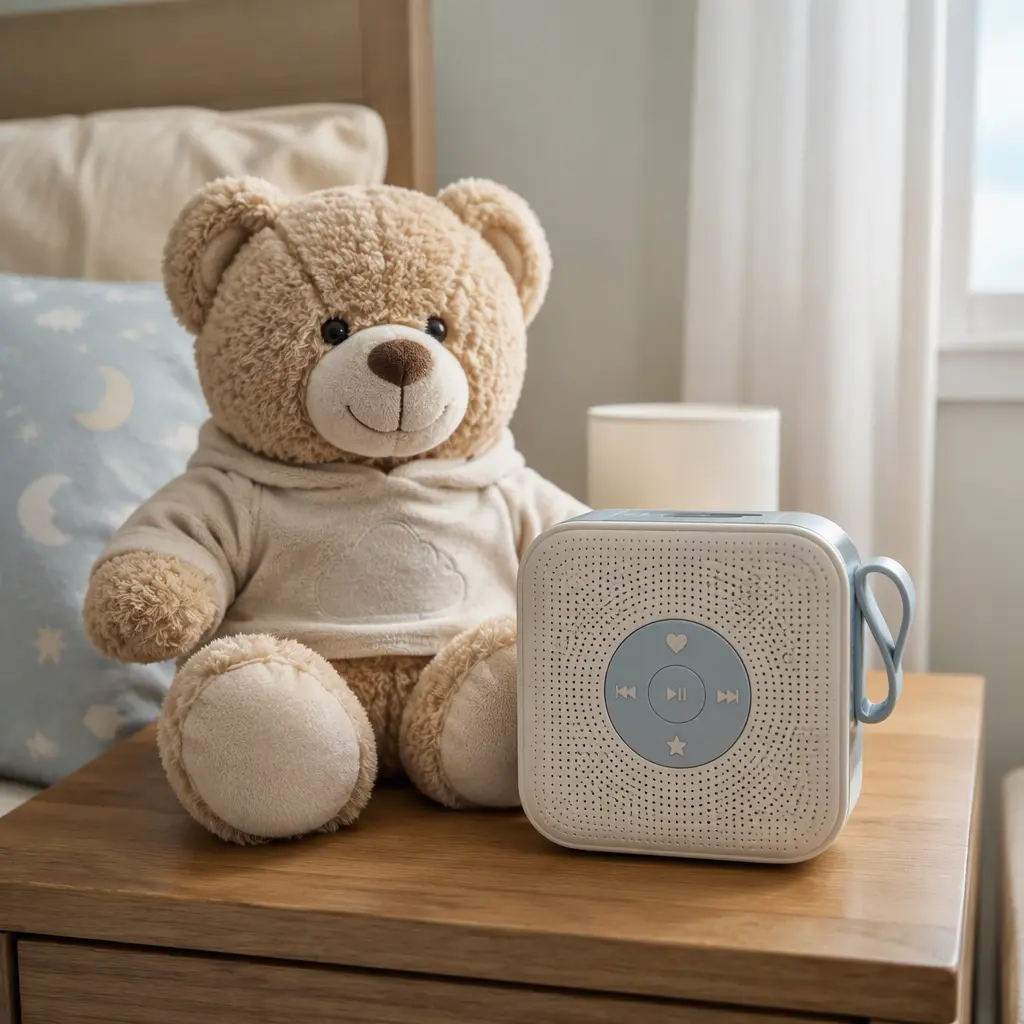
The main question is whether your child calms down through predictable playback or through interaction. Some children settle better with repetitive stories, music and routines. Others respond well to conversational reassurance. Parents should also consider whether connected features create extra complexity at bedtime. Toys with microphones, cloud services or app controls may need charging, updates or Wi‑Fi setup, while simpler audio devices usually work more reliably once routines are established.
- Offline playback matters for travel, shared custody arrangements and avoiding bedtime disruptions caused by weak Wi‑Fi.
- Check whether microphones can be muted or disabled when not needed, especially in bedrooms.
- Look at physical controls. Preschoolers often manage large buttons and simple card systems more easily than touch controls or apps.
- Consider sleep disruption. Highly interactive AI toys can accidentally encourage more talking instead of winding down.
- Review ongoing costs such as subscriptions, credits or paid content libraries.
- Think about durability and washable surfaces. Plush toys may need more careful cleaning than hard-shell audio players.
- Battery life and charging habits matter if the toy stays beside the bed every night.
Age suitability
Both products broadly fit the 3–5 age range, but they suit different stages within it. Younger preschoolers who rely heavily on comfort objects may connect more naturally with a plush interactive bear. Children closer to age 5 often handle independent audio playback more confidently and may enjoy choosing stories themselves. Yoto Mini generally works best for children who can follow a simple bedtime sequence such as selecting a card, listening quietly and falling asleep without ongoing interaction. Curio AI Bear may appeal more to children seeking reassurance or conversation, although some highly verbal children could become more alert and engaged instead of sleepy.
Options compared
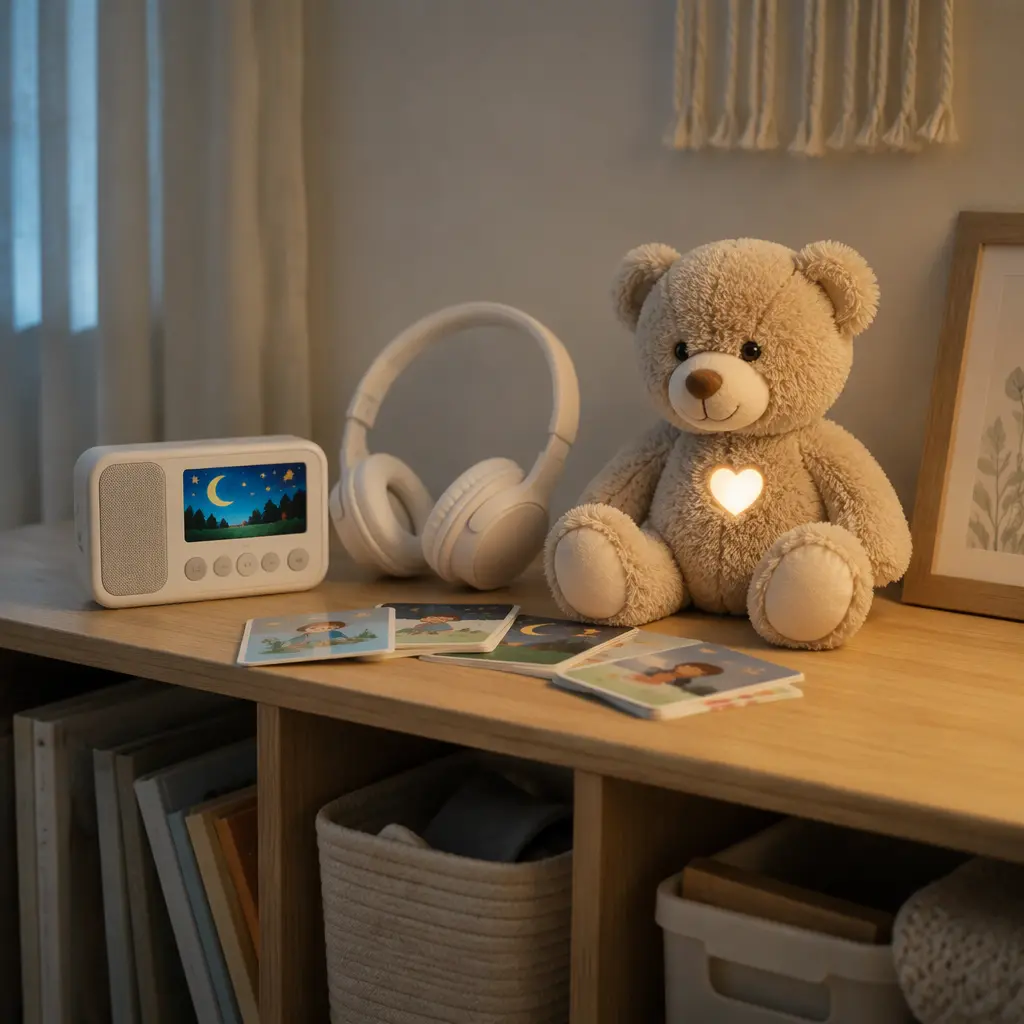
Curio AI Bear sits closer to the category of AI companion toy than traditional sleep audio device. The appeal is responsiveness: children can talk to it, ask questions or engage in back-and-forth interactions. For some anxious children, that conversational element may provide comfort during transitions like lights-out or sleeping in their own room. However, parents should weigh the trade-off carefully. AI interaction can become stimulating at exactly the time many families are trying to reduce excitement and conversation. A child who keeps chatting with the bear may delay sleep rather than settle into it.
Because Curio AI Bear depends on connected AI features, parents should also expect more reliance on apps, account setup or cloud-based processing than with a simpler speaker toy. Features may evolve over time through updates, but long-term usefulness can depend on manufacturer support. Microphones are central to the experience, so families uncomfortable with always-listening devices in bedrooms may prefer alternatives with clearer offline functionality.
Yoto Mini takes a more routine-focused approach. It is not an AI toy in the same sense. While it connects to apps and online content systems, the core experience is straightforward audio playback using cards, downloaded content and simple controls. Many parents looking to reduce bedtime battles prioritize predictability over interaction, and Yoto-style audio players fit that goal well. Children can replay the same calming story or sleep sounds nightly without needing active conversation. The absence of a camera and the reduced emphasis on microphones may also feel more comfortable for privacy-conscious households.
- Curio AI Bear suits children who seek conversational reassurance, enjoy responsive toys and already use plush comfort objects during bedtime.
- Curio AI Bear may not suit children who become overstimulated by talking, ask endless follow-up questions or struggle to disengage from interactive play.
- Yoto Mini suits families building structured bedtime routines with repeatable stories, calming audio and independent use.
- Yoto Mini may feel less emotionally comforting for children who want a cuddly object or direct conversational responses.
- For travel and shared sleeping spaces, compact audio players are often easier to pack and manage than larger plush connected toys.
- For households limiting internet-connected devices in bedrooms, offline-capable audio playback is usually simpler to supervise and maintain.
Frequently asked questions
Can either toy actually reduce bedtime anxiety?
They may help some children by adding predictability, comfort or distraction from worries, but neither product should be viewed as a treatment for anxiety. Children who respond well to routines often benefit more from consistent bedtime habits than from advanced technology alone. Parents usually see the best results when audio toys are paired with regular sleep schedules and calm transitions.
Does AI interaction help children sleep better?
It depends on the child. Some children feel reassured by responsive conversation, while others become more alert and emotionally engaged. AI toys can blur the line between calming and stimulating play. Families dealing with bedtime delays may prefer limited-interaction audio instead of open-ended conversation.
Which option works better without internet access?
Dedicated audio players such as Yoto Mini generally offer more practical offline listening once content is downloaded or stored locally. AI-driven toys usually rely more heavily on online processing for conversational features. Parents who travel frequently or want simpler nightly reliability often prioritize offline playback.
Are microphones necessary for bedtime toys?
Not necessarily. Microphones are essential for conversational AI experiences but less important for story playback or sleep sounds. Some families value voice interaction, while others prefer fewer connected features in sleeping areas. Checking whether microphones can be muted provides additional flexibility.
What matters more: comfort object or audio routine?
Children vary widely. Preschoolers attached to plush toys may respond strongly to a comforting stuffed companion. Others gain more confidence from controlling their own stories and routines independently. Watching how your child already self-soothes can offer better guidance than choosing the most advanced feature set.
For most families focused specifically on reducing bedtime battles, a simple and repeatable audio routine tends to work more consistently than highly interactive technology. Curio AI Bear may still appeal to children who strongly value conversational comfort and imaginative companionship. The better choice depends on whether your child settles through calm repetition or through emotional interaction.