Miko 4 vs Luka AI Cube for Curious Kids
A parent-focused guide to Miko 4 and Luka AI Cube for children aged 6–8, covering conversation quality, reading support, privacy controls, subscriptions, and when AI features help or distract.
Compare prices and availability
Check current prices and availability for this guide on eBay.
As an eBay Partner, we may be compensated if you make a purchase.
AI toys aimed at younger children increasingly promise conversation, storytelling, homework help and reading support in one device. For parents of children aged 6 to 8 who ask constant questions, products such as Miko 4 and Luka AI Cube can look appealing because they offer more interaction than a traditional electronic toy. The difference is that these devices rely on microphones, apps and cloud-based features rather than simple pre-recorded responses. Choosing between them often comes down to whether a family wants a broad conversational companion, a focused reading helper, or less screen-connected technology overall. It is also worth considering how quickly novelty wears off and whether AI responses stay useful during everyday play.
What to look for
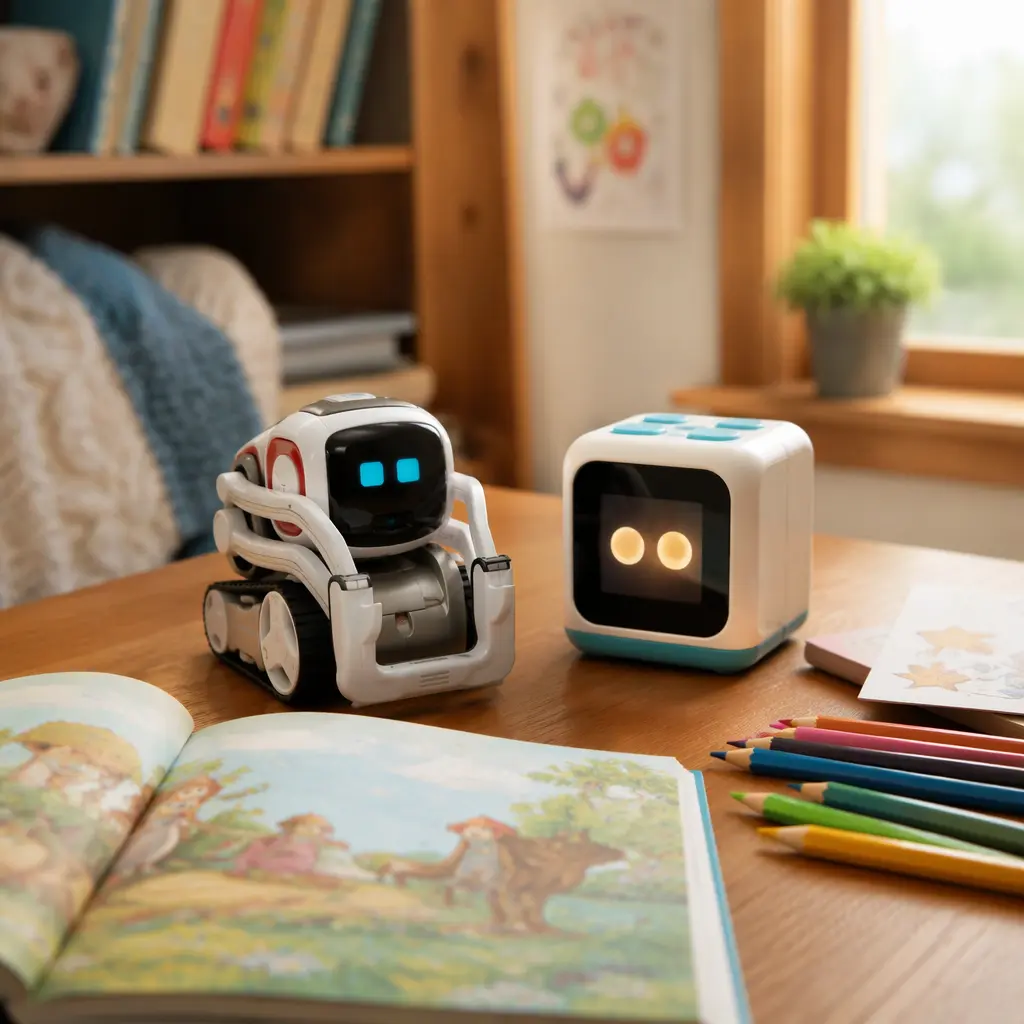
The biggest difference between connected AI toys is not personality or appearance but how much they depend on apps, internet access and cloud processing. Some devices mainly respond with scripted content and simple speech recognition, while others generate wider conversational answers using online AI systems. For children in the 6–8 age range, that distinction affects both usefulness and supervision needs. Parents should also think about whether the toy remains fun without a subscription or ongoing app support, since connected toys can lose features if services change.
- Conversation style: Open-ended AI chat can feel impressive at first but may become distracting during homework, reading or bedtime routines. More focused devices often keep interactions shorter and easier to manage.
- Reading support: Luka-style reading companions are designed around books and audio guidance, while broader AI robots usually mix stories, quizzes, games and casual conversation.
- Privacy controls: Check whether microphones can be muted, what parental controls are available in the companion app and whether voice recordings are stored in the cloud.
- Offline usefulness: Some functions may stop working without Wi‑Fi. Parents who want fewer connected features may prefer toys that still offer stories or reading help offline.
- Subscriptions and credits: Certain AI features may depend on paid memberships, usage limits or account systems. Manufacturer features and policies can change over time.
- Noise and attention level: Conversational robots can interrupt family routines with constant prompts, sound effects or reminders. Reading-focused toys are often calmer.
- Durability and storage: Robot-style toys sometimes include moving parts and charging docks, while smaller cube-shaped devices are easier to store and travel with.
Age suitability
Children aged 6 to 8 are old enough to enjoy conversational toys but usually still need guidance about what these devices can and cannot do. A child who already enjoys reading independently may benefit more from a reading assistant that encourages books without pulling attention toward games or random questions. Meanwhile, highly social children who enjoy roleplay and interactive routines may respond better to a conversational robot. Parents should also consider attention span. Some children become deeply engaged with AI conversations, while others quickly treat the toy like a novelty speaker. Devices that rely heavily on voice interaction can also frustrate children with quieter speech, accents or speech differences if recognition is inconsistent.
Options compared
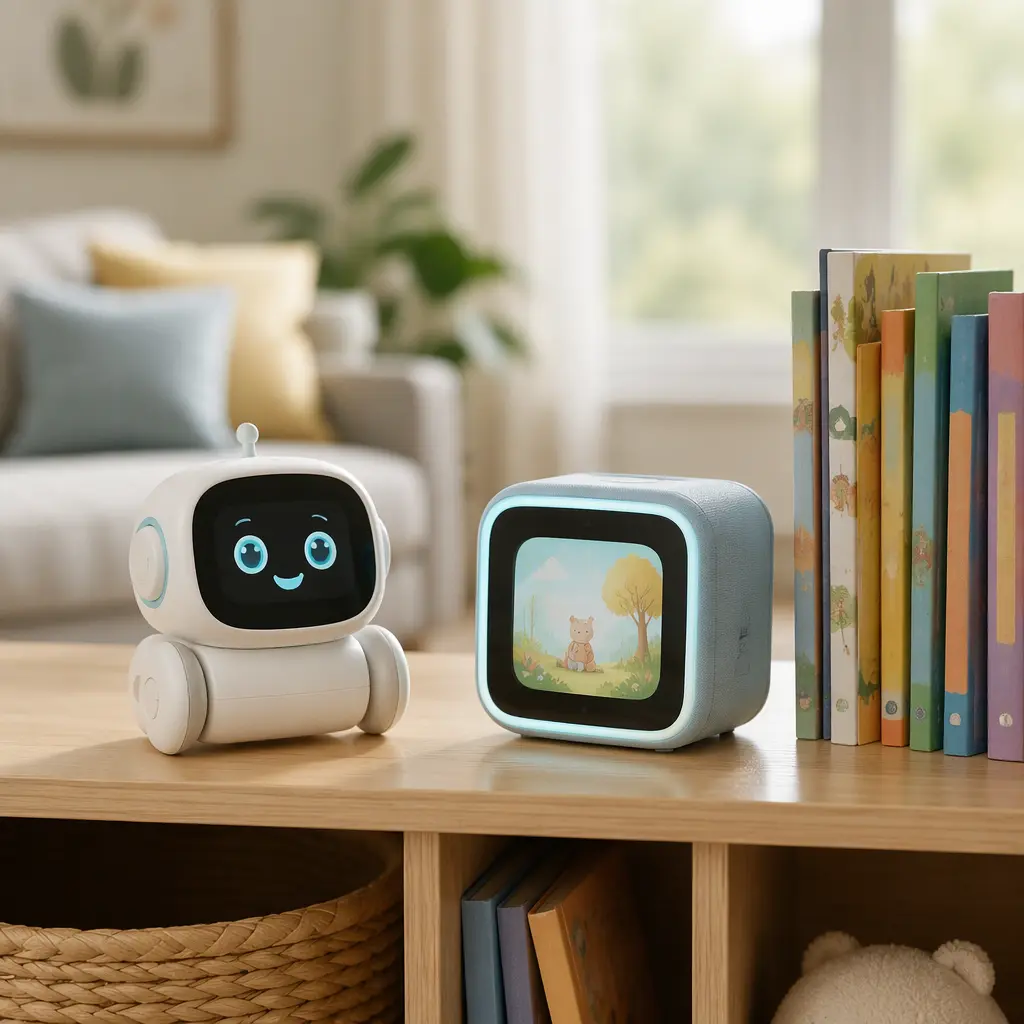
Miko 4 is positioned more as a conversational AI robot. Manufacturer marketing focuses on interactive chat, educational activities, games and personality-driven engagement. For children who constantly ask questions about animals, space, jokes or facts, this style can feel entertaining because the toy responds dynamically instead of following a fixed script. The trade-off is that broader conversation can sometimes drift away from focused learning. Some children end up spending more time prompting the robot for silly responses than using educational features. Families sensitive to noise or overstimulation may also find frequent spoken interactions tiring in smaller homes.
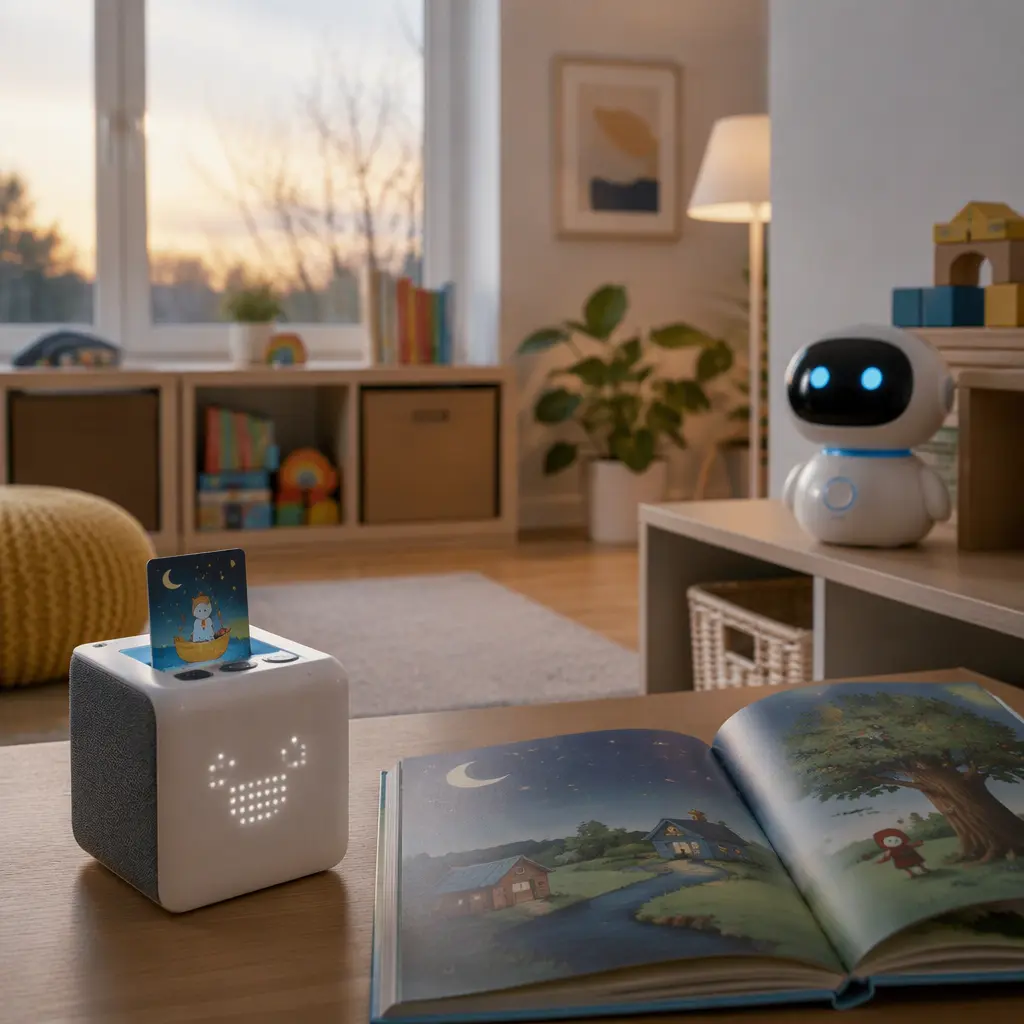
Luka AI Cube products are generally more focused on reading support and guided educational interaction. Rather than acting like a social companion throughout the day, the cube-style format often works best during reading sessions or quieter play. For parents trying to encourage independent reading habits, that narrower purpose can actually be an advantage because it reduces distractions. The trade-off is that children expecting a highly conversational robot companion may lose interest faster. Reading-oriented toys also depend heavily on language compatibility and supported books, so families should check regional support and available content carefully.
- Choose a conversational AI robot if your child enjoys back-and-forth interaction, jokes and open-ended questions, and your household is comfortable with app-connected devices and regular supervision.
- Choose a reading-focused AI companion if your priority is literacy support, calmer play and shorter structured interactions around books.
- Avoid highly connected AI toys if your family prefers minimal data collection, long-term offline reliability or toys that work independently from apps and cloud services.
- For shared bedrooms or quiet homes, lower-noise reading devices are usually easier to manage than always-on conversational robots.
- Children who become easily distracted during homework may benefit from AI tools with narrower educational goals rather than unrestricted conversation.
Frequently asked questions
Do AI toys actually answer children's questions accurately?
AI-based toys can provide surprisingly detailed answers, but they are not guaranteed to be accurate. Younger children may not recognize mistakes or made-up information, so parents should treat these toys as conversation tools rather than trusted educational authorities.
Can these toys work without internet access?
Many AI conversation features rely on cloud processing and internet connectivity. Some toys still offer limited offline activities, stories or games, but the most advanced responses often require Wi‑Fi and companion apps.
Are privacy settings important for kids' AI toys?
Yes. Devices with microphones may collect voice interactions or usage data depending on manufacturer policies. Parents should review mute controls, account settings, parental permissions and whether recordings can be deleted through the companion app or account portal.
Will a reading-focused AI toy replace reading with parents?
For most families, these toys work better as a supplement than a replacement. Reading companions can encourage confidence and independent practice, but shared reading still helps with comprehension, discussion and emotional engagement with stories.
How long do children usually stay interested in AI toys?
Interest varies widely. Some children enjoy conversational interaction for months, especially if new content is added through apps or updates. Others lose interest once the novelty of asking questions fades. Toys tied to existing routines such as reading time often maintain more consistent use.
For most families choosing between Miko 4 and Luka AI Cube, the decision is less about which toy sounds smarter and more about what role the toy should play at home. A conversational robot may suit children who enjoy interactive entertainment and frequent question-and-answer play, while a reading-focused device may better support calmer routines and literacy goals. Looking closely at privacy controls, internet dependence and how easily the toy fits into everyday family life will usually matter more than the AI marketing itself.