StoryPhones vs Yoto Mini for Kids Sharing a Room
A parent-focused guide to choosing between StoryPhones and Yoto Mini for children who share bedrooms, with practical advice on headphones, sleep routines, offline listening and independence.
Compare prices and availability
Check current prices and availability for this guide on eBay.
As an eBay Partner, we may be compensated if you make a purchase.
For children who share a bedroom, audio players can solve one problem while creating another. A device that encourages independent listening and quiet bedtime routines may also leak sound across the room, require bright screens or depend heavily on a parent's phone. StoryPhones and Yoto Mini are both designed for children around the early primary-school years, but they approach listening very differently. StoryPhones centres on wireless headphones and character-linked audio tokens, while Yoto Mini uses a compact speaker-based player with optional headphones and card-based content. The better fit often depends less on the content library and more on how your household handles bedtime timing, noise tolerance, storage space and independence.
What to look for
When comparing audio players for siblings sharing a room, focus on how the listening happens rather than just the content available. The main practical differences are whether the device is designed primarily for headphones or room audio, how easily children can operate it independently and how much setup depends on an adult's phone or app. Parents may also want to consider whether the device still works during travel or poor Wi‑Fi connections, since offline playback can matter during bedtime routines.
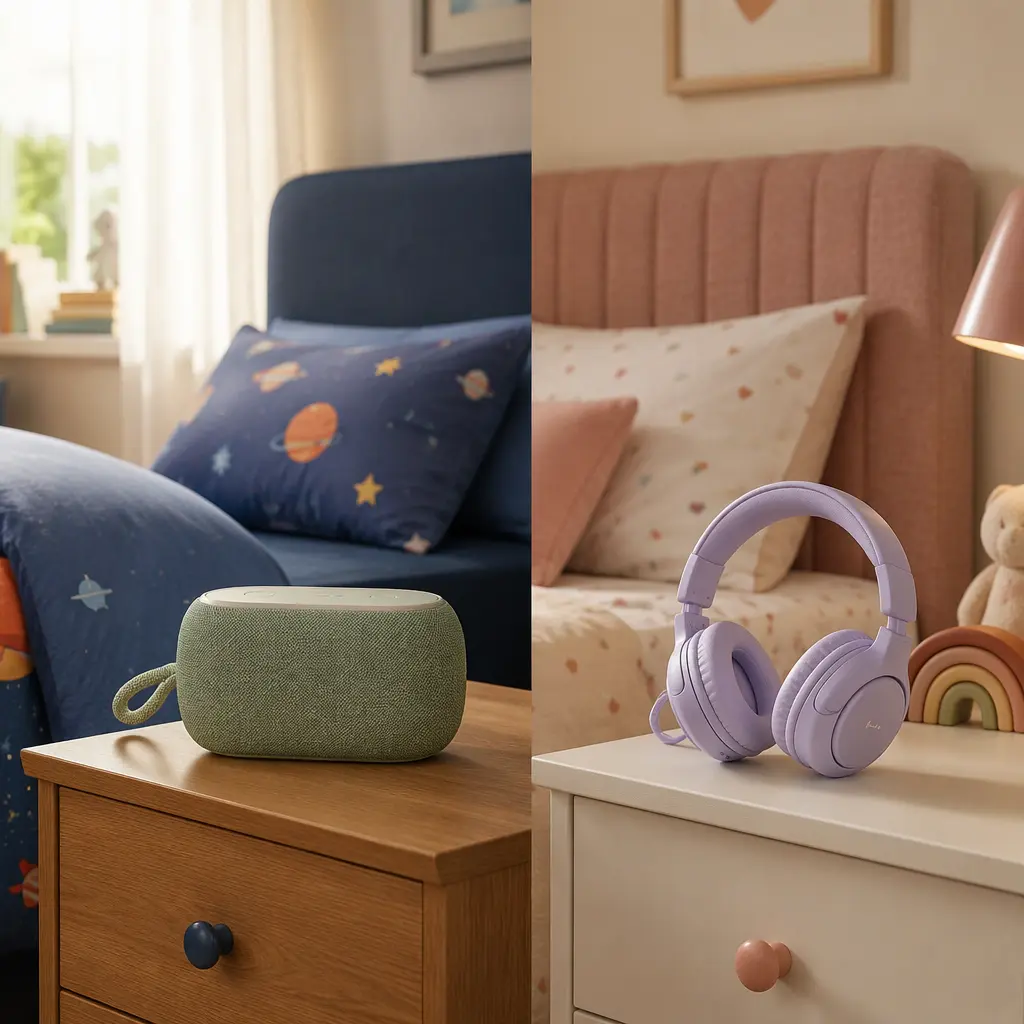
- Headphone-first versus speaker-first design: StoryPhones are built around listening privately through headphones, while Yoto Mini is designed mainly as a small speaker player with optional headphone support.
- Volume management: Look for child-friendly volume limiting and easy-to-reach controls that younger children can manage independently at night.
- Offline playback: Both systems support downloaded or physical-content playback, but setup and syncing may still require Wi‑Fi and companion apps.
- Battery life and charging habits: A shared room often means fewer power outlets near beds, so charging frequency can become part of the nightly routine.
- Durability and portability: Yoto Mini is easier to carry around the house or on trips, while StoryPhones reduce the chance of audio disturbing siblings.
- Content ownership and subscriptions: Some content may require subscriptions, digital purchases or app-linked accounts depending on the ecosystem.
- Storage and clutter: Cards, tokens and charging cables can accumulate quickly in small shared bedrooms.
Age suitability
For children aged 6 to 8, both devices generally suit growing independence well, but they support different habits. StoryPhones may work better for children who already enjoy wearing headphones comfortably for longer listening sessions, such as audiobooks during quiet time or bedtime. They can also suit households where siblings go to sleep at different times and parents want to minimise room noise. Yoto Mini often appeals more to children who like selecting cards, listening together occasionally or carrying a player between rooms. Its physical controls are simple enough for many children in this age group to manage without constant help, although younger or easily distracted children may still need support organising cards or charging routines.
Options compared
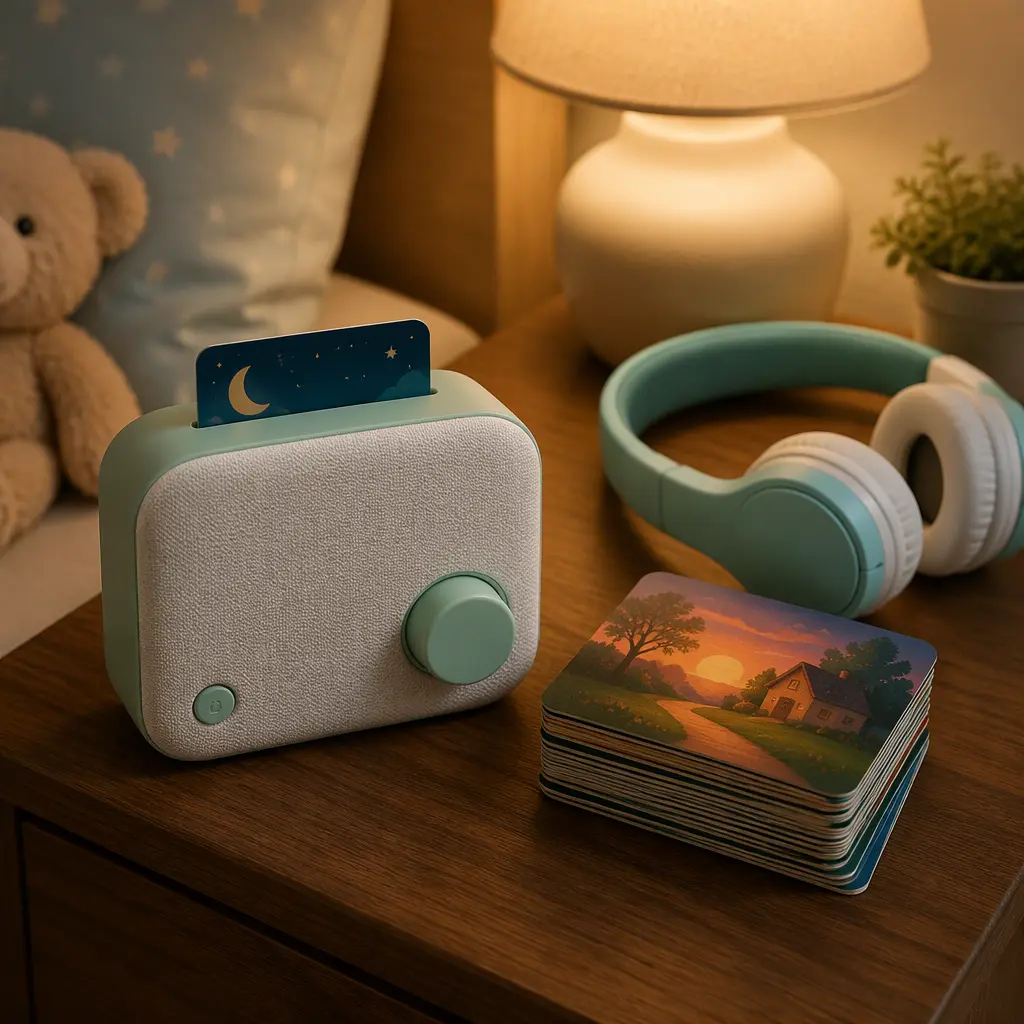
StoryPhones are the quieter option for shared bedrooms because the listening experience happens almost entirely through headphones. That can be especially useful when one child falls asleep earlier or wakes earlier than a sibling. Children who like immersive listening without disturbing others may adapt quickly to the format. The trade-off is that some children dislike wearing headphones while lying down or relaxing before sleep. Parents may also need to monitor charging more carefully since wireless headphones become unusable when batteries run flat.
Yoto Mini is often more flexible as an all-purpose family audio device. Children can listen through the built-in speaker during daytime play and switch to wired or wireless headphones at night. The compact size also works well for travel, car rides and moving between bedrooms. In shared rooms, though, the built-in speaker can become a source of conflict if siblings have different schedules or preferences. Its card system may appeal strongly to children who enjoy collecting and choosing stories independently, but families with limited storage space may prefer fewer physical accessories.
- Choose StoryPhones if your priority is private listening, minimal room noise and independent bedtime audio without disturbing siblings.
- Choose Yoto Mini if you want one flexible device for daytime speaker listening, travel and a broader mix of stories, music and activities.
- StoryPhones may suit children sensitive to sibling noise but may not suit children who dislike headphones or frequently misplace small accessories.
- Yoto Mini may suit households that enjoy shared listening and portable screen-free entertainment, but it can be less ideal for staggered bedtimes in small bedrooms.
- For families limiting app dependence, check how much setup, updates and content management require a smartphone and internet connection before buying.
Frequently asked questions
Can both devices be used without Wi‑Fi?
Both systems support listening without a constant internet connection once content is downloaded or linked through their physical media systems. However, initial setup, account management and adding new content typically require a companion app and internet access.
Are headphones included?
Packaging varies by retailer and bundle. StoryPhones are centred around headphones by design, while Yoto Mini usually functions primarily as a standalone speaker player. Parents should check exactly what accessories are included before buying.
Which option works better for bedtime?
For siblings sharing a room, StoryPhones usually create fewer bedtime disruptions because audio stays private. Yoto Mini can still work well at night if children use headphones consistently, but speaker playback is more likely to wake or distract others.
Do these devices rely on subscriptions?
Some content libraries, premium features or digital access may involve subscriptions or separately purchased content depending on the platform. Parents should compare the ongoing ecosystem costs rather than focusing only on the hardware price.
Which is easier for children to use independently?
Many children in the 6 to 8 age range can use either device independently after setup. Yoto Mini's card insertion system is straightforward and tactile, while StoryPhones can feel simpler for children who mainly want to put on headphones and listen quietly without navigating speakers or menus.
For shared bedrooms, the deciding factor is often sound management rather than content selection. StoryPhones generally make bedtime routines quieter and more private, while Yoto Mini offers greater flexibility for daytime listening and travel. Parents balancing sibling sleep schedules, limited space and independent listening habits may find that the quieter, headphone-focused approach works better overnight, while families wanting a more versatile room-to-room player may prefer the adaptability of Yoto Mini.