Tamagotchi Paradise vs Punirunes for Forgetful Kids
A parent-focused guide to Tamagotchi Paradise and Punirunes for ages 6–8, comparing how each handles missed play, resets, care demands, durability, noise and ongoing costs.
Compare prices and availability
Check current prices and availability for this guide on eBay.
As an eBay Partner, we may be compensated if you make a purchase.
Virtual pets can be a good fit for children who want something interactive without the cost, space and responsibility of a real animal. For many families, though, the bigger question is how well these toys cope with inconsistent attention. Children aged 6–8 often enjoy caring for a digital pet for a few days, then forget it during school, sports or weekends away. Tamagotchi Paradise and Punirunes approach that problem differently. One leans more toward classic pet-care routines with consequences for neglect, while the other focuses more on low-pressure interaction and tactile play. Choosing the better option depends less on graphics or trends and more on how much parent involvement you want, how your child reacts to failure or resets, and whether the toy still feels fun after the novelty phase.
What to look for
For children who regularly forget routines, the most important difference is how forgiving the toy is after missed care. Some virtual pets punish neglect quickly with illness, unhappy characters or complete resets. Others are designed more like fidget companions or mini-games that remain usable even after long breaks. Parents should also look at sound controls, battery needs and whether progress depends on apps, subscriptions or online features.
- How quickly the pet becomes unhappy or resets after missed care
- Whether the toy still works offline without apps, accounts or Wi‑Fi
- Volume controls and whether sounds can be muted for classrooms or car rides
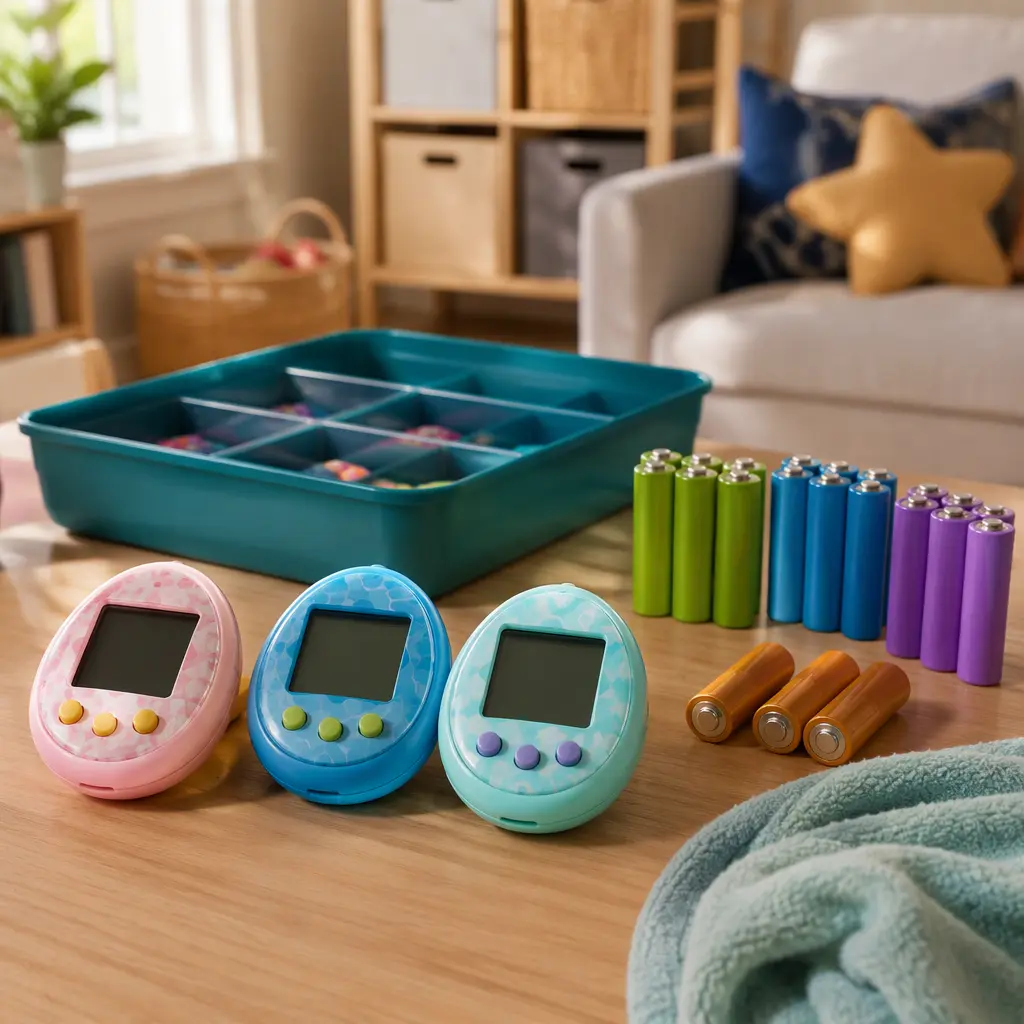
- Battery type and how often batteries may need replacing
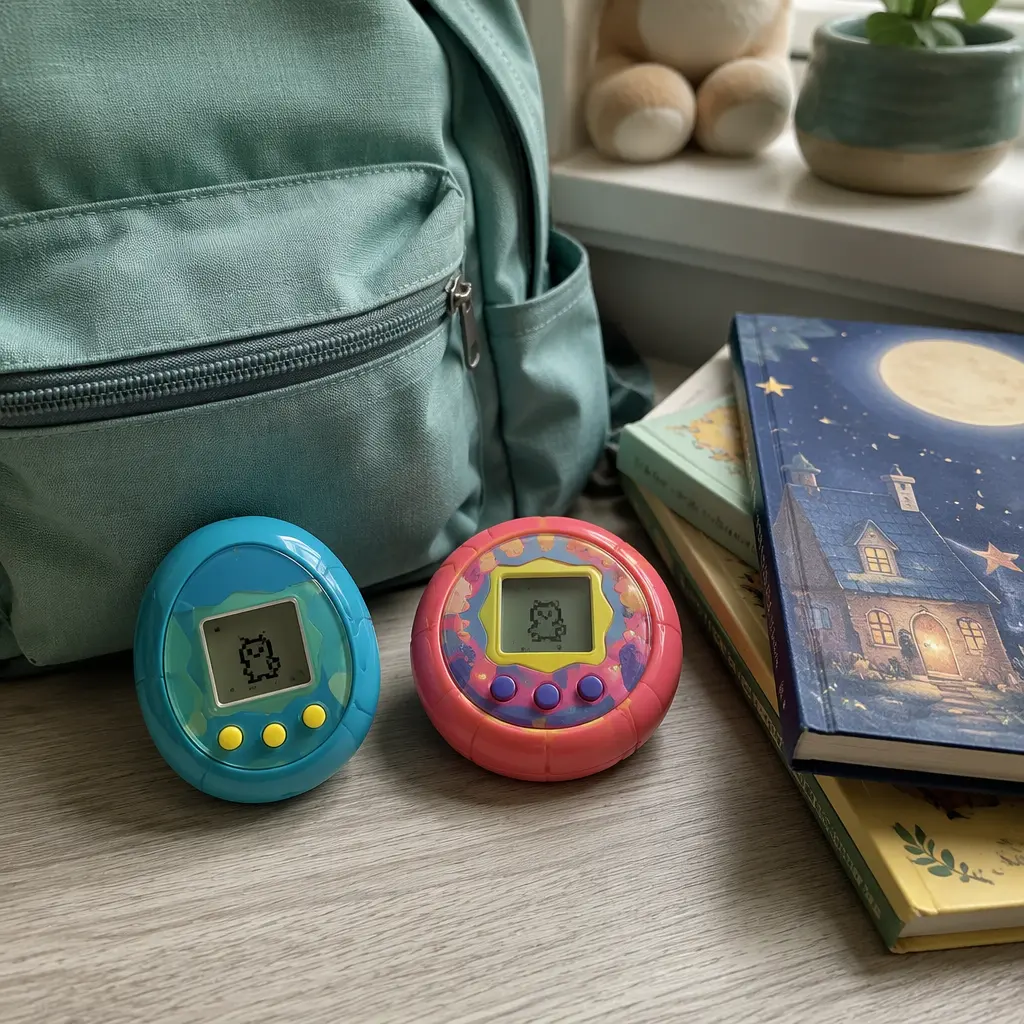
- How durable the shell and buttons feel for backpack use
- Whether gameplay depends on daily check-ins or allows casual play
- If the toy includes tactile or sensory features that keep interest longer
- Whether progress can be paused during holidays, school weeks or busy periods
Age suitability
Both toy lines generally fit the 6–8 age range, but they appeal to slightly different personalities. Tamagotchi-style pets usually suit children who enjoy routines, collecting characters and checking in several times per day. Kids who become upset when they lose progress may need more parent support, especially during the first few weeks. Punirunes-style toys are often easier for casual players because the interaction focuses more on touching, mini-games and sensory play than strict care schedules. Reading ability still matters for both categories because menus, icons and instructions can be confusing for younger children. Families with multiple children may also want to consider whether the toy encourages sharing or whether one child becomes protective about maintaining streaks and progress.
Options compared
Tamagotchi toys are built around the idea that the pet needs regular attention. Feeding, cleaning and interaction are part of the challenge, and that structure is exactly what some children enjoy. For kids who like routines, there can be a strong sense of ownership and accomplishment. The downside is that forgetting the toy for a day or two may lead to negative outcomes depending on the version. Some children accept this as part of the game, while others find repeated restarts frustrating. Parents may also notice more reminders from children to help find the device, replace batteries or rescue neglected pets before bedtime.
Punirunes devices, by comparison, are usually more forgiving and less dependent on strict schedules. Their standout feature is the tactile interaction, where children physically interact with a soft interface rather than only pressing buttons. That sensory element can hold attention longer for some kids, especially those who lose interest in menu-heavy toys. Because the experience is less focused on survival-style maintenance, occasional breaks from play tend to feel less punishing. The trade-off is that children who specifically want the challenge of raising a creature over time may find it less rewarding than a classic Tamagotchi experience.
- Choose Tamagotchi-style play if your child enjoys routines, collecting characters and checking in frequently.
- Choose Punirunes-style play if your child prefers casual interaction, sensory play and fewer consequences for forgetting.
- Tamagotchi toys may create more parent reminders around bedtime care, batteries or missed check-ins.
- Punirunes devices are often easier for travel or irregular schedules because progress tends to feel less fragile.
- Children who are highly sensitive to losing progress may find strict virtual-pet systems discouraging after repeated resets.
- Families wanting a toy that works mainly offline without subscriptions should verify app requirements before buying newer connected versions of any virtual pet line.
Frequently asked questions
Do these toys need Wi‑Fi or subscriptions?
Many standalone virtual pets work fully offline, but newer releases sometimes add app connectivity or optional online features. Parents should check manufacturer information carefully because support features can vary by region and may change over time. For younger children, a fully self-contained toy is usually simpler and easier to manage.
Which option is quieter?
Most virtual pets use frequent sound alerts to encourage check-ins. Devices with adjustable volume or mute settings are easier for shared family spaces, classrooms and car journeys. Tamagotchi-style toys may produce more reminder alerts because care schedules are central to the gameplay.
Are virtual pets good for teaching responsibility?
They can help children practice routines and remembering tasks, but the lessons are limited because the consequences are reversible and simplified. Some children become more organised with scheduled check-ins, while others simply stop playing if the toy feels demanding. A forgiving toy often keeps children engaged longer than one that frequently punishes missed play.
What if my child loses interest after a week?
That is common with electronic novelty toys. Sensory features, mini-games and collectible elements can extend interest, but most virtual pets still go through cycles of intense use followed by long breaks. Choosing a toy that tolerates inconsistent play helps avoid disappointment when children return to it later.
Are these toys messy or difficult to store?
Virtual pets are generally compact and low-mess compared with craft kits or large interactive toys. The main storage issue is preventing them from getting lost in backpacks, bedding or car seats. Some families keep them in a small basket or charging area alongside headphones and handheld games.
For children who regularly forget routines, Punirunes-style play is usually the easier fit because it places less pressure on constant maintenance and tends to feel more forgiving after missed days. Tamagotchi-style toys still make sense for kids who actively enjoy the responsibility aspect and are motivated by collecting and long-term care. The best choice depends on whether your family wants a structured virtual-pet challenge or a lower-pressure interactive companion that stays fun even when attention comes and goes.