Toniebox Lite vs Yoto Mini for UK Family Travel
A practical UK travel guide comparing Toniebox Lite and Yoto Mini for ages 3–5, covering offline listening, portability, durability, repairability, card costs and long-trip usability.
Compare prices and availability
Check current prices and availability for this guide on eBay.
As an eBay Partner, we may be compensated if you make a purchase.
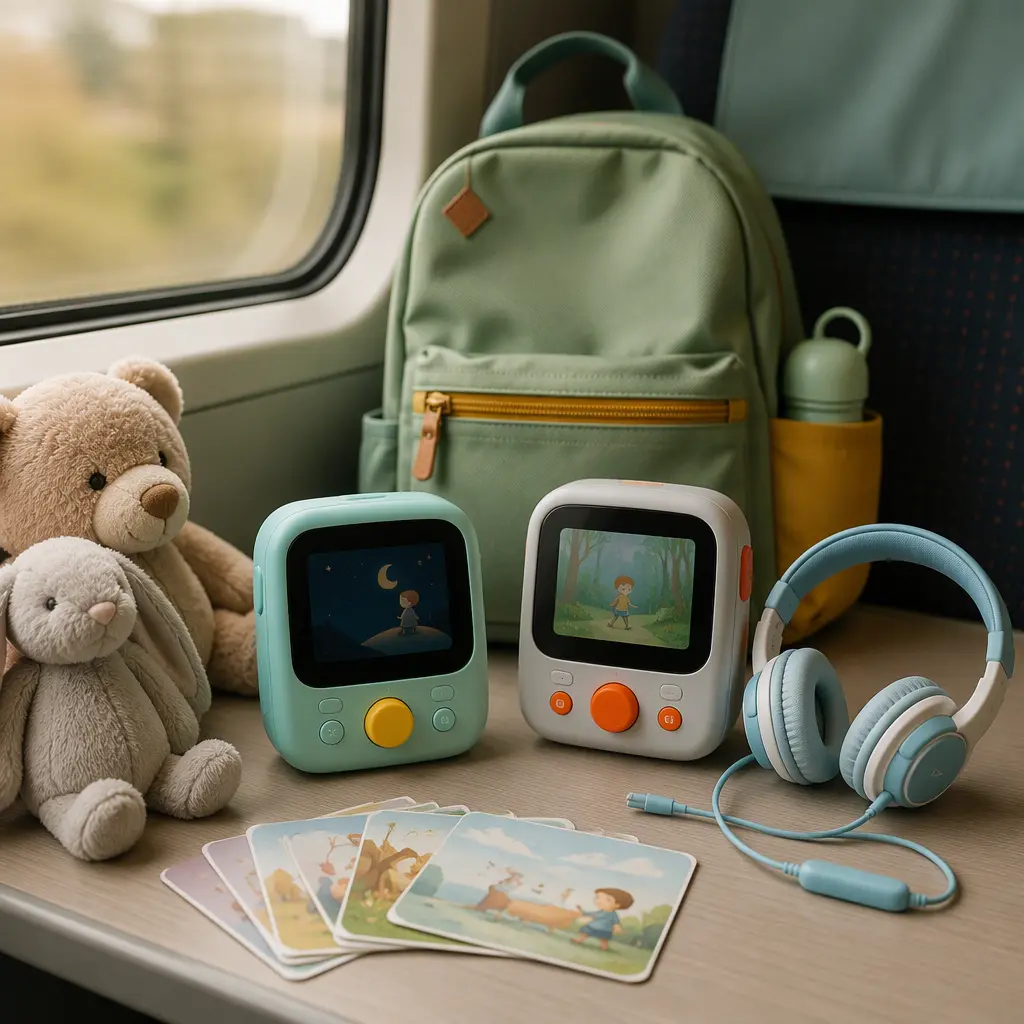
For UK families planning long car journeys, train trips or flights with preschoolers, screen-free audio players can be easier to manage than tablets. Two of the most discussed options are the Toniebox Lite and the Yoto Mini. Both are designed around independent listening, simple controls and portable stories or music, but they solve travel problems differently. The biggest differences are not just size or appearance. Parents usually end up deciding based on offline reliability, how much extra content costs over time, whether the player works without Wi‑Fi, how durable it feels in a backpack and how easy it is to manage during a long day away from home.
What to look for
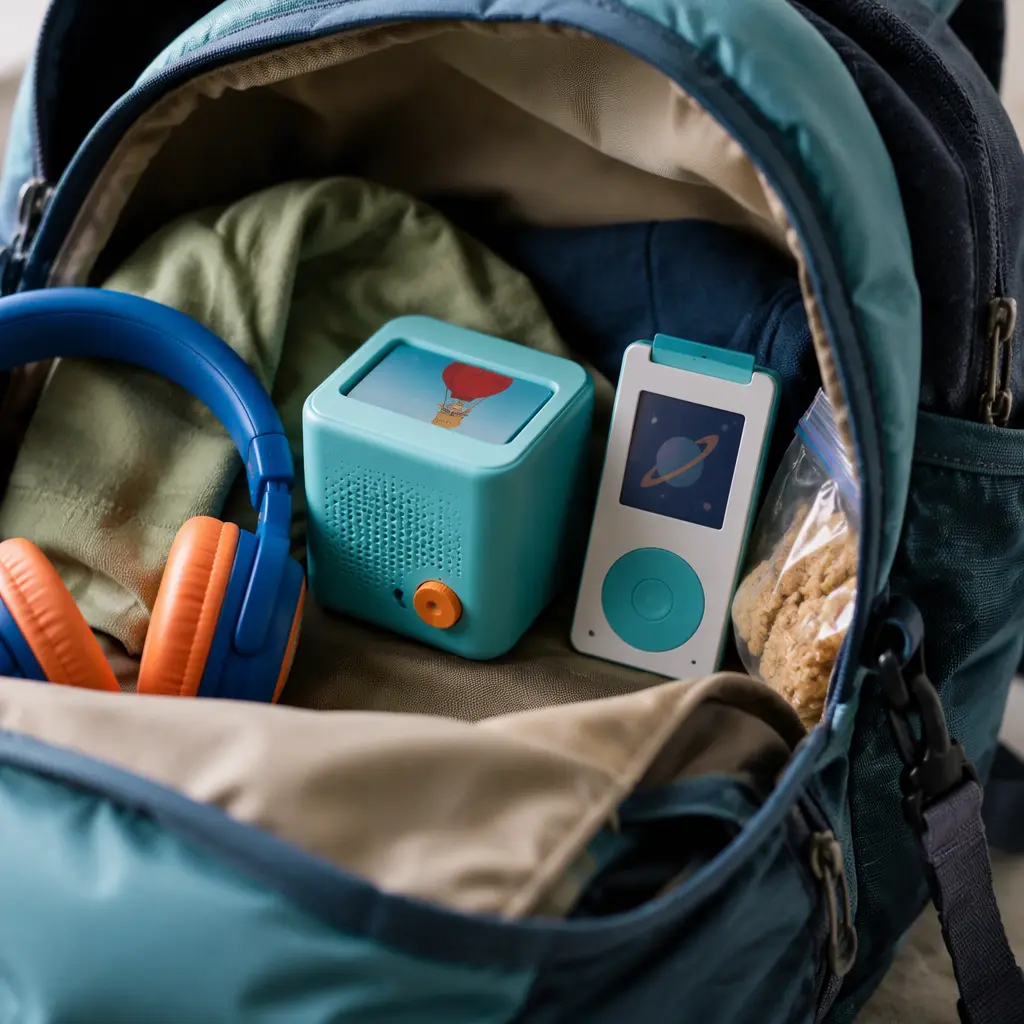
Travel audio players for ages 3–5 need to balance simplicity with practicality. Some children want tactile play with character figures, while others are happy selecting cards themselves. Parents often care more about battery life, packing size and how many stories can be carried without clutter. Connected features also matter. Both systems rely on apps for setup and content management, but their day-to-day travel usefulness depends heavily on how well they function offline once content is downloaded.
- Offline playback matters more than streaming access during flights, ferry crossings and rural travel.
- Check how content is stored. Figure-based systems take more physical space than slim audio cards.
- Consider replacement costs for lost accessories, especially if children carry content independently.
- Look at repairability and durability. Soft fabric-covered designs can survive drops differently from hard plastic devices.
- Headphone compatibility can matter on public transport where speaker volume may disturb others.
- Battery charging method and charging speed become more noticeable during multi-day trips.
- Some app features, downloads or content libraries may depend on region availability and ongoing account support.
- Think about storage at home as well as in luggage. Collections can grow quickly over time.
Age suitability
Both products are aimed comfortably at the 3–5 age range, but they suit slightly different stages of independence. The Toniebox approach is often easier for younger preschoolers because placing a figure on top starts playback automatically with almost no menu navigation. The soft-sided design is also aimed at rougher handling. Yoto Mini asks children to understand card swapping and button controls, but many four- and five-year-olds quickly learn the system. It can continue fitting older children better because the audio catalogue and card system may feel less babyish over time. Families with siblings sometimes prefer Yoto Mini because it takes less luggage space when carrying multiple stories.
Options compared
The Toniebox Lite style focuses heavily on tactile interaction. Children place a character or audio figure onto the box to start playback. That physical simplicity is useful during stressful travel moments because there are fewer controls to explain repeatedly. The trade-off is packing efficiency. A week-long trip with several stories may mean carrying multiple figurines, which take up noticeably more space than cards. Replacement figure costs can also add up if items are lost during travel. Parents should also consider storage at home because collections can expand quickly.
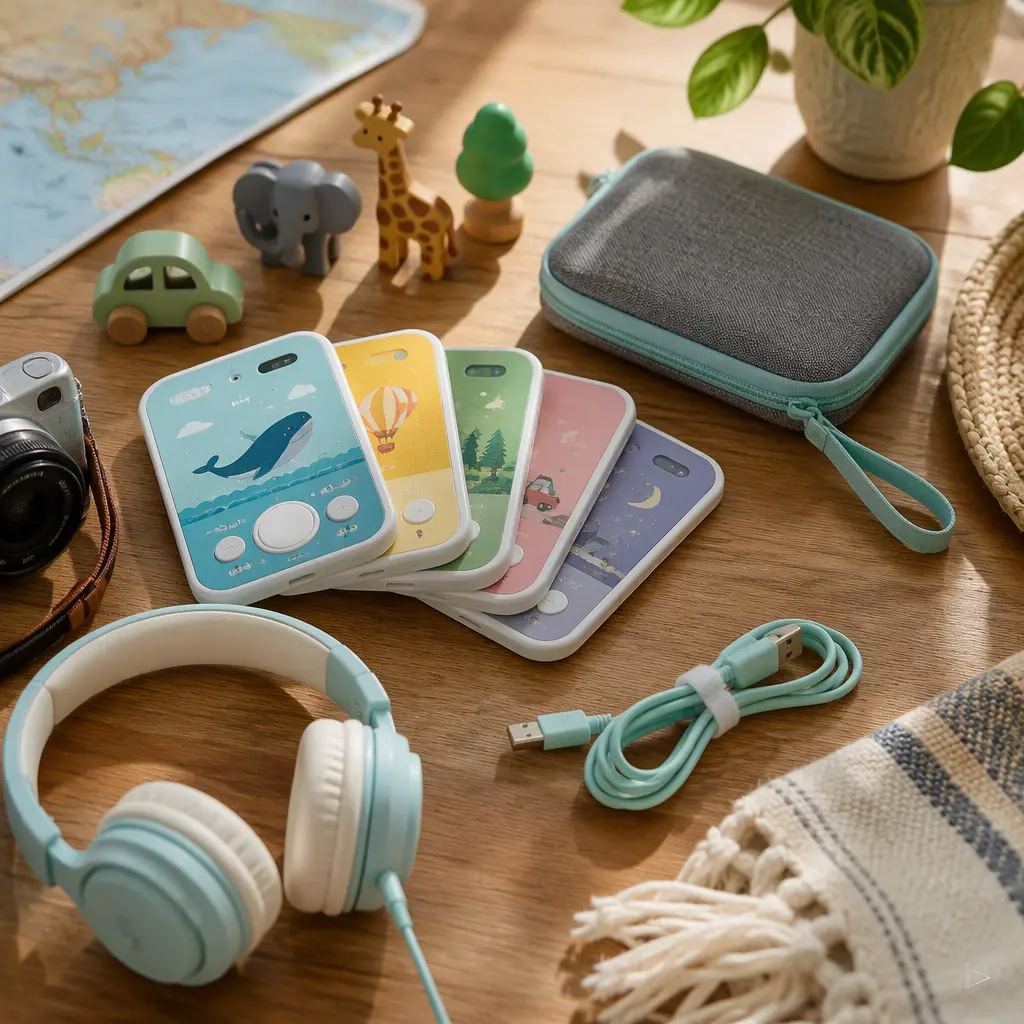
Yoto Mini is built more like a compact portable media player. Audio is usually linked to slim cards, making it easier to carry many stories in a small pouch. This is one of the strongest advantages for long-distance travel or hand luggage restrictions. It also tends to fit better into coat pockets or seat organisers. The compromise is that younger children may need more help understanding controls at first. The harder shell design may also feel less forgiving when dropped repeatedly onto hard floors compared with soft-sided alternatives.
- Choose Toniebox Lite if your child benefits from highly tactile play, struggles with menus or is likely to throw devices around during use.
- Choose Yoto Mini if luggage space matters, you want to carry many stories at once or you expect the player to remain useful into later childhood.
- Families taking frequent flights may prefer card-based storage because it reduces bulk in cabin bags.
- For long offline journeys, both systems depend on downloading content in advance through their companion apps.
- Repairability can vary by construction style. Soft fabric exteriors may hide cosmetic wear better, while modular card systems reduce moving decorative parts.
- Parents sensitive to ongoing costs should compare the price of additional figures versus cards rather than only comparing starter bundles.
- Neither device is fully future-proof. App support, account systems and content licensing can change over time with connected products.
Frequently asked questions
Do these players work without Wi‑Fi during travel?
Both systems are designed to support offline playback after content has been downloaded and linked through their apps. Parents should complete setup and downloads before leaving home because hotel or airport Wi‑Fi can be unreliable. Features such as account management, new downloads or library syncing may still require internet access.
Which is easier for a three-year-old to use independently?
The Toniebox-style interaction is usually simpler for younger preschoolers because it relies on placing figures onto the player. Yoto Mini is still child-friendly, but some children may need extra help learning card insertion and playback controls during the first few weeks.
Are subscriptions required?
Core playback does not generally require a subscription once content is owned and downloaded, but optional memberships, credits or content clubs may exist depending on the platform and region. Parents should check what features are included before relying on any advertised libraries or bonus content.
Which system travels better in small bags?
Yoto Mini usually has the advantage for compact packing because the player itself is slim and the audio cards stack neatly in small cases. Figure-based systems are bulkier but may still work well for shorter trips where only a few favourite stories are needed.
Do connected features raise privacy concerns?
These products are far less data-intensive than toys with microphones, cameras or conversational AI systems, but they still rely on apps, accounts and cloud-linked content management. Parents may want to review privacy policies, account permissions and how children’s listening data is handled before setup.
For most UK travel situations in 2026, the decision comes down to portability versus tactile simplicity. Toniebox Lite is likely to suit younger preschoolers who want physical interaction and straightforward playback, while Yoto Mini makes more sense for families prioritising compact packing, larger audio libraries and longer-term use. Neither option replaces checking battery levels, preloading content and packing spare headphones before a long journey, but both can reduce screen dependence during travel in a way many parents find easier to manage.