The Wiggle Car: How a pedal-free ride-on keeps kids moving
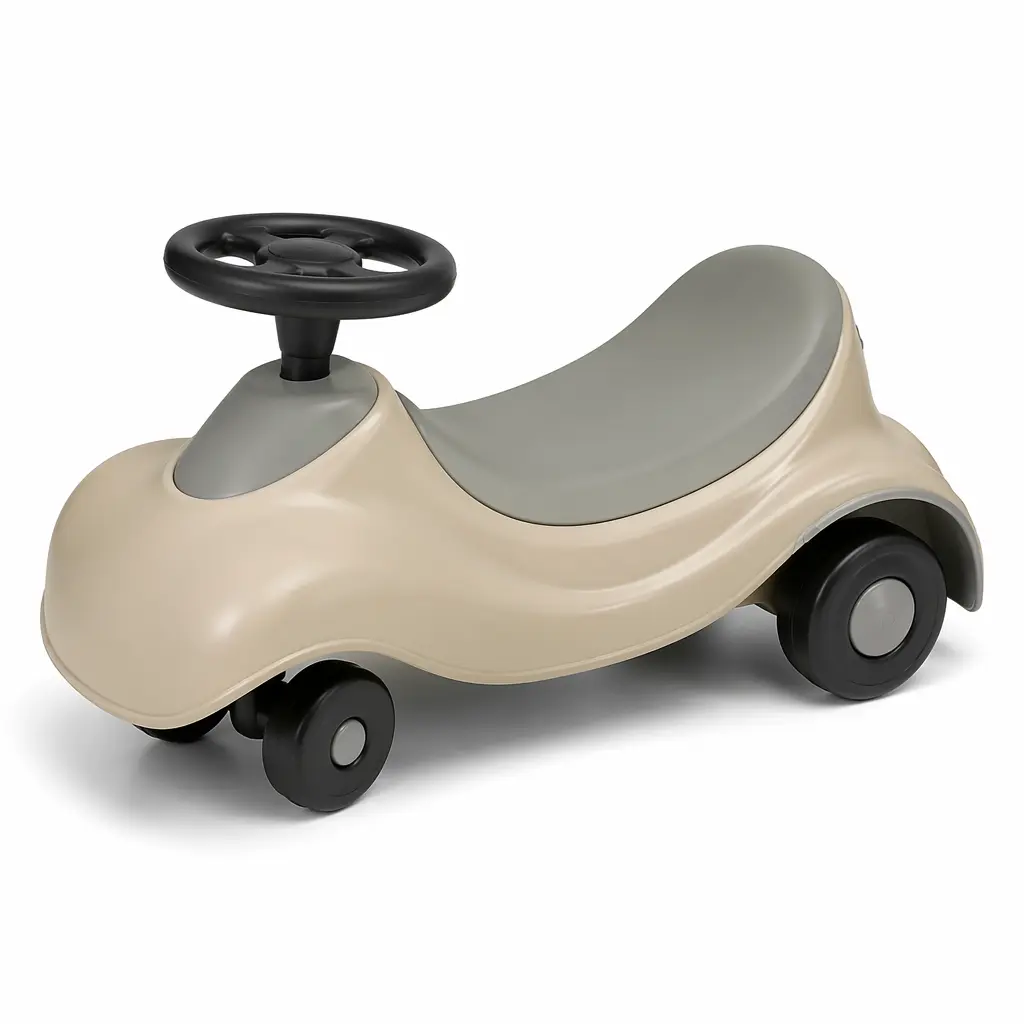
The Wiggle Car looks simple, but its twist-to-go motion teaches kids balance and coordination—no pedals, batteries, or charging required.
Compare prices and availability
Check current prices and availability for this guide on eBay.
As an eBay Partner, we may be compensated if you make a purchase.
At first glance, the Wiggle Car seems almost too simple to work. There are no pedals, no motor, and no obvious way to push off. Yet place a child on one, and within minutes they’re gliding across the floor, steering left and right to build momentum. That quiet moment of discovery—realising their own body can make the toy move—is what has turned the Wiggle Car into a modern playground staple.
Where it came from
The Wiggle Car emerged in the early 2000s as part of a broader rethink of ride-on toys. Designers were looking for ways to encourage physical play without relying on pedals, chains, or electronics. Inspired by caster wheels used in furniture and industrial carts, the idea was to let steering itself become the engine.
Rather than focusing on speed or realism, the original concept centred on body movement. By swivelling the steering wheel left and right, a child could transfer energy through the front caster wheels, creating forward motion. It was a clever piece of mechanical minimalism, and it quickly found a place in nurseries, schools, and living rooms around the world.
Why it works
The genius of the Wiggle Car lies in how directly it connects cause and effect. There’s no button to press or pedal to master. Movement comes from a natural twisting motion that most children already use when they walk, dance, or play. That makes the learning curve short and the sense of achievement immediate.
Because the rider supplies all the power, the toy scales naturally with the child. Younger kids start with small, enthusiastic wiggles; older ones refine the motion and glide further with less effort. Standout features include:
- Pedal-free propulsion driven by side-to-side steering
- Low seat height for stability and easy mounting
- Smooth, quiet wheels suitable for indoor floors
- Simple construction with very few moving parts
Who it’s for
Most Wiggle Cars are aimed at toddlers and preschoolers, typically from around 2 years old upward, depending on balance and coordination. They’re often recommended for indoor play, but many families also use them on patios or smooth pavements. There’s also a surprising adult appeal: older siblings and even parents sometimes find themselves taking a turn, drawn in by the novelty and the low-impact movement.
Variants and what to look for today
Today’s Wiggle Cars stick closely to the original formula, but there are variations worth noting. Some models are sized slightly larger to support heavier riders, while others focus on extra-wide seats or reinforced frames for durability. Colour options are common, though the underlying mechanics tend to be very similar.
When shopping, look for smooth caster wheels that rotate freely and a steering column that feels solid rather than loose. Generic versions are widespread, and many work perfectly well, but very lightweight plastics or poorly fitted wheels can affect the ride. As with most ride-ons, simplicity is usually a good sign.
Frequently asked questions
Does a Wiggle Car really work without pedals?
Yes. Forward motion comes from turning the steering wheel left and right. This movement shifts the front caster wheels in a way that converts side-to-side energy into forward glide.
Is it safe for indoor use?
Generally, yes. The wheels are designed to be quiet and non-marking on smooth floors. Clear a bit of space and supervise younger children, especially around furniture.
What skills does it help develop?
Riding encourages balance, coordination, and spatial awareness. Because children control speed with their own movement, it also supports body awareness and self-regulation.
Can older kids use one?
Many can, as long as the weight limit allows. Larger versions are better suited to older children, but even standard models often handle occasional use beyond the toddler years.
The Wiggle Car’s staying power comes from its restraint. By doing less—no batteries, no screens—it invites kids to do more themselves. In a toy landscape crowded with features, that simple invitation to move may be its most enduring feature of all.