VTech Marble Rush and the Rise of Interactive Marble Runs
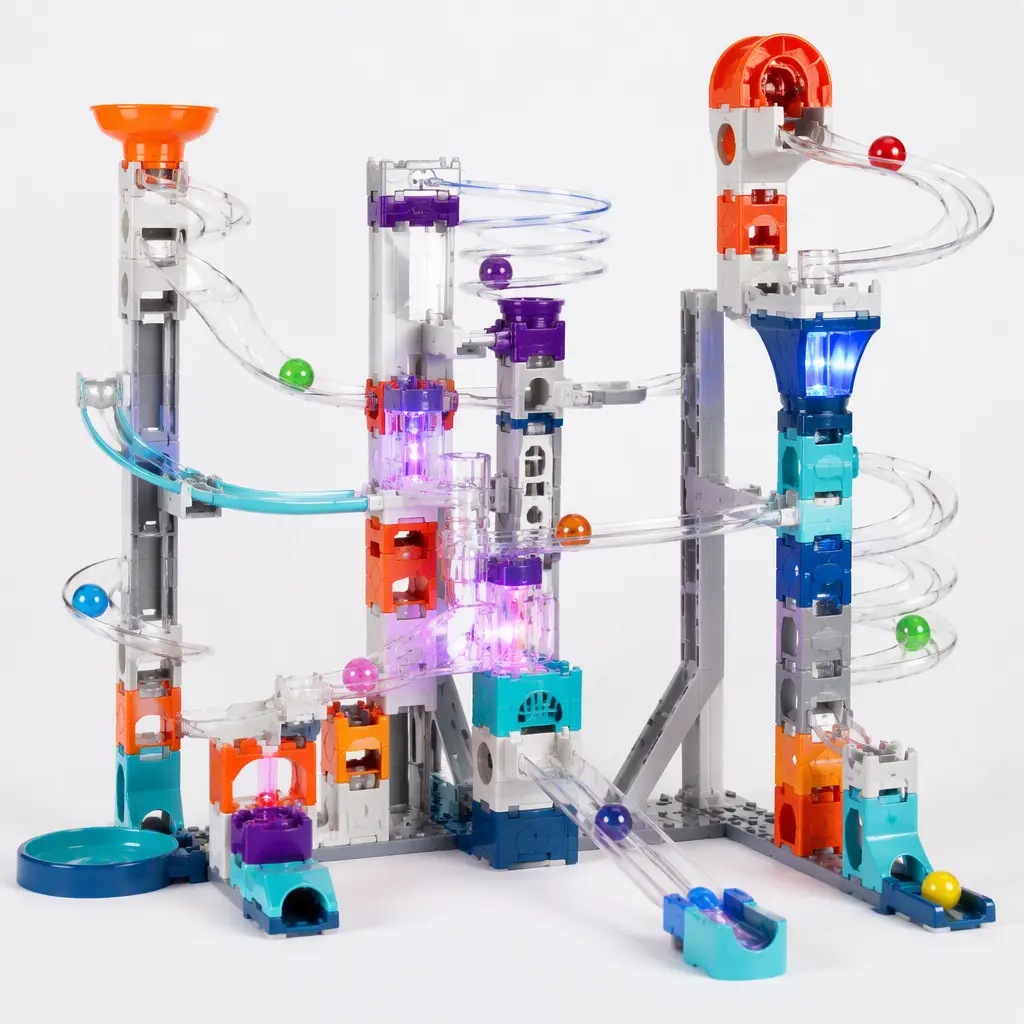
VTech Marble Rush combines classic marble-run construction with electronic lights, sounds, and modular tracks, turning a familiar STEM toy into an interactive building experience for modern families.
Compare prices and availability
Check current prices and availability for this guide on eBay.
As an eBay Partner, we may be compensated if you make a purchase.
Marble runs have been around for generations, but VTech Marble Rush arrived with a distinctly modern twist. Instead of treating the marble track as a purely mechanical toy, the system adds lights, sounds, launch effects, and interactive elements that react as marbles move through the build. The result sits somewhere between a classic construction set and an electronic activity toy, aimed at children who enjoy building as much as watching the action unfold. It also reflects a broader shift in STEM toys toward experiences that reward experimentation while still delivering fast, visible results.
Where it came from
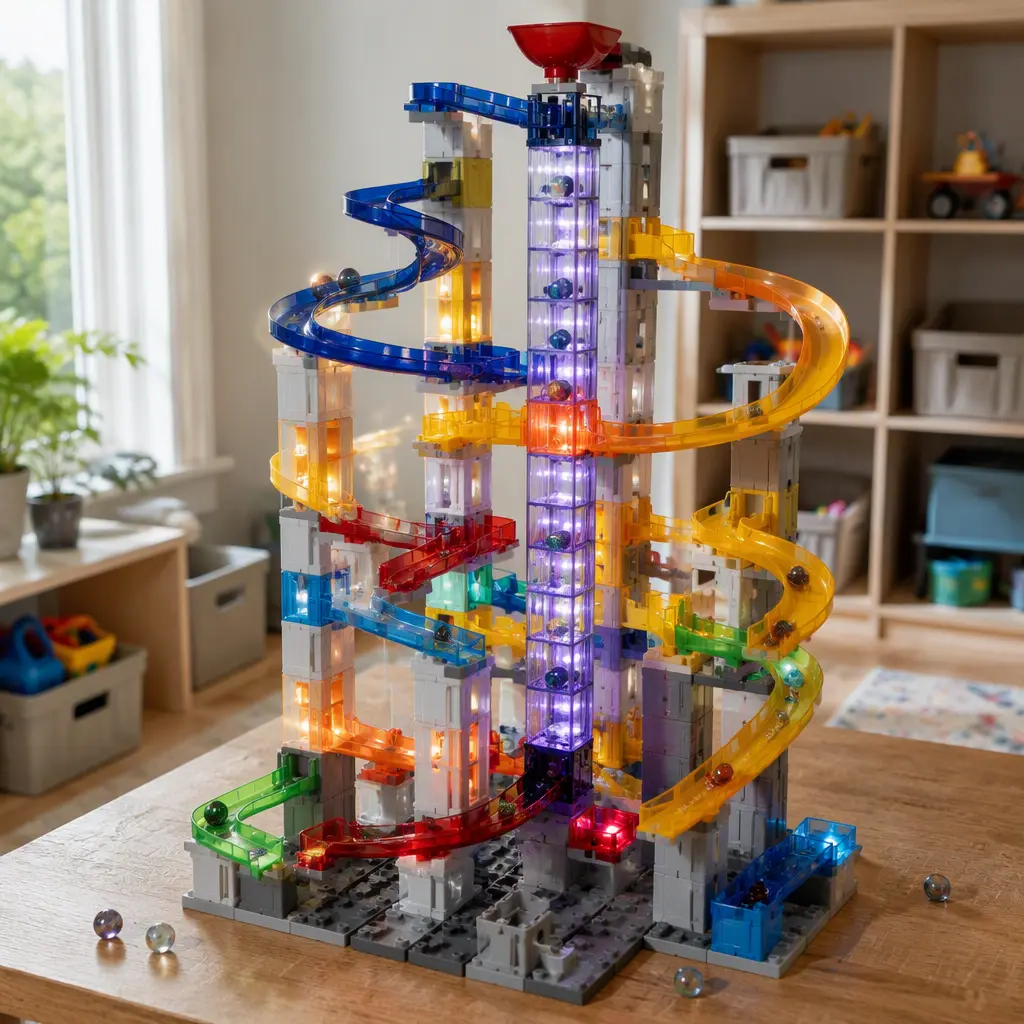
VTech introduced Marble Rush around 2020, during a period when construction toys and STEM-branded play products were becoming increasingly competitive. Traditional marble runs already had a strong reputation for teaching cause and effect, gravity, and problem-solving, but many sets on the market leaned heavily toward either preschool simplicity or advanced hobby-style engineering. Marble Rush attempted to bridge that gap with approachable snap-together construction and built-in electronic feedback.
The company behind the line was already known for educational electronics and interactive preschool toys, so the addition of sound modules and light-up action pieces fit naturally within its catalog. Rather than replacing open-ended building, the electronics were designed to reinforce it. Children could rearrange ramps, towers, and launchers while still getting immediate sensory feedback from moving marbles. That combination helped the line stand out in toy aisles crowded with coding kits and screen-based educational products.
Why it works
At its core, Marble Rush succeeds because the toy delivers two satisfying experiences at once. The first is construction play: snapping together towers, connectors, curves, and pathways into a structure that can actually function. The second is performance. Once the marbles start moving, the toy becomes kinetic entertainment, with spinning sections, drops, jumps, and electronic reactions keeping children engaged long after the initial build is complete.
The design also lowers some of the frustration common in older marble runs. Components are typically color-coded and modular, making it easier to identify compatible pieces and rebuild sections without starting over entirely. Many sets encourage experimentation through alternate layouts rather than requiring a single correct design. For younger builders especially, that flexibility matters. A track that partly works can still feel rewarding, and rebuilding becomes part of the play instead of a failure state.
- Snap-together modular track pieces that can be rearranged repeatedly
- Electronic zones with lights, sounds, or motion-triggered reactions
- Vertical towers and launch systems that add movement variety
- Compatibility across many sets for larger combined builds
- Open-ended layouts that encourage experimentation and problem-solving
Who it's for
Marble Rush is primarily aimed at school-age children who enjoy hands-on building and active play. Younger children are often drawn to the bright colors and motion, while older kids may spend more time optimizing speed, height, or complicated pathways. The toy also has noticeable crossover appeal for adults and older siblings because marble runs naturally invite collaborative tinkering. Parents frequently end up helping stabilize towers, redesign bottlenecks, or race marbles through competing routes. Compared with more rigid STEM kits, the experience feels playful first and educational second, which is part of the line's broad appeal.
Variants and what to look for today
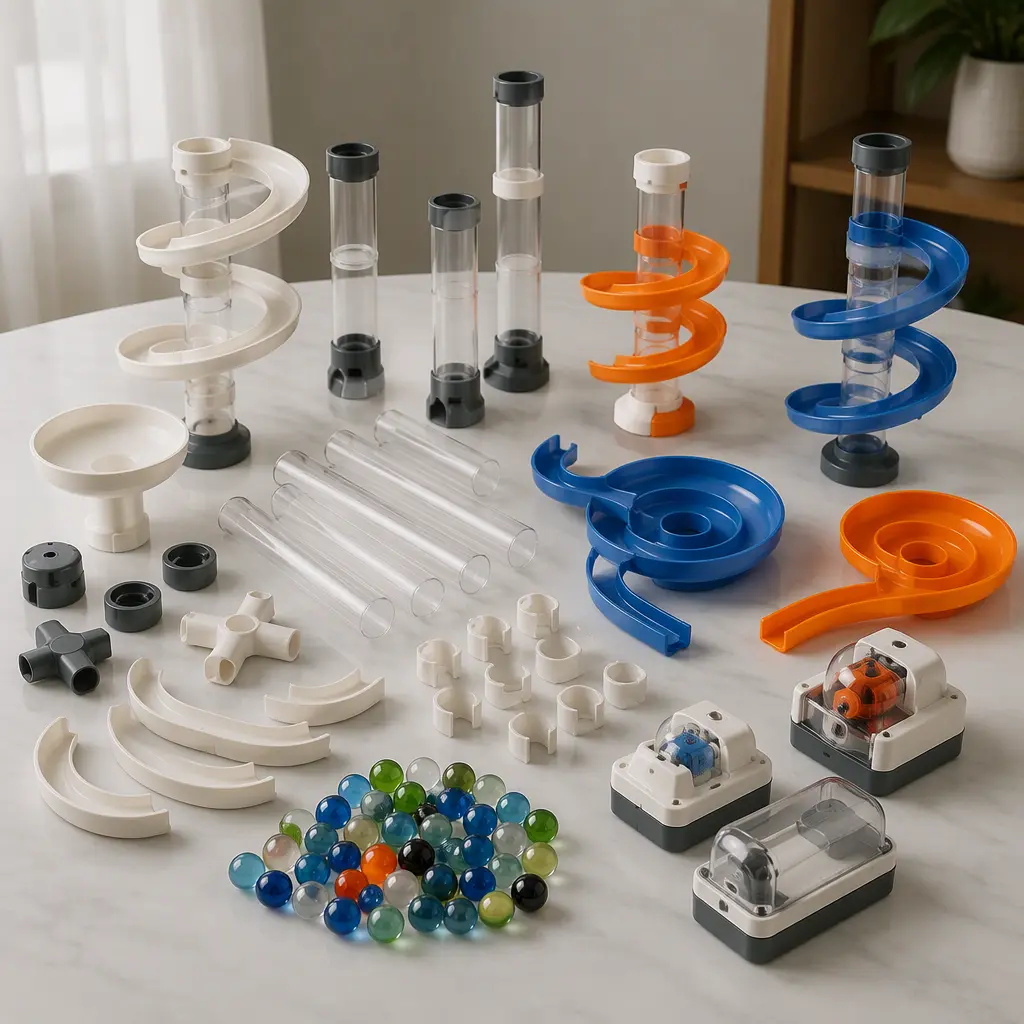
The Marble Rush range expanded quickly after launch, with sets varying from compact beginner builds to larger multi-level constructions featuring motorized elevators, looping sections, and more elaborate electronic modules. Some sets emphasize simple gravity tracks, while others focus on action features such as launchers or trick-style movement. Because the system is modular, many families eventually combine multiple kits into a single oversized structure.
When shopping today, compatibility and stability are the biggest considerations. Larger builds benefit from a wide base and enough support columns to prevent wobbling during play. It is also worth checking whether a set includes electronic elements or is primarily mechanical, since the branding can look similar across different packages. Generic marble-run systems may appear interchangeable at first glance, but connection tolerances can vary enough to create loose joints or unreliable tracks.
- Starter-sized sets are easier for younger children to assemble independently
- Larger expansion-focused kits work best when combined with existing tracks
- Electronic modules may require batteries for lights and sound features
- Transparent track pieces help children follow marble movement visually
- Well-fitting connectors are important for stable tall builds
Frequently asked questions
Is Marble Rush more of a STEM toy or a regular toy?
It works as both. Children naturally explore gravity, momentum, sequencing, and structural balance while building tracks, but the toy is designed first and foremost to be entertaining and interactive rather than classroom-focused.
Do different Marble Rush sets connect together?
Most sets in the line are designed around a shared modular system, allowing families to expand builds over time. Larger combined layouts are one of the main attractions of the toy family.
Are the electronic features necessary for play?
No. The electronic sections add sound and visual feedback, but the core play pattern still comes from building and testing marble pathways. Even simpler non-electronic sections remain engaging on their own.
Is Marble Rush difficult to assemble?
Complexity depends on the size of the build. Smaller sets are approachable for younger children, while larger structures may require patience and occasional adult help, especially when aligning tall sections securely.
VTech Marble Rush arrived at a moment when many educational toys were competing for attention through apps and screens. Its success came from moving in a different direction. By combining physical construction with motion, lights, and sound, the line modernized the marble run without losing the simple satisfaction that made the format popular in the first place. For many families, that balance between experimentation and spectacle is exactly what keeps the marbles rolling.