The Balance Board: Why wobbling became serious play
Once a rehab tool and surf trainer, the balance board became a go-to toy for building coordination, strength, and focus—by leaning into instability.
Compare prices and availability
Check current prices and availability for this guide on eBay.
As an eBay Partner, we may be compensated if you make a purchase.
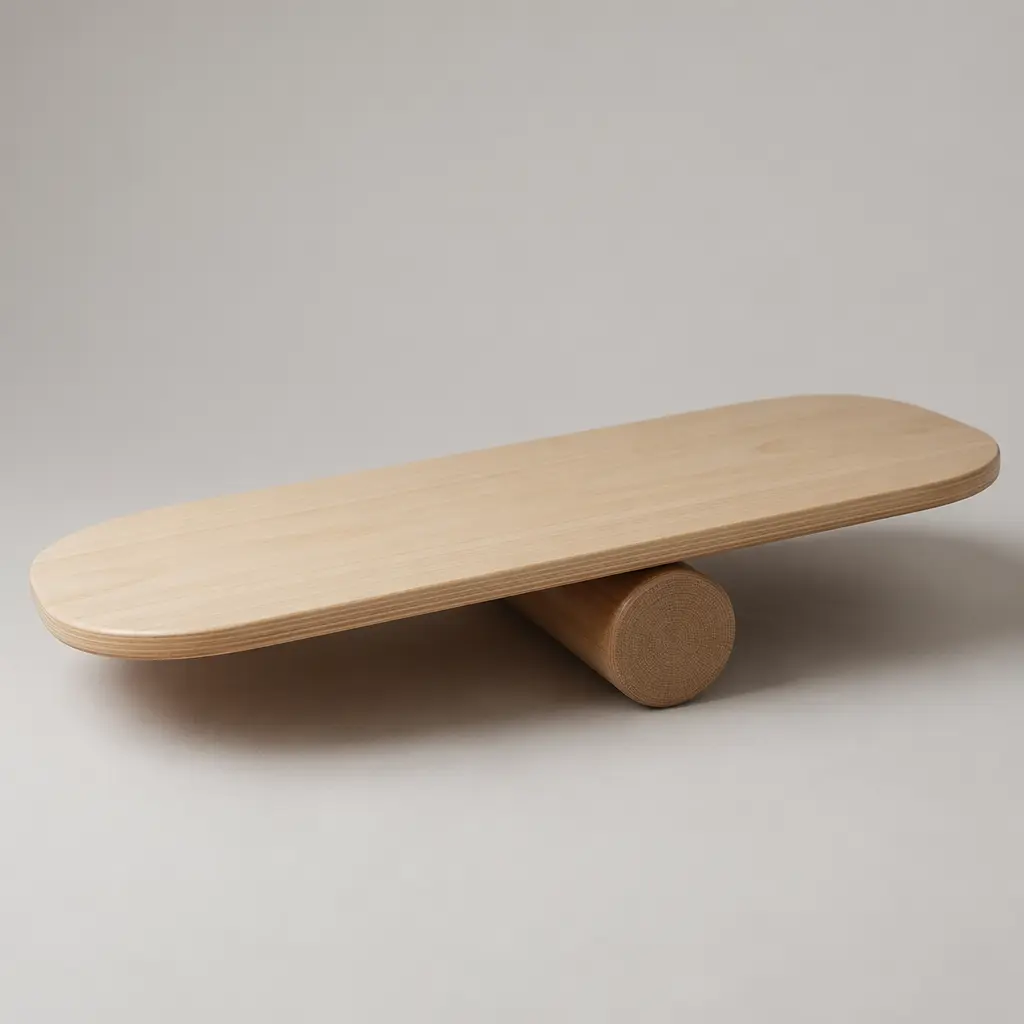
The balance board looks almost too simple to be interesting: a plank, a roller, and not much else. Yet step on one and it quickly becomes clear why it has stuck around. By turning standing still into an active challenge, balance boards make wobbling purposeful. They reward focus, small adjustments, and patience—skills that don’t always come easily to kids or adults, but pay off everywhere else.
Where it came from
Balance boards didn’t start as toys. Variations have been used for decades in physical therapy, sports training, and rehabilitation, where controlled instability helps rebuild strength and coordination. Athletes—particularly surfers, skiers, and skateboarders—used early boards to train off the water or slopes, mimicking the constant micro-adjustments their sports demand.
Over time, those training tools migrated into homes and classrooms. Designers softened the look, swapped industrial materials for wood and cork, and reframed the challenge as play. What emerged was a modern classic: an object that feels open-ended enough for free play, yet purposeful enough that parents and teachers could see the developmental value.
Why it works
The appeal of a balance board lies in its feedback loop. Every shift of weight produces an immediate response. Lean too far and the board tips; correct gently and it steadies. This constant conversation between body and board builds proprioception—the sense of where your body is in space—along with core strength and coordination.
Unlike many active toys, there’s no single “right” way to play. Standing becomes rocking, rocking becomes squatting, and soon the board is part of obstacle courses, imaginative games, or quiet focus time.
- Simple design with no batteries or screens
- Immediate physical feedback that rewards control
- Scales from gentle rocking to demanding balance challenges
- Encourages short bursts of movement indoors or out
Who it’s for
Balance boards are typically marketed for school-age children, but their real range is broader. Younger kids enjoy supervised rocking and imaginative play, while older children use them to test limits and build skills. Adults often rediscover them as desk-side movement tools or light fitness aids. The shared appeal is that the challenge adapts to the user—what’s tricky for one person is calming for another.
Variants and what to look for today
Today’s balance boards come in a handful of familiar formats. The most common is a flat board paired with a cylindrical roller, offering side-to-side motion. Others use a fixed dome or ball underneath for multi-directional movement. Materials range from laminated wood to molded plastic, sometimes with cork or rubber surfaces for grip.
When choosing one, look at surface texture and stability rather than branding. A slightly grippy top helps bare feet stay put, and rounded edges reduce bumps during slips. Be wary of very lightweight boards that can feel twitchy or flimsy; a bit of heft usually translates to smoother motion.
Frequently asked questions
Are balance boards safe for kids?
With supervision and sensible setup, yes. Most injuries come from using boards on slippery floors or near furniture. Clear space and gradual progression make a big difference.
Do they really help with coordination?
Regular use can improve balance, core strength, and body awareness. The gains are subtle but cumulative, especially when the board is part of everyday play.
Can adults use children’s balance boards?
Many can, provided the board is rated for higher weights. Adults often use them for light exercise, stretching, or as a way to stay active while standing.
Is there a learning curve?
Yes, but that’s part of the appeal. Most people find basic rocking quickly, then gradually experiment with more challenging movements.
In a toy landscape crowded with noise and novelty, the balance board stands out by doing less. It invites movement without instruction and challenge without competition. By making instability fun, it quietly teaches control—and proves that sometimes the best play starts with losing your balance.