Bananagrams: How a no-board word game went everywhere
Bananagrams turned speedy spelling into a grab‑and‑go family challenge. With no board and a simple race-to-finish twist, it made word play portable, loud, and surprisingly addictive.
Compare prices and availability
Check current prices and availability for this guide on eBay.
As an eBay Partner, we may be compensated if you make a purchase.
Bananagrams looks almost too simple to last: a bunch of letter tiles, no board, and everyone building words at the same time. Yet since the mid‑2000s it has become a staple in backpacks, holiday homes, and family game cupboards. Its hook is speed. There’s no waiting your turn and no shared board to argue over—just a race to use your letters first. That sense of constant motion is what turned a small word game into a modern classic.
Where it came from
Bananagrams was created by members of the Nathanson family and released in 2006. The idea grew out of a love of word play and a desire to strip away the barriers that can make traditional board games feel slow or formal. Instead of turns, boards, or score pads, the game focused on simultaneous play and a simple goal: be the first to use all your tiles in connected words.
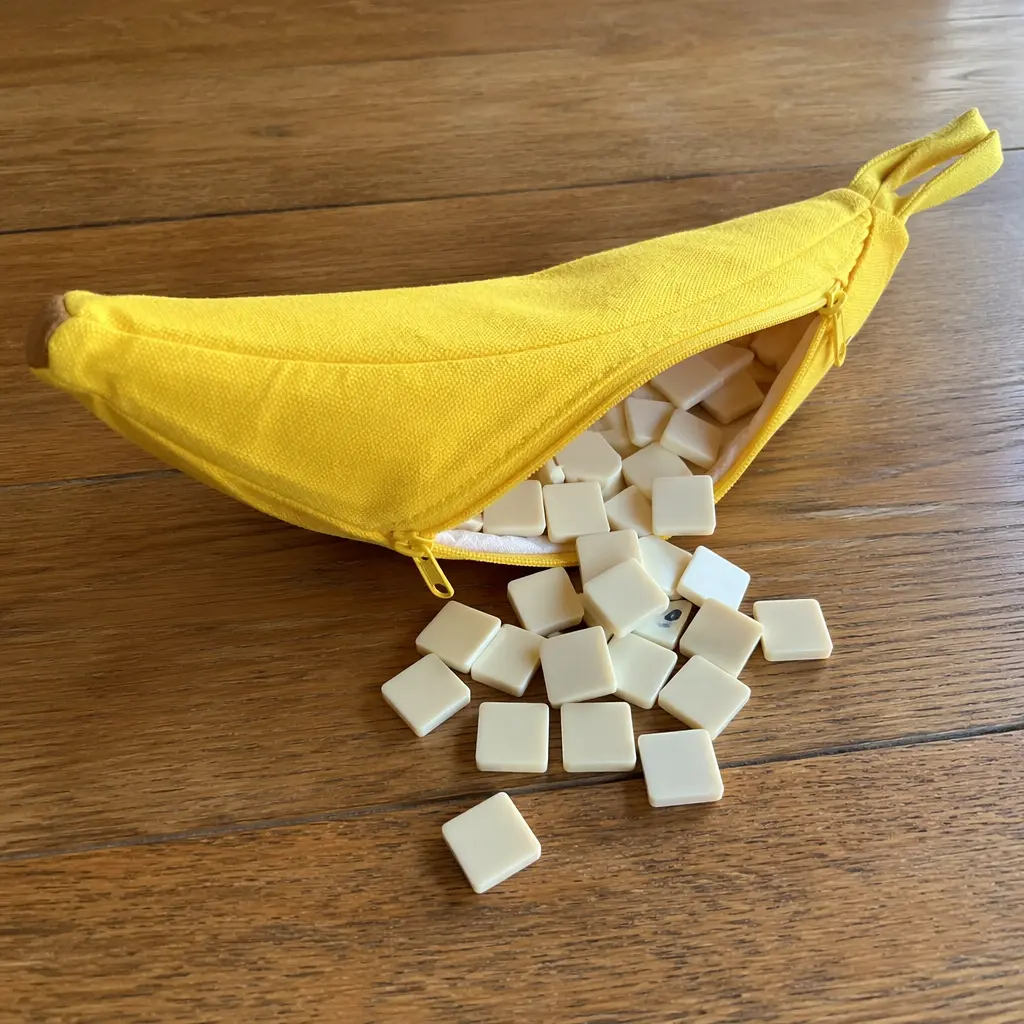
The playful banana theme helped it stand out on shelves, but the real innovation was practical. Everything fits into a soft pouch, making it easy to throw into a bag. That portability matched the era perfectly, as families looked for games that could travel to cafés, campsites, and flights without needing a big table or long setup.
Why it works
At its heart, Bananagrams borrows the crossword-building idea people already know, then adds urgency. Everyone starts at the same time, drawing tiles and building their own grid. When someone finishes, the pressure spikes for everyone else. The rules are light, but the experience is intense in a friendly way.
Several design choices keep it accessible and replayable:
- Simultaneous play, so no one waits around
- No board or fixed layout, allowing flexible table space
- Short rounds that fit into spare moments
- Language-based challenge that scales with the players’ skills
- A tactile tile feel that’s satisfying for both kids and adults
Who it's for
Bananagrams is typically recommended for school‑age children and up, once basic spelling is comfortable. Younger players can join in with help, while teenagers and adults often find it surprisingly competitive. It’s also popular with teachers and grandparents, since it exercises vocabulary without feeling like homework. Because everyone plays at once, mixed‑age groups can adjust their own pace without slowing the game down.
Variants and what to look for today
Over time, the core idea has expanded into a small family of games. There are junior-friendly versions with simplified letters, travel-friendly editions with fewer tiles, and themed spins that tweak the rules for new challenges. Despite the variations, the classic version remains the reference point and the one most families start with.
When shopping today, it’s worth checking that the tile set feels sturdy and that the pouch closes securely. Generic letter‑tile games can look similar, but the balance of letters and the quality of the tiles affect how smoothly the game plays. Stick with well-reviewed editions and be wary of ultra‑cheap copies with thin tiles that slide around or wear quickly.
Frequently asked questions
How long does a game usually take?
Most rounds last 10–20 minutes, depending on players’ experience and vocabulary. Many families play several rounds in one sitting.
Do you need a large table?
Not really. Each player builds their own grid, so even a coffee table or picnic blanket can work, as long as everyone has a bit of personal space.
Is it educational or just for fun?
It’s both. Players practice spelling, pattern recognition, and quick thinking, but the competitive, fast-paced format keeps it feeling like a game rather than a lesson.
Can you play with two players?
Yes. It works well with two and scales up easily for larger groups, which is part of its broad appeal.
Nearly two decades after its debut, Bananagrams still earns its place by being easy to start and hard to put down. It doesn’t rely on a board, a theme, or a long explanation—just the universal pleasure of making words under pressure. That simplicity is what keeps it traveling from kitchen tables to suitcases, one quick round at a time.