Bauspiel Lucent Cubes and the Rise of Design-Led Play
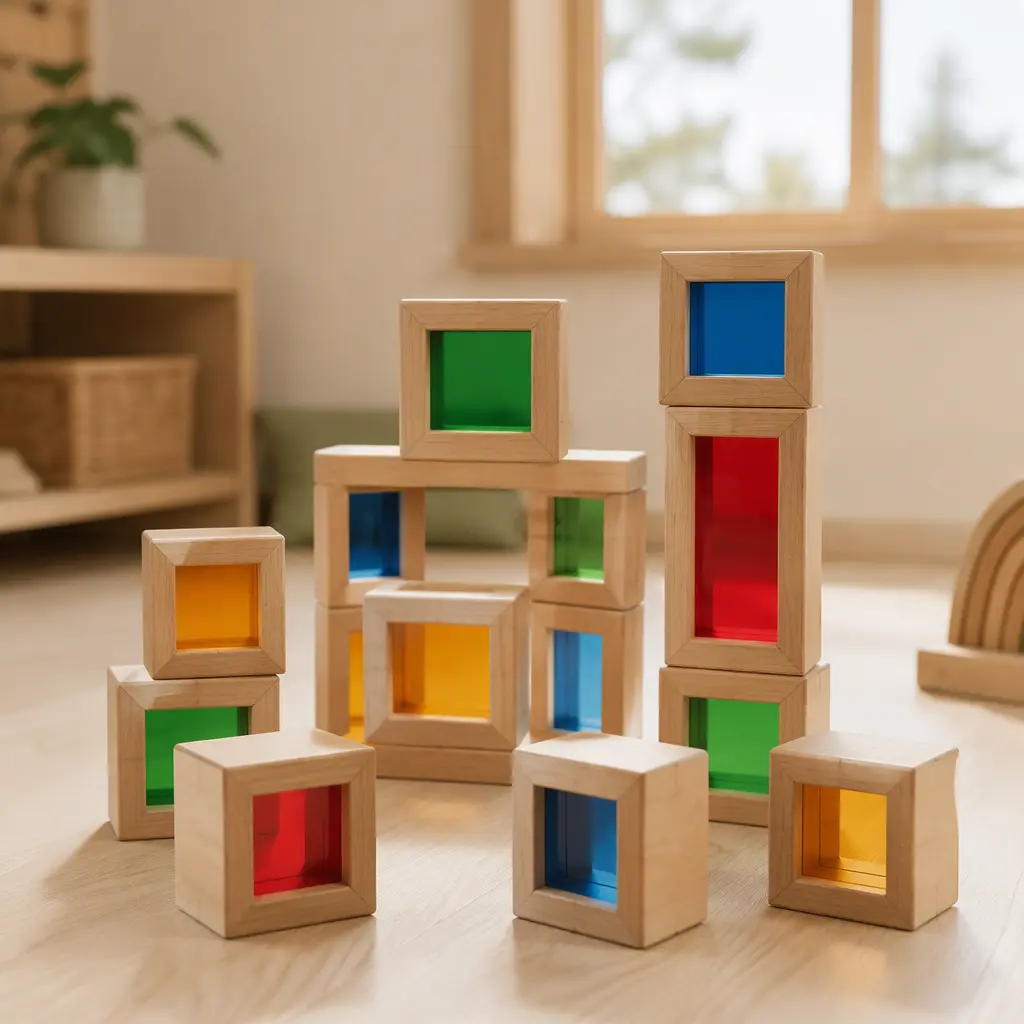
Bauspiel Lucent Cubes turned simple building blocks into a design-focused play staple, blending natural wood with jewel-like acrylic windows that appeal to children, parents, and educators alike.
Compare prices and availability
Check current prices and availability for this guide on eBay.
As an eBay Partner, we may be compensated if you make a purchase.
Bauspiel Lucent Cubes sit at the intersection of toy design, early childhood education, and modern interior style. At first glance they look almost architectural: smooth wooden cubes with bright translucent windows that catch sunlight like stained glass. In practice, they function as open-ended building toys that encourage stacking, sorting, imaginative construction, and sensory play. Their rise in popularity reflects a broader shift toward toys that are visually calm, durable, and flexible enough to grow with a child over several years.
Where it came from
Bauspiel is a German toy maker known for handcrafted wooden toys that emphasize sensory richness and open-ended exploration. The company emerged from the European tradition of educational wooden play materials associated with Waldorf classrooms, Montessori environments, and free-play learning spaces. Rather than focusing on licensed characters or electronic features, Bauspiel built its reputation around tactile materials, natural finishes, and visually striking color accents.
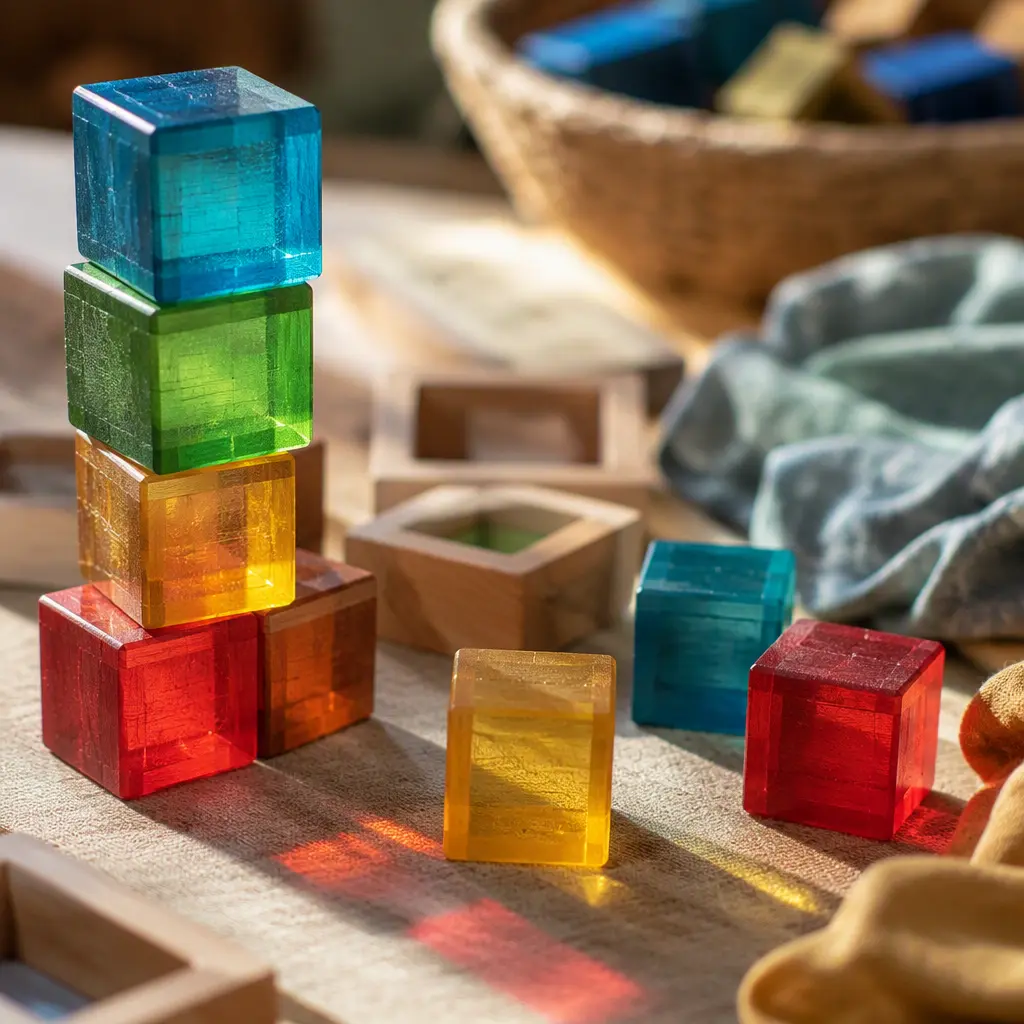
The Lucent Cubes became one of the brand's most recognizable creations because they transformed an ordinary block set into something unusually interactive with light. Each cube combines solid wood framing with inset translucent acrylic panels that resemble tiny windows. Children can stack them into towers, use them on light tables, or hold them up to sunlight to see shifting colors and shadows. The concept is simple, but the sensory effect makes the toy memorable in classrooms and modern playrooms alike.
Why it works
The appeal of Lucent Cubes comes from how many kinds of play they support without needing rules or instructions. Younger children often begin by exploring the colors and textures, lining cubes up or carrying them from place to place. As children get older, the same cubes become building materials for bridges, castles, patterns, or imaginary cities. Because the blocks are uniform and sturdy, they invite experimentation without frustrating instability.
The design also aligns closely with current parent preferences around toys. Many families are looking for products that avoid flashing lights and noise while still holding attention over time. Lucent Cubes fit naturally into neutral-toned playrooms, but they remain visually engaging because the translucent inserts react differently depending on the lighting in the room. They photograph well, display neatly on shelves, and often become part of a larger loose-parts play setup.
- Solid wood construction with smooth, weighty handling
- Translucent colored centers that interact with sunlight and light tables
- Open-ended building possibilities rather than fixed outcomes
- Compatible with many other wooden block systems
- Appealing to both classroom settings and home play spaces
Who it's for
Lucent Cubes are typically best suited for preschool and early elementary ages, though toddlers can enjoy supervised sensory exploration with larger sets. Older children often use them as part of imaginative world-building or decorative constructions combined with magnetic tiles, ramps, or natural loose parts. Adults are part of the audience too. Many parents and educators appreciate that the cubes feel more like enduring materials than trend-driven toys. Their polished look and durable construction make them popular in homes where toys are expected to blend into shared living spaces rather than dominate them visually.
Variants and what to look for today
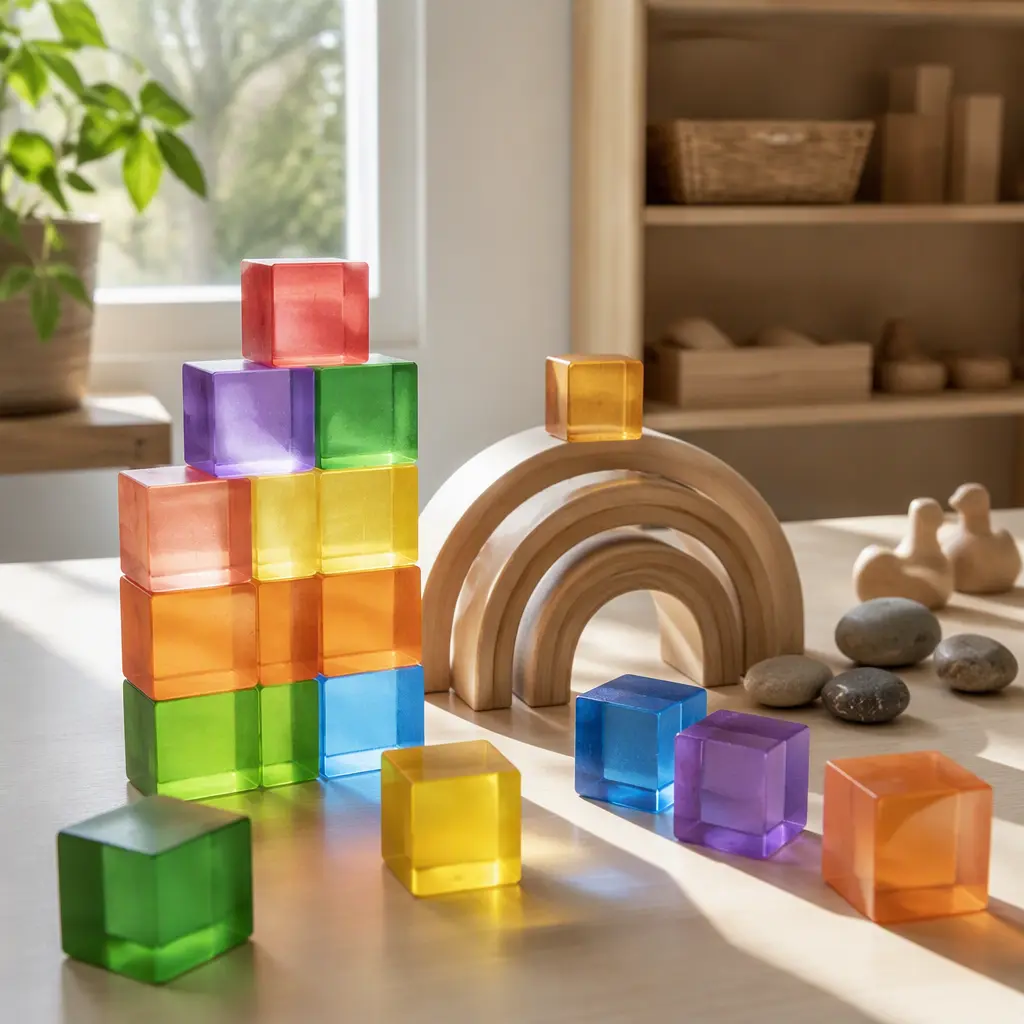
Modern Lucent Cube sets appear in a range of sizes and configurations. Some focus on basic cube shapes, while others combine rectangular prisms, window blocks, or mirrored inserts. Many families mix them with other open-ended toys such as rainbow arches, wooden people, sensory trays, or magnetic construction tiles. Light tables are especially popular companions because they intensify the translucent effect of the colored panels.
As demand for aesthetic wooden toys has increased, many similar products have appeared on the market. Quality differences often show up in the finish and durability. Well-made sets typically feature smooth sanding, securely fitted acrylic inserts, and hardwood construction that resists cracking or splintering. Lower-cost imitations may use thinner plastic inserts or rougher finishes that wear down more quickly under heavy play.
- Look for smooth edges and securely fixed translucent panels
- Heavier hardwood pieces generally feel more durable during stacking play
- Starter sets work well for younger children before expanding into larger collections
- Light tables or sunny windows increase the visual play value considerably
- Simple storage trays can help keep pieces organized between play sessions
Frequently asked questions
Are Lucent Cubes Montessori toys?
They are not officially tied to one educational method, but they are widely used in Montessori-inspired and Waldorf-inspired spaces because they encourage self-directed, open-ended exploration without electronics or scripted play patterns.
Do children actually build with them or mostly display them?
Most children use them actively for construction, sorting, pretend play, and sensory experiments with light. Their decorative appearance appeals to adults, but their durability and stackable design support regular hands-on use.
Are they compatible with other block systems?
Yes. Many families combine Lucent Cubes with standard wooden blocks, ramps, magnetic tiles, or loose parts. Their simple geometric sizing makes them flexible additions to broader building collections.
Why are they popular on social media and in modern playrooms?
Part of their popularity comes from how photogenic they are in natural light. The colored reflections and clean wood finishes fit contemporary design trends, but the enduring appeal comes from their versatility as open-ended play materials rather than decorative objects alone.
Bauspiel Lucent Cubes represent a broader movement in modern toys toward slower, more flexible forms of play. They do not rely on characters, apps, or complicated instructions to hold attention. Instead, they turn a familiar object — the humble wooden block — into something visually rich and adaptable. That combination of simplicity, craftsmanship, and sensory appeal explains why they have become fixtures in classrooms, boutique toy stores, and design-conscious homes around the world.