Carcassonne: The tile‑laying game that builds itself
Since 2000, Carcassonne has shown how placing the board can be the game. Its simple tile‑laying turns cities, roads and fields into a quietly strategic, family‑friendly classic.
Compare prices and availability
Check current prices and availability for this guide on eBay.
As an eBay Partner, we may be compensated if you make a purchase.
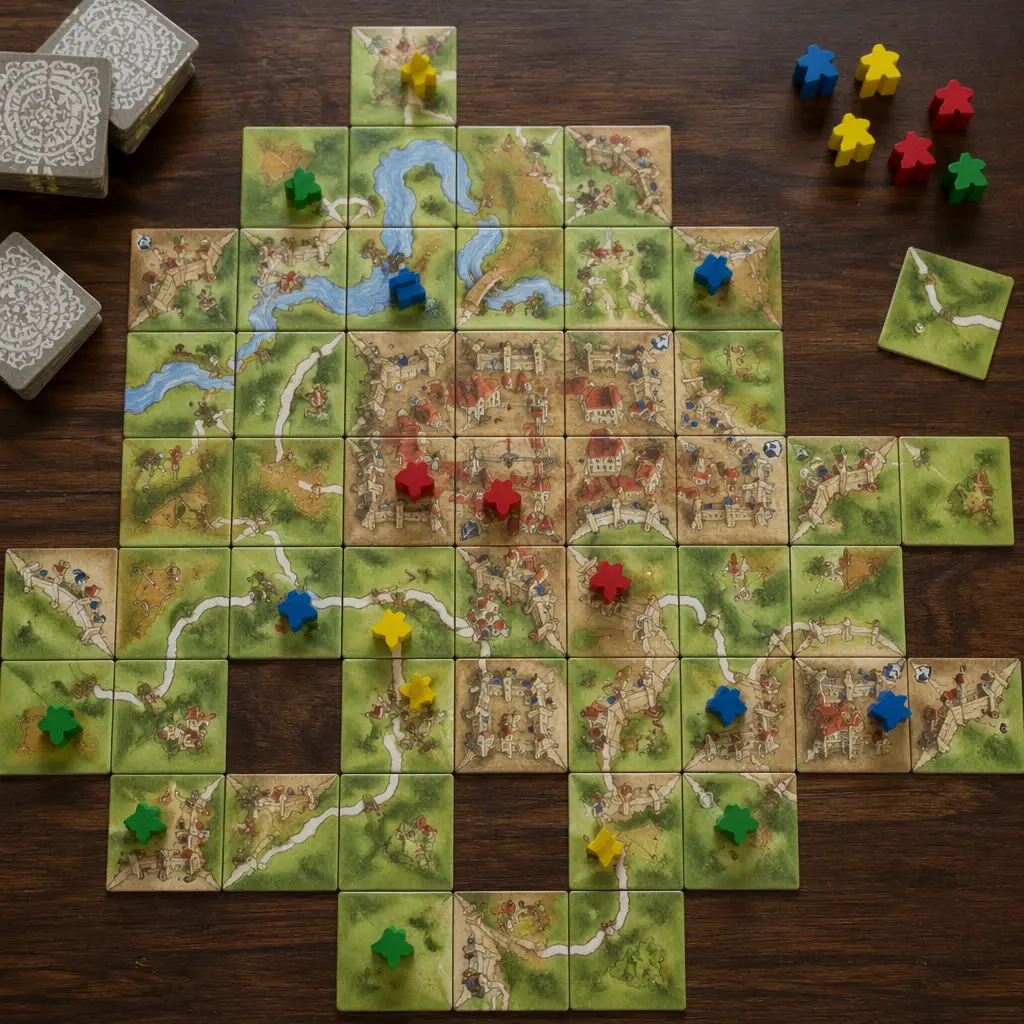
Carcassonne is one of those rare games that feels obvious once you’ve played it. Instead of starting with a fixed board, players build the map as they go, laying tiles that create cities, roads, monasteries and farms. Every placement changes what’s possible next. That simple idea helped turn Carcassonne into a modern classic and introduced a generation of families to strategy games that don’t feel intimidating.
Where it came from
Carcassonne was designed by German game designer Klaus‑Jürgen Wrede and first released in 2000. Named after the famous walled city in southern France, the game draws on a loosely medieval theme without getting bogged down in history. Its original purpose was refreshingly straightforward: create a game that was easy to learn, quick to play, and still offered meaningful choices.
At the time, European‑style board games were gaining attention beyond hobby circles, and Carcassonne arrived at exactly the right moment. It won major awards early on and quickly spread from dedicated game shops to mainstream retailers. Its success helped cement the idea that modern board games could be both accessible and deep, paving the way for many family‑weight strategy games that followed.
Why it works
The core mechanic is elegant: draw a tile, place it so edges match, then decide whether to commit one of your limited followers to score from that feature. Every turn is small, but the consequences add up. Because the board grows in unpredictable ways, players must balance planning ahead with reacting to what appears.
Carcassonne also succeeds because it layers interaction gently. You can quietly build your own city, or you can connect to an opponent’s feature and compete for points. It’s rarely aggressive, but it’s never solitary.
- A board that changes shape every game
- Simple rules that hide meaningful strategy
- Limited followers that force tough choices
- Indirect interaction without constant conflict
- Clear scoring that’s easy to explain to newcomers
Who it's for
Carcassonne is often recommended for ages around 7 and up, but its real strength is how wide its appeal stretches. Children can focus on matching tiles and claiming features, while adults think about timing, blocking, and long‑term scoring. It works just as well as a relaxed family game as it does with adults who enjoy light strategy, and it scales nicely from two players to larger groups.
Variants and what to look for today
Over the years, Carcassonne has expanded into a whole family of products. The core game remains the best starting point, but many players enjoy adding expansions that introduce new tiles, rules, or scoring opportunities. These can make the game longer or more complex, so they’re usually best added gradually.
When looking for a copy today, it’s worth checking which edition you’re getting, as artwork and component styles have evolved. Stick with well‑made versions that have sturdy tiles and clear iconography. Generic imitations often miss the balance and clarity that make the original work so well.
Frequently asked questions
Is Carcassonne hard to learn?
No. Most players grasp the basics within a few turns. The challenge comes from making smart decisions, not from memorising rules.
How long does a typical game take?
A standard game usually lasts around 30–45 minutes, depending on player count and experience.
Do you need expansions to enjoy it?
Not at all. The base game stands on its own and is often preferred for casual or family play.
Is it good for two players?
Yes. With two players, the game becomes tighter and more tactical, which many people enjoy.
More than two decades after its debut, Carcassonne still earns its place on shelves and tables. Its lasting appeal comes from a simple insight: when players build the world as they play, every game tells a different story.