Crossfire: The marble battle game built on speed and chaos
Crossfire turned a simple tabletop setup into a noisy, fast-moving contest of reflexes. Decades after its debut, the marble battle game still stands out for pure kinetic energy.
Compare prices and availability
Check current prices and availability for this guide on eBay.
As an eBay Partner, we may be compensated if you make a purchase.
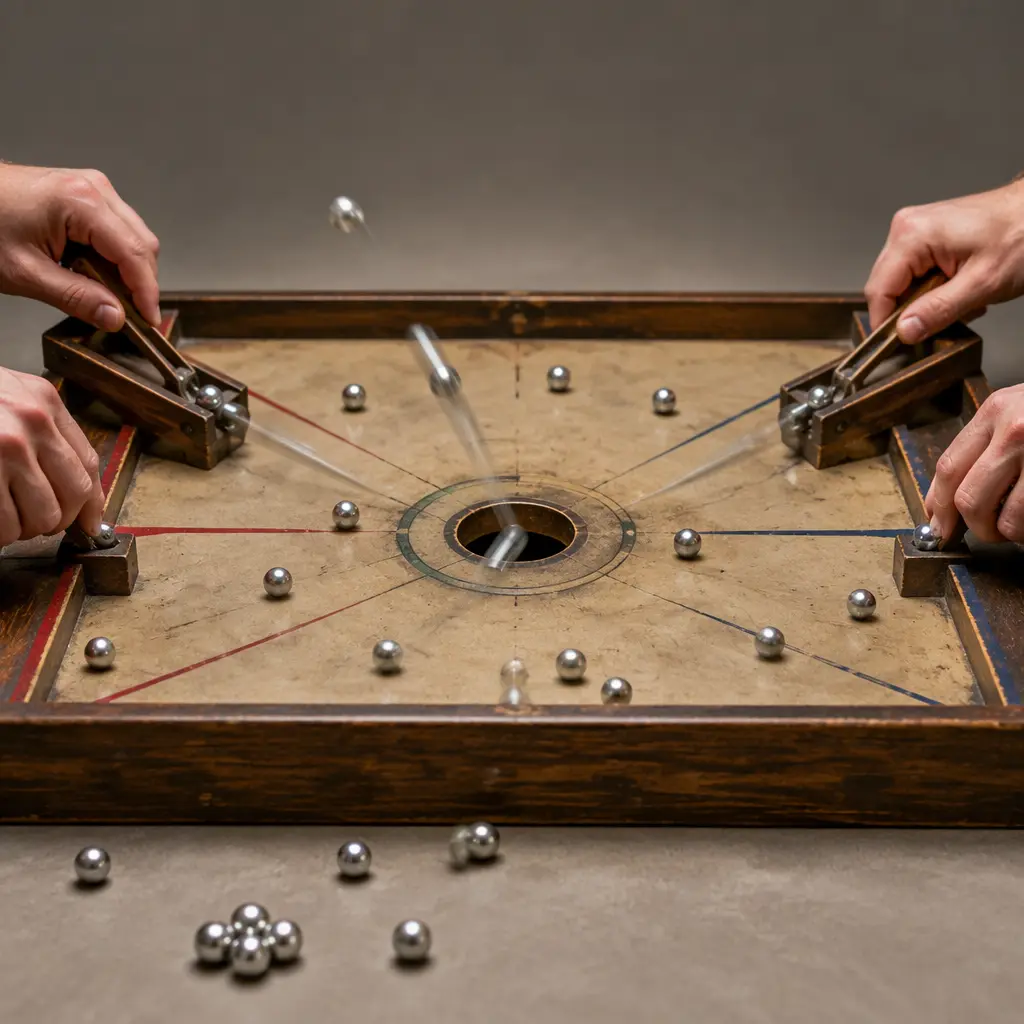
Some family games reward patience, planning, or careful strategy. Crossfire went in the opposite direction. The tabletop marble battle game, first released in the early 1970s, became famous for turning a small plastic arena into a loud, frantic contest of speed and coordination. Players sat face to face, rapidly firing metal marbles across the board while trying to force several into the opponent’s goal. The appeal was immediate: quick rounds, constant movement, and the feeling that the game might spin out of control at any second. Even people who barely remembered the rules often remembered the sound.
Where it came from
Crossfire arrived during a period when toy companies were experimenting with games that felt more physical and energetic than traditional board games. Released in 1971 by the Milton Bradley company, the game combined elements of tabletop competition, dexterity play, and mechanical toy design. Instead of turns and cards, it focused on simultaneous action. Both players could fire marbles as fast as they wanted, creating a constant stream of movement across the board.
The setup was simple but distinctive. Each side of the game included a spring-loaded launcher that propelled small steel marbles toward a central area. The objective was not to hit targets directly, but to overwhelm the opponent by driving marbles into their goal zone. That design gave Crossfire an unusual feel compared with other family games of the era. It was less about careful scoring and more about pressure, timing, and momentum. The game also benefited from memorable television advertising in the 1980s and 1990s, which presented it as a dramatic head-to-head battle rather than a quiet tabletop activity.
Why it works
Crossfire succeeds because it removes downtime almost entirely. Both players act at the same time, and the action starts immediately after the marbles are loaded. The physical feedback of flicking or pressing the launcher, hearing marbles collide, and reacting to fast changes on the board keeps players engaged in a way that many traditional board games do not. Rounds are short, which encourages rematches and quick competitions between siblings or friends.
The game also creates a surprisingly unpredictable rhythm. A player can dominate for several seconds, only to lose control after one lucky rebound sends multiple marbles back toward their own side. Because the board is compact and chaotic, players constantly adapt. Younger players often enjoy the sensory excitement, while adults tend to appreciate the directness of the design. There is almost no setup beyond placing the marbles, and the rules can be explained in under a minute.
- Fast simultaneous gameplay with almost no waiting
- Simple rules that are easy for younger players to grasp
- Physical action and sound effects that make the game memorable
- Short rounds that encourage repeat play
- Compact tabletop setup compared with larger action games
Who it's for
Crossfire has traditionally appealed to children roughly elementary-school age and older, especially players who prefer action-heavy games over strategy titles. Because the gameplay relies on speed and coordination, younger children may need supervision around the small metal marbles, but older kids usually understand the mechanics quickly. Adults who grew up during the 1980s and 1990s often revisit Crossfire for nostalgia, particularly if they remember the intense advertising campaigns or played it at sleepovers and family gatherings. It also works well as a short activity between longer games because rounds move so quickly.
Variants and what to look for today
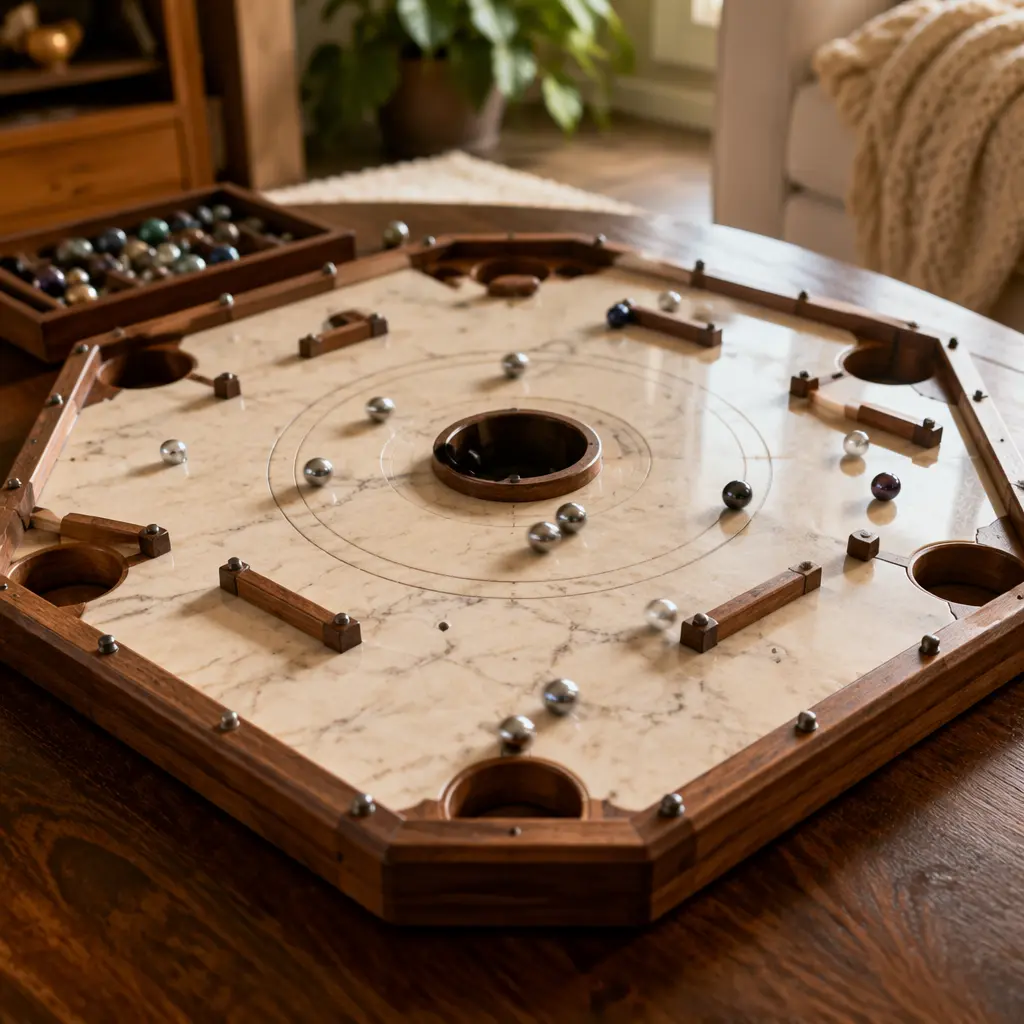
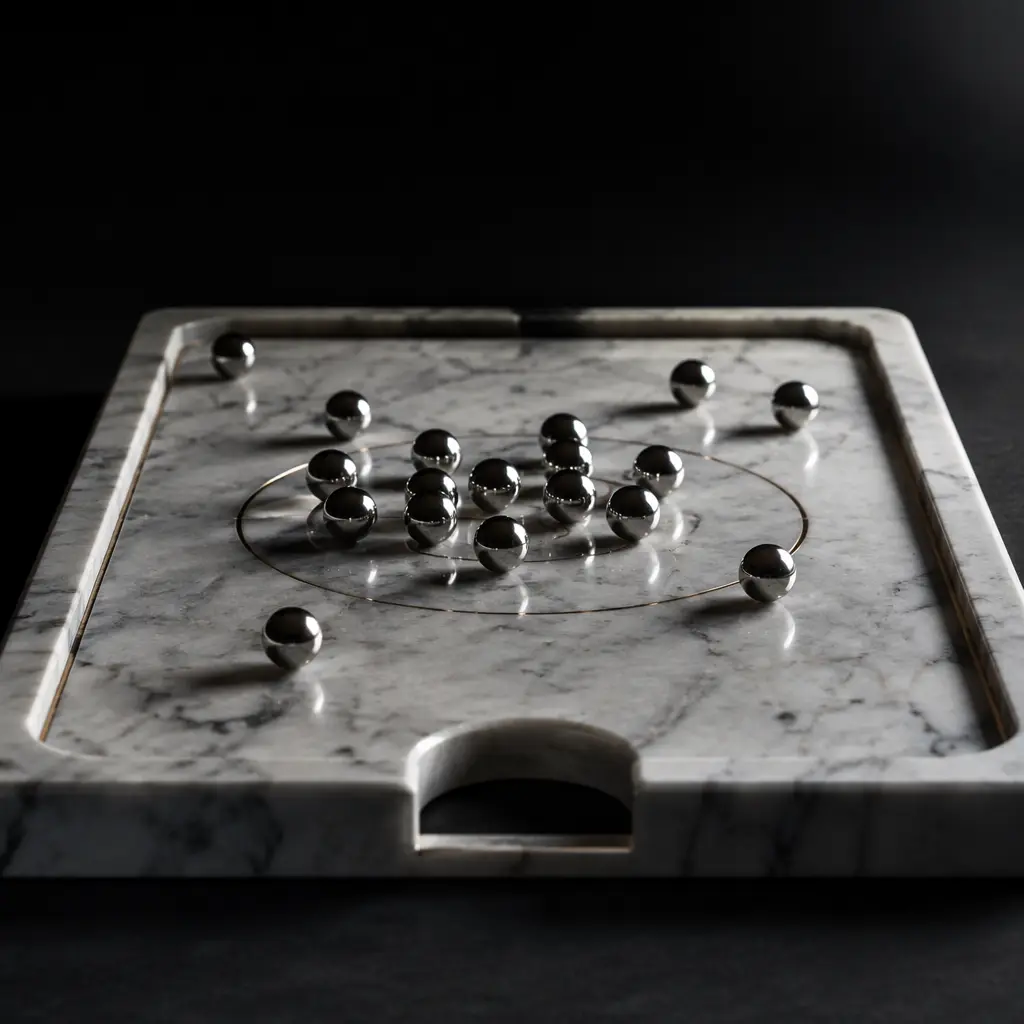
Over the years, Crossfire has appeared in several re-releases and updated editions. The overall concept has stayed consistent, though details such as board colors, launcher shapes, and plastic quality have varied between production runs. Vintage editions from the 1970s and 1980s are especially popular with collectors who want the original look and feel, while later reissues are often easier to find and may include sturdier replacement parts.
Anyone shopping for Crossfire today should pay close attention to completeness. Missing marbles, damaged launchers, or warped playing surfaces can affect how the game performs. Since the gameplay depends on speed and smooth movement, worn parts make a noticeable difference. Generic marble battle games also exist, and while some capture the spirit of the original, lower-quality versions may jam easily or use lightweight components that reduce the satisfying impact and noise that helped define Crossfire in the first place.
- Check that the launcher mechanisms still spring smoothly
- Make sure all metal marbles are included and evenly sized
- Inspect the board surface for cracks or warping
- Vintage editions may have stronger nostalgia appeal
- Modern reissues can be easier to maintain for regular play
Frequently asked questions
Is Crossfire a board game or an action toy?
It sits somewhere between the two categories. Crossfire has goals and rules like a board game, but the experience depends heavily on reflexes, physical coordination, and mechanical action.
Why do people remember the commercials so clearly?
The advertising leaned into excitement and competition, presenting the game as intense and fast-moving. The energetic style matched the gameplay and helped the product stand out during the television-heavy toy marketing era of the 1980s and 1990s.
Are vintage versions better than newer ones?
Collectors often prefer older editions for nostalgia and build quality, but condition matters more than age. A complete, well-maintained reissue can provide a better play experience than a damaged vintage copy.
Does Crossfire require much strategy?
The game is driven more by reaction speed and pressure than deep strategy, although experienced players do learn techniques for controlling marble flow and timing their shots.
Crossfire remains memorable because it committed fully to one idea: making a tabletop game feel urgent. It did not try to simulate a realistic sport or build a complicated scoring system. Instead, it relied on noise, speed, and constant motion. Decades after its introduction, that formula still feels different from most family games on store shelves, which helps explain why the marble battle arena continues to hold a place in toy history.