Fisher-Price Corn Popper: Why a noisy push toy still matters
First sold in the 1950s, the Fisher-Price Corn Popper turns walking practice into noisy fun. Here’s how a simple push toy helped generations of toddlers find their feet.
Compare prices and availability
Check current prices and availability for this guide on eBay.
As an eBay Partner, we may be compensated if you make a purchase.
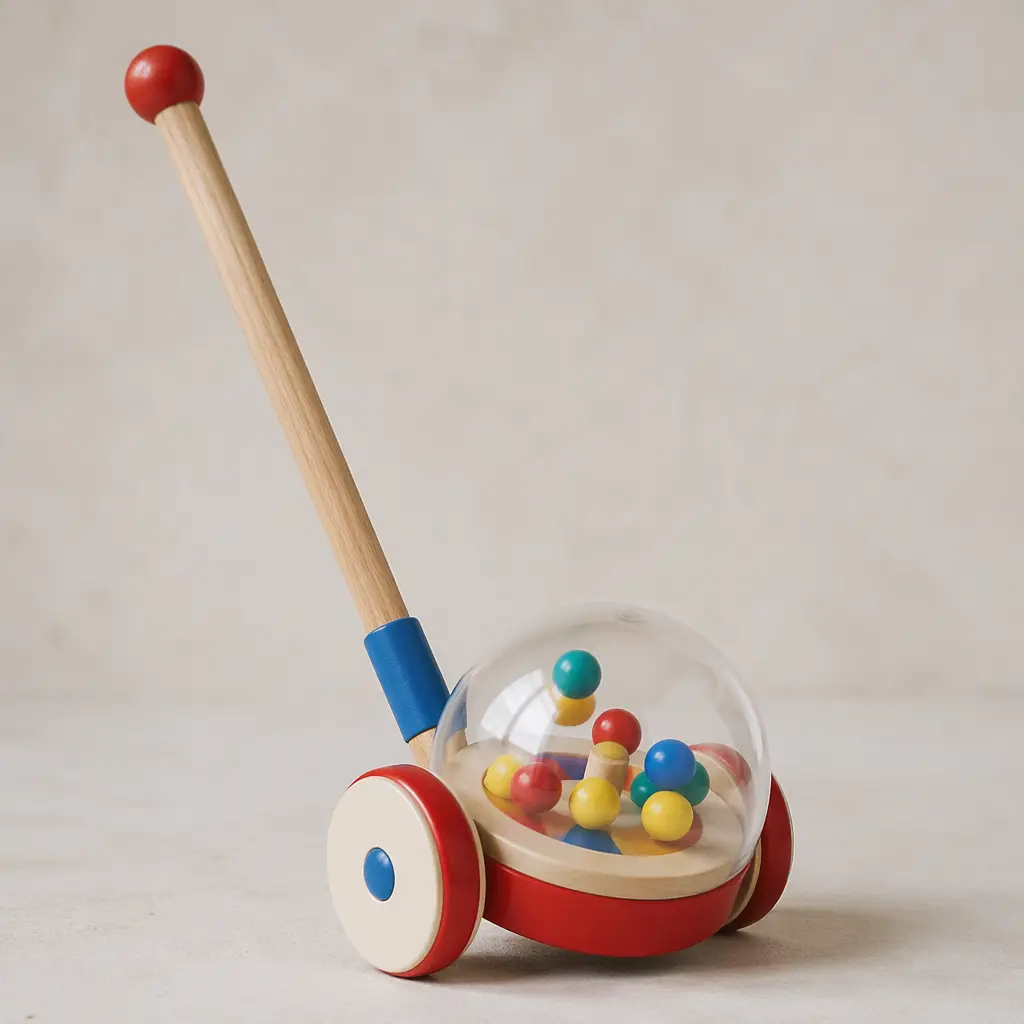
Few toys announce themselves the way the Corn Popper does. With every step a toddler takes, it rewards the effort with a burst of color and sound—bright balls popping and bouncing under a clear dome. For parents, it’s a familiar mix of encouragement and noise. For toddlers, it’s motivation on wheels. Decades after it first appeared, this simple push toy is still doing the same job: helping small children practice walking while turning effort into play.
Where it came from
The Corn Popper was introduced by Fisher-Price in 1957, during a period when the company was redefining toys for very young children. Rather than focusing on fantasy or collectibles, Fisher-Price leaned into child development—how toys could support physical skills, coordination, and confidence.
Originally made with a wooden handle and metal or plastic components, the Corn Popper was designed for children just learning to walk. The idea was straightforward: give toddlers something stable to push, then reward forward motion with instant feedback. The popping balls weren’t just amusing; they were a clear cause-and-effect lesson tied directly to movement.
Why it works
At its core, the Corn Popper is a lesson in motivation. Walking is hard work for toddlers, and early steps can be frustrating. The toy turns each step into an event. Push harder or faster, and the popping becomes more energetic. Slow down, and the action calms. That direct link between effort and reward keeps children engaged longer than a silent walker would.
Its design is also deceptively thoughtful. The handle is sized for small hands, the base is wide enough to feel stable, and the rolling resistance encourages steady forward motion rather than running. Standout features include:
- A clear dome that lets children see movement as well as hear it
- Bright, high-contrast balls that draw visual attention
- A push mechanism that works only when the toy is moving forward
- Simple construction with no batteries or screens
Who it's for
The Corn Popper is aimed squarely at toddlers, typically from around 12 months up to about two years old—roughly the window when children are learning to stand, balance, and walk independently. That said, it has a surprising amount of adult appeal. Many parents and grandparents remember having one themselves, which makes it a popular nostalgia gift. It’s also often chosen by caregivers who prefer toys that encourage physical activity over passive play.
Variants and what to look for today
Over the years, the Corn Popper has been updated with new materials and brighter plastics, but the basic formula hasn’t changed. Modern versions are lighter, often all-plastic, and designed to meet current safety standards. You’ll still find the familiar popping action and bold colors.
When shopping today, look for a sturdy handle connection, smooth-rolling wheels, and securely enclosed balls that can’t be removed. Generic push popper toys are common, and many work just fine, but very cheap versions can have flimsy handles or wheels that don’t roll evenly, which can frustrate new walkers.
Frequently asked questions
Is the Corn Popper too loud for indoor use?
It’s definitely not a quiet toy. The popping sound is part of its appeal for toddlers, but it can be noisy on hard floors. Many parents reserve it for daytime play or larger rooms.
Does a push toy really help toddlers learn to walk?
Push toys don’t teach walking on their own, but they can encourage practice. They provide balance support and a reason to keep moving, which can help build confidence.
Are modern versions different from vintage ones?
Modern versions tend to be lighter and made from updated plastics, with safety improvements. The play pattern and popping action remain largely the same.
Can older children play with it?
Older children may enjoy it briefly, but it’s designed for early walkers. Its real value is during that short developmental stage.
The Corn Popper endures because it solves a real problem in a joyful way. It doesn’t promise to make walking effortless or quiet, but it turns practice into play. For nearly seventy years, that simple idea—movement rewarded with noise and color—has helped generations of toddlers take confident steps forward.