Fisher-Price Laugh & Learn: How talking toys became the norm
Fisher-Price Laugh & Learn helped make talking, singing, adaptive learning toys a household staple—reshaping how babies play, listen, and learn at home.
Compare prices and availability
Check current prices and availability for this guide on eBay.
As an eBay Partner, we may be compensated if you make a purchase.
For many parents, Fisher-Price Laugh & Learn toys feel almost inevitable—cheerful voices, simple songs, and a friendly prompt encouraging babies to press, tap, or flip something. But when the line first appeared, it marked a real shift. Laugh & Learn helped normalize the idea that baby toys could talk, sing, and even adapt to a child’s development, all while remaining simple enough for infants to enjoy.
Where it came from
Fisher-Price has been making toys for young children since the 1930s, but the Laugh & Learn line emerged much later, as electronic components became cheaper, smaller, and more reliable. By the early 2000s, parents were increasingly open to toys that blended traditional play with early learning concepts like letters, numbers, and cause-and-effect.
Laugh & Learn was designed to sit squarely in that space. Rather than positioning itself as formal education, the line focused on exposure—hearing words, songs, and simple questions during everyday play. The toys were built to feel friendly and low-pressure, aiming to support development without replacing human interaction.
Why it works
At its core, Laugh & Learn succeeds because it combines repetition with reward. Babies press a button, hear a response, and often see a light or movement. That immediate feedback encourages them to keep exploring. Over time, familiar songs and phrases become comforting, even as children gradually understand more of the words.
Another key element is scalability. Many Laugh & Learn toys are designed to remain interesting across several months—or even years—by offering different modes or layers of content. This makes them feel less disposable than single-stage baby toys.
- Simple cause-and-effect interactions that reward curiosity
- Friendly voices and melodies designed not to overwhelm
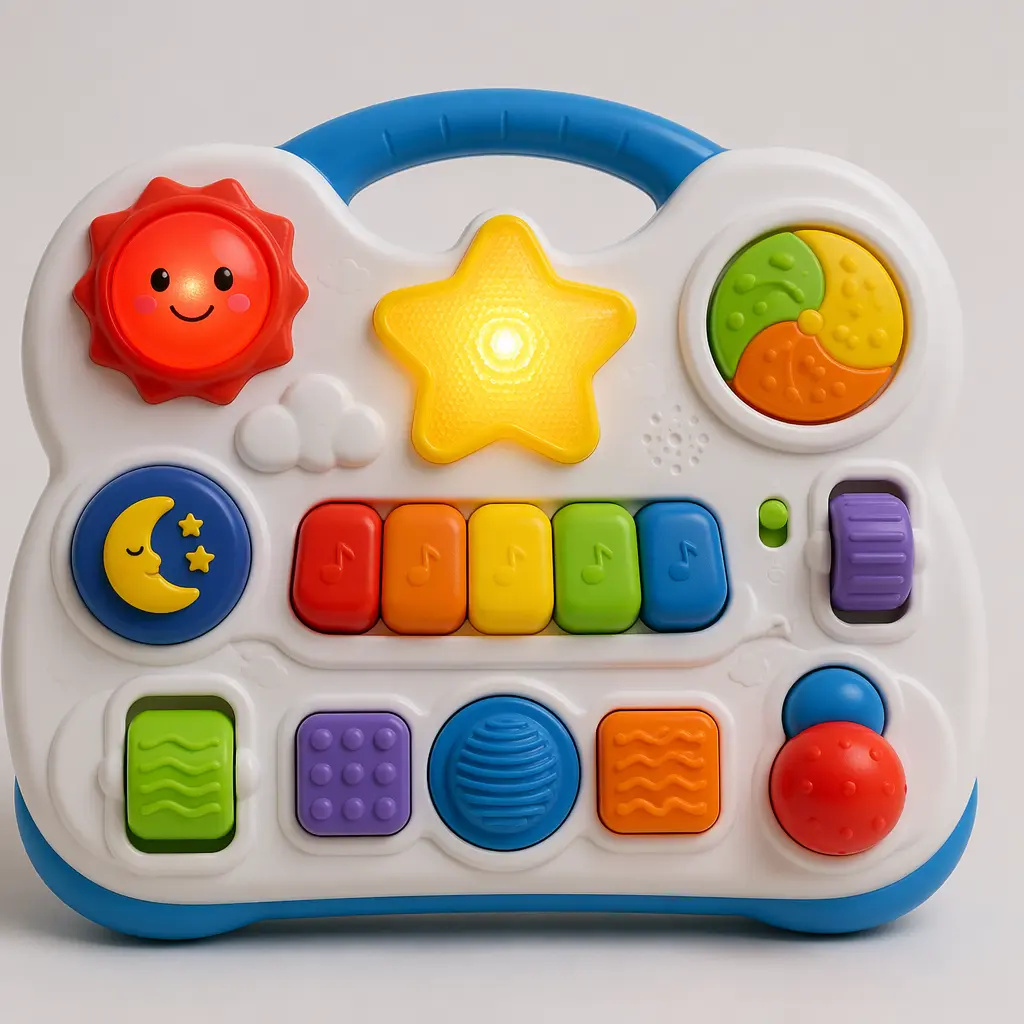
- Chunky, baby-safe controls sized for small hands
- Content that introduces basics like numbers, colours, and everyday routines
Who it's for
Laugh & Learn toys are aimed primarily at babies and toddlers, typically from around six months to three years. That said, their appeal extends to parents and caregivers who want toys that can occupy a child independently for short periods while still feeling constructive. Some adults also appreciate the predictability—these toys tend to do what they promise, without complicated setup or screens.
Variants and what to look for today
Over the years, Laugh & Learn has grown into a broad family rather than a single product. The line includes musical toys, role-play items, plush companions, and activity centres. While the themes vary, the underlying approach—interactive prompts paired with music and speech—remains consistent.
When choosing a Laugh & Learn-style toy today, it’s worth paying attention to build quality and volume levels. Well-made versions have responsive buttons, clear but gentle audio, and battery compartments secured with screws. Generic copies may look similar but often lack durability or balanced sound.
Frequently asked questions
Do Laugh & Learn toys actually teach children?
They’re best thought of as exposure tools rather than formal teaching aids. The toys introduce words, sounds, and routines, which can support language development when combined with real-world interaction.
Are talking toys overstimulating for babies?
Most Laugh & Learn toys are designed with relatively slow pacing and simple melodies. Used in moderation, they’re unlikely to overwhelm, but balance with quiet, open-ended play is still important.
How long will a child stay interested?
Interest varies, but many children engage with these toys over a longer period than expected, especially those with multiple modes or activities that unlock as skills develop.
Fisher-Price Laugh & Learn didn’t just create a popular toy line—it helped define a category. By making interactive, talking toys feel approachable and trustworthy, it set expectations that still shape baby toys today. Love them or find the songs a little too catchy, their influence on early-years play is hard to ignore.