Why Fisher-Price’s Zebra Walker Still Fits Modern Nurseries
The 2025 refresh of Fisher-Price’s Learn with Me Zebra Walker highlights why simple, connected-free baby toys still appeal to families looking for movement, repetition and easy setup.
Compare prices and availability
Check current prices and availability for this guide on eBay.
As an eBay Partner, we may be compensated if you make a purchase.
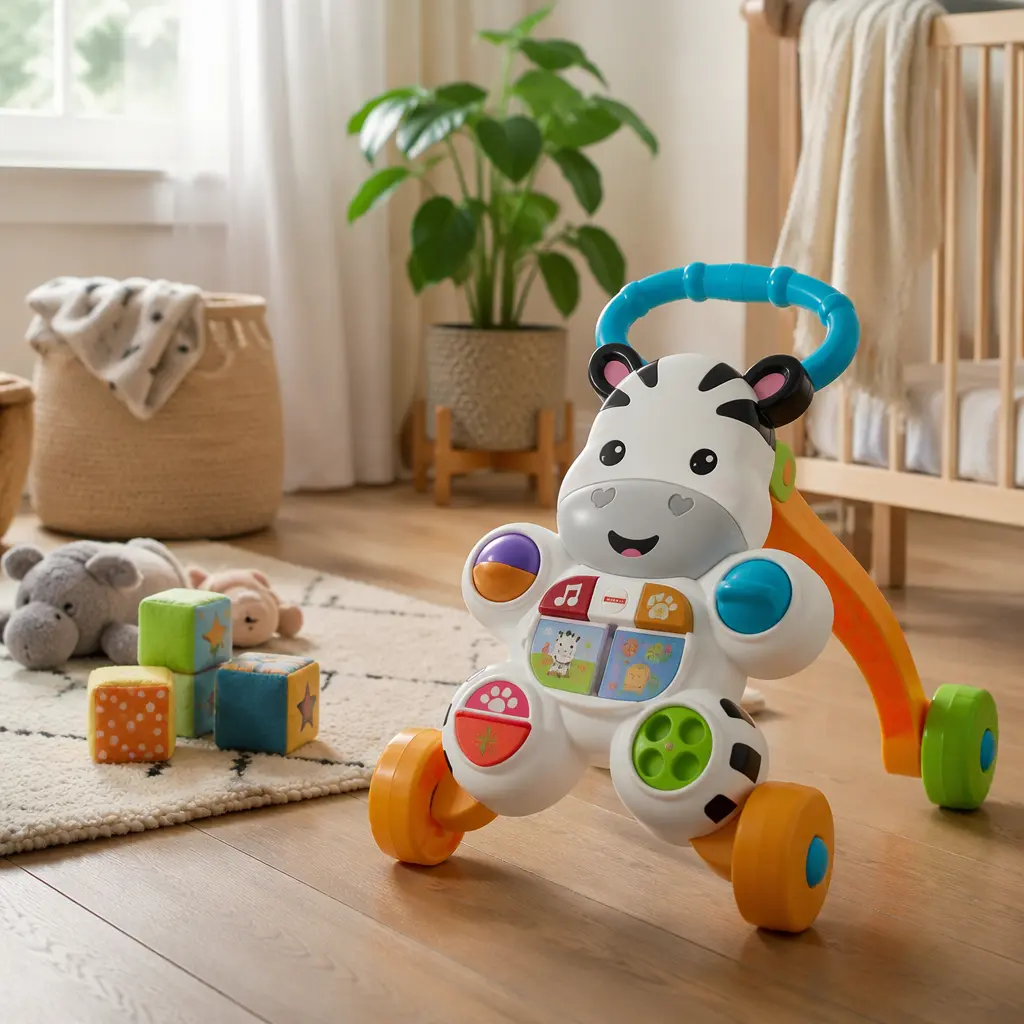
At a time when many infant products promise app connectivity, subscription content or sensor-driven tracking, the Fisher-Price Learn with Me Zebra Walker remains rooted in a much older idea: babies learn by pushing, grabbing, repeating and exploring at their own pace. The 2025 refresh keeps the familiar zebra-themed push walker format while reinforcing a category that still performs strongly in toy aisles and baby stores — stand-up walkers and activity toys that work immediately without accounts, charging cables or paired devices.
Where it came from
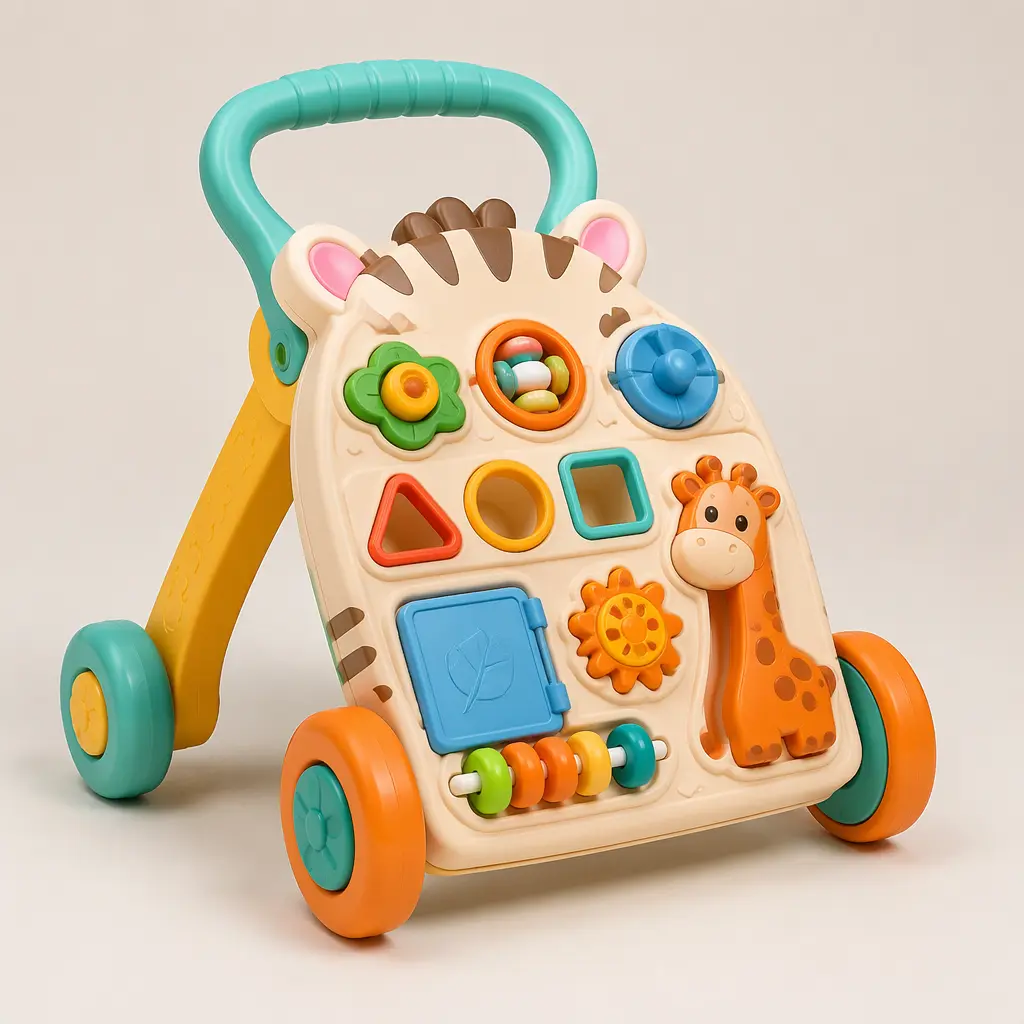
Fisher-Price has spent decades building toys around early developmental play, especially products designed for babies transitioning from floor play to standing and walking. Push walkers became a staple in that category because they combine physical support with hands-on activities in a single object. The zebra walker line followed that familiar formula: a broad wheelbase for stability, a handle sized for toddlers and a front activity area filled with buttons, spinners and tactile elements.
The 2025 refresh arrives during a period when many parents are becoming more selective about connected products for infants. Concerns around screen time, app longevity, data privacy and device clutter have helped simpler electronic toys maintain relevance. Toys like the Zebra Walker still use lights, sounds and music, but they generally function as self-contained products rather than cloud-connected platforms. That distinction matters to families who want sensory feedback and interactive play without introducing another account-managed device into the home.
Why it works
The core appeal of the Zebra Walker is that it grows alongside a short but important stage of development. Babies can interact with the front panel while sitting, then later use the handle and wheels during early walking practice. That dual-purpose design helps explain why push walkers continue to occupy prominent shelf space despite waves of app-enabled baby tech entering the market over the last decade.
Its play pattern is also easy to understand. Press a button and something happens immediately: a sound, phrase, light or melody. Spin a roller and it moves. Flip a page and the texture changes. For infants and young toddlers, that direct cause-and-effect interaction can be more meaningful than more abstract digital experiences. The toy does not depend on Wi‑Fi range, software updates or phone compatibility, and adults can usually hand it to a child without setup or onboarding.
- Push-walker format encourages movement and balance practice
- Front activity panel supports seated play before walking begins
- Built-in sounds and music provide immediate feedback without apps
- Chunky controls are designed for repeated pressing, spinning and grabbing
- Portable, self-contained play with no account setup or internet connection required
Who it's for
Push walkers like the Zebra Walker are generally aimed at babies and young toddlers moving from sitting and crawling toward standing and assisted walking. Adults often use them as living-room activity toys because they combine several forms of play in one footprint. The connected-free design may also appeal to caregivers trying to limit screens or simplify travel between rooms, grandparents’ homes or daycare settings. While electronic sounds remain part of the experience, the interaction stays grounded in physical movement rather than digital content feeds.
Variants and what to look for today
Fisher-Price has updated and reissued versions of its infant walkers and activity stations over the years, often adjusting colors, sound packages or decorative details while keeping the overall format familiar. The 2025 refresh continues that pattern rather than reinventing the category. Shoppers may see differences between regional releases, retailer-exclusive colorways or updated packaging depending on market and season.
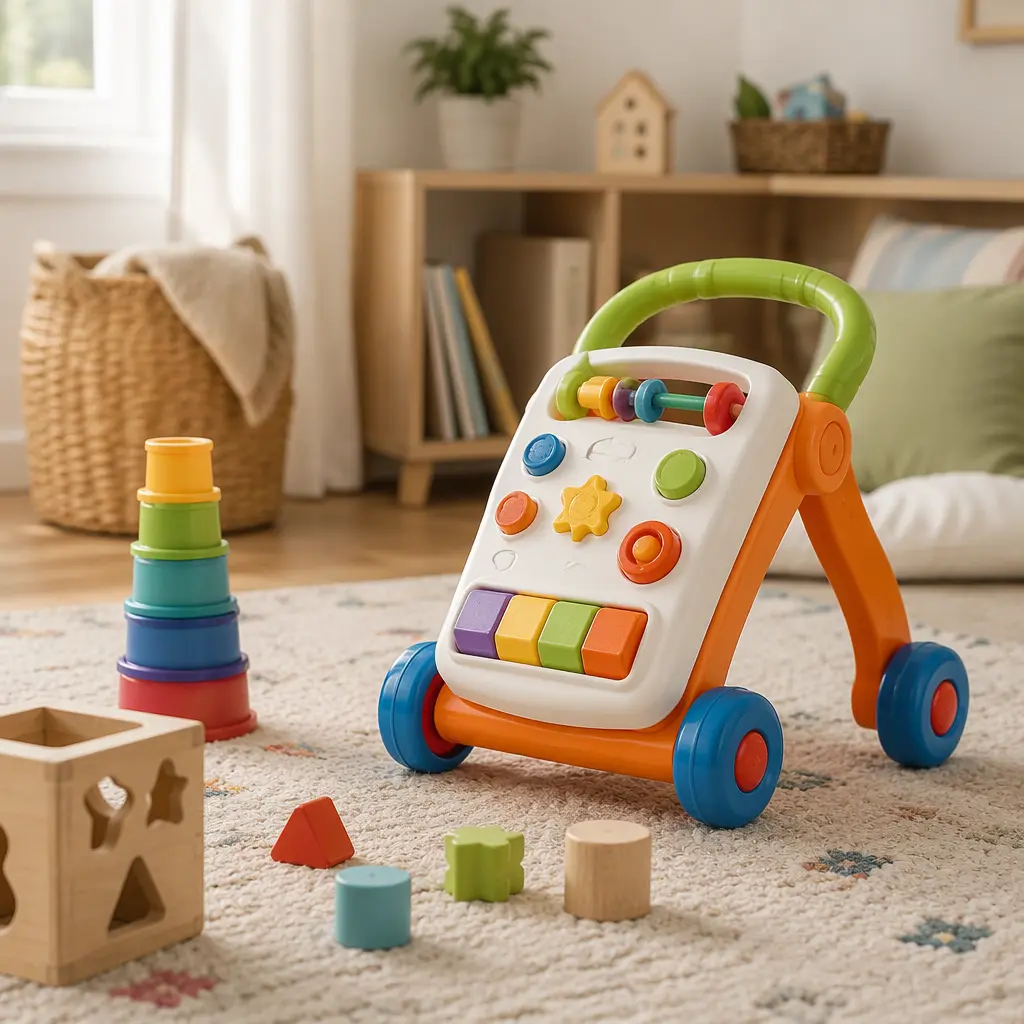
Families shopping today will also notice how crowded the push-walker category has become. Some alternatives lean heavily into licensed entertainment brands or touchscreens, while others strip the concept down into mostly wooden minimalist designs. The Zebra Walker sits somewhere in the middle: electronic but not app-dependent, playful without requiring companion devices.
- Check wheel resistance and overall stability for your flooring type
- Look for easy-to-clean surfaces and recessed buttons
- Battery-powered sound features vary between versions and regions
- Be cautious with extremely lightweight imitation walkers that may feel less stable
- Confirm age guidance and assembly details from the retailer or manufacturer listing
Frequently asked questions
Is the Zebra Walker a smart toy?
Not in the app-connected sense. The toy includes electronic sounds, music and interactive buttons, but it is generally designed as a self-contained product without cloud services or phone pairing.
Does it still make sense when many baby toys use apps?
For many families, yes. Connected-free toys remain popular because they are quick to use, portable and less dependent on software support. They also avoid many of the compatibility and privacy questions associated with internet-enabled devices.
Can babies use it before they walk?
Push walkers are commonly designed for multiple stages of play. Many babies first interact with the front activity panel while sitting or kneeling before later using the handle during supported walking practice.
Are there quieter alternatives?
Yes. The broader push-walker category includes simpler wooden walkers and lower-tech activity carts with little or no electronic sound. Parents often choose based on available space, noise tolerance and desired play style.
The enduring appeal of the Fisher-Price Learn with Me Zebra Walker says something broader about the toy market in 2025. Even as connected nursery gadgets continue to expand, many families still gravitate toward products that are immediate, understandable and physically engaging. A push walker does not promise developmental analytics or AI-generated interactions. Instead, it offers a handle to hold, wheels to push and buttons that respond the same way every time — a formula that remains surprisingly resilient in the modern toy aisle.