Fisher‑Price Little People: Chunky figures, big imagination
Since 1959, Fisher‑Price Little People have shown how simple, chunky figures can spark safe, open‑ended pretend play for toddlers—shaping early playrooms for generations.
Compare prices and availability
Check current prices and availability for this guide on eBay.
As an eBay Partner, we may be compensated if you make a purchase.
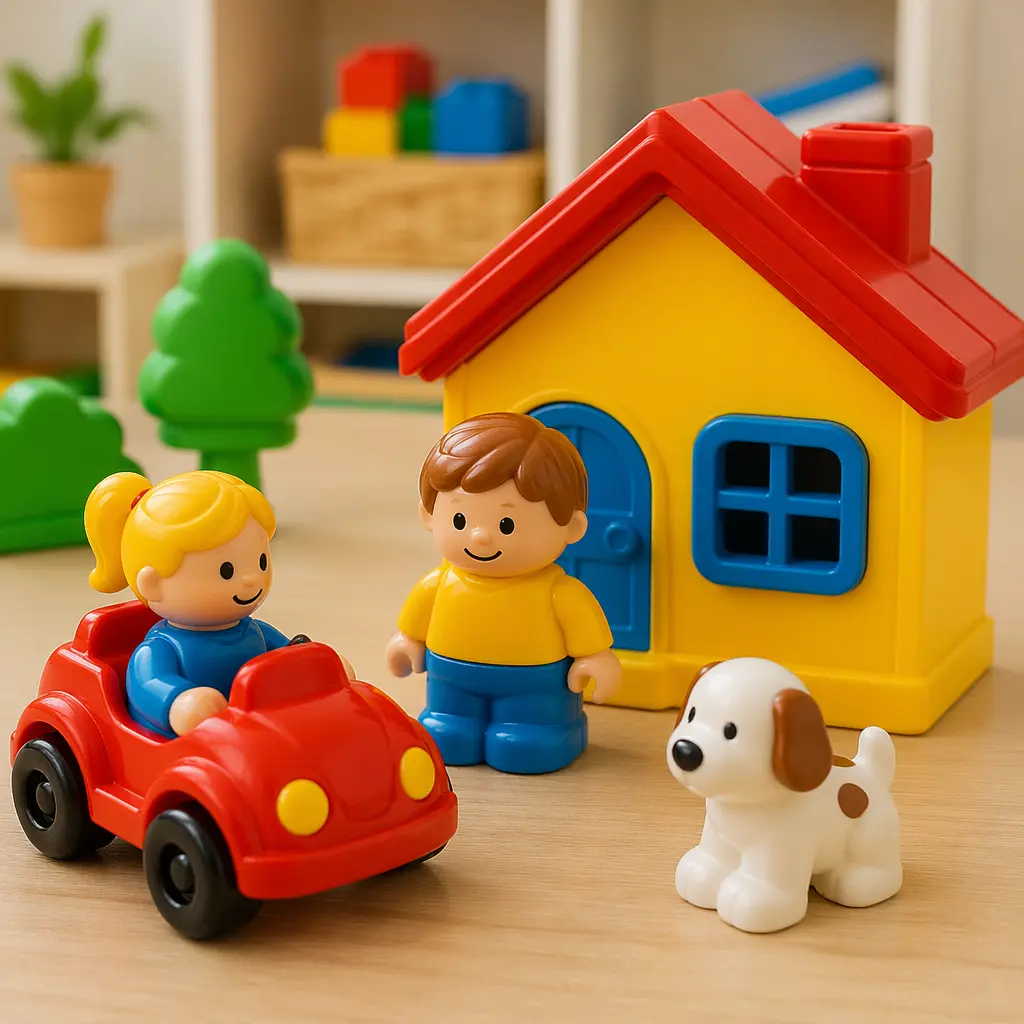
Few toys are as instantly recognisable to parents as Fisher‑Price Little People. With their rounded bodies, friendly expressions and easy‑to‑grasp size, these figures helped define what safe pretend play looks like for toddlers. They weren’t about collecting or complex stories. They were about first narratives—going to the farm, driving a bus, visiting a house—and letting very young children explore the world in miniature.
Where it came from
Little People debuted in 1959, during a period when toy makers were starting to take early childhood development more seriously. Fisher‑Price, already known for sturdy wooden pull toys and practical nursery items, set out to design figures that were safe for toddlers who were still mouthing, dropping and banging everything they touched.
The earliest figures were made of wood, shaped like small pegs with painted faces. Their simplicity was intentional: no removable parts, no sharp edges, and a size that was difficult to swallow. As plastics improved in the 1960s and 70s, the figures transitioned to durable plastic while keeping the same core idea—friendly, indestructible characters designed for very young hands.
Why it works
The success of Little People lies in restraint. The figures are not overly detailed, which leaves space for imagination. A farmer can become a parent. A bus driver can be anyone the child chooses. The toys invite storytelling without dictating it, a balance that is especially important for toddlers just learning to role‑play.
From a design perspective, everything serves a purpose. The wide stance helps figures stand upright. Rounded edges reduce injury risk. Bright, contrasting colours attract attention without overwhelming. Sets are usually themed around everyday experiences, helping children make sense of their surroundings through play.
- Chunky proportions sized for small hands
- Durable materials that tolerate rough play
- Simple facial expressions that feel friendly, not busy
- Playsets based on familiar real‑world places
- Minimal small parts for safer early play
Who it's for
Little People are primarily aimed at toddlers and preschoolers, roughly ages 1 to 5. That said, their appeal often extends beyond the target age. Older siblings may use them as background characters in larger play worlds, and adults frequently rediscover them through nostalgia. For parents and caregivers, the brand’s long association with safety and durability remains a major draw.
Variants and what to look for today
Over the decades, Little People have evolved while keeping their core identity. Modern figures are slightly more detailed than early versions, with clearer clothing cues and themed sets tied to homes, farms, vehicles and community helpers. Materials are lighter but still robust, and most sets remain compatible within the same general scale.
When shopping today, parents will find a wide range of playsets and standalone figures. Look for sturdy construction and age‑appropriate labeling, especially if buying second‑hand. Vintage wooden figures are popular with collectors, but for everyday play, contemporary plastic versions tend to be more practical and easier to clean.
Frequently asked questions
Are Little People safe for babies?
Most Little People figures are designed for toddlers rather than infants. While they avoid small detachable parts, parents should always check the recommended age and supervise play for children under 12 months.
Do old and new figures work together?
In general, yes. While styles have changed, the basic scale has stayed similar enough that older figures can usually be used with newer playsets, and vice versa.
Why are they so durable?
They are designed for early childhood environments, where toys are dropped, thrown and chewed. Thick plastic and simple construction reduce breakage and extend their usable life.
Are they only for pretend play?
Pretend play is the main focus, but Little People also support fine motor skills, language development and social learning as children act out everyday situations.
More than six decades on, Fisher‑Price Little People remain a quiet success story. They didn’t rely on trends or tie‑ins to endure. Instead, they met young children exactly where they were—curious, imaginative, and still learning how the world works—and gave them tools sturdy enough to explore it again and again.