Geodesic Climbing Domes: Playground Challenge at Home
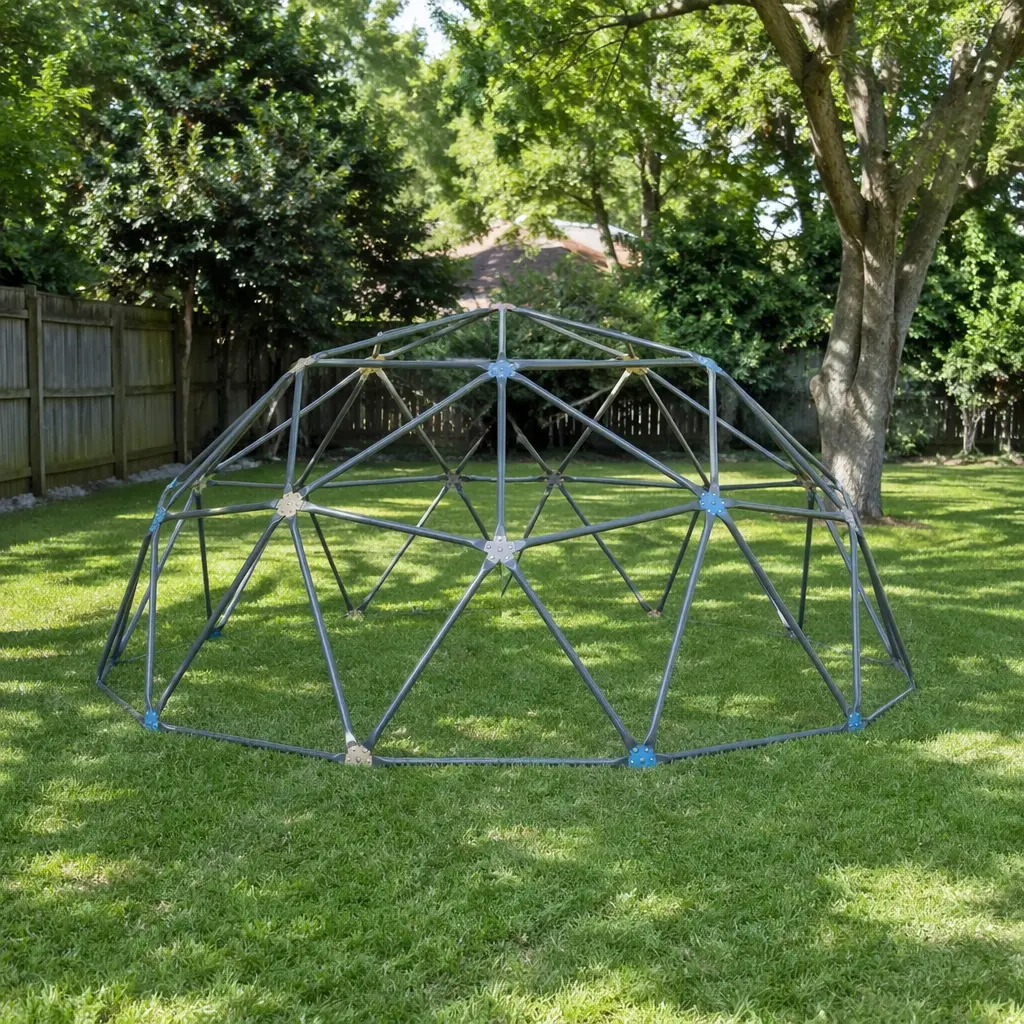
Geodesic climbing domes took the big, confidence-building challenge of playground frames and shrank it for back gardens, giving kids a safe way to climb, hang, and invent their own outdoor games.
Compare prices and availability
Check current prices and availability for this guide on eBay.
As an eBay Partner, we may be compensated if you make a purchase.
Geodesic climbing domes are one of those toys that feel instantly familiar, even if you didn’t grow up with one in your own garden. They borrow the look and challenge of large public playground climbing frames, but scale them down for home use. The result is a simple, geometric structure that invites kids to climb, hang, scramble, and turn the backyard into an adventure space rather than just a patch of grass.
Where it came from
The idea behind geodesic climbing domes traces back to mid‑20th‑century architecture and playground design. The geodesic form, popularised by architect Buckminster Fuller, is known for its strength and efficient use of materials. Playground designers adopted the shape because it could create large, climbable structures that were stable, open, and visually striking.
Backyard versions began appearing more widely in the late 20th and early 21st centuries, as parents looked for alternatives to traditional swing sets and slides. These domes promised something different: less guided play and more physical problem‑solving. Instead of a single way to use them, they offered many routes up, across, and down.
Why it works
At heart, a geodesic climbing dome is just a network of bars arranged in repeating triangles. That simplicity is exactly why it works so well. Kids can approach it from any side, choose their own path, and adjust the challenge to their ability. One child might stay low and practise balance, while another heads straight for the top.
Because the structure is open, children can see where they’re going and adults can easily supervise. The dome doesn’t tell you how to play; it responds to how you move. Over time, it becomes a climbing frame, a fort, a spaceship, or a base for hanging ropes and blankets.
- 360‑degree access with no fixed "front" or "back"
- Triangular geometry that feels sturdy under weight
- Encourages whole‑body movement, not just arms or legs
- Supports imaginative play beyond simple climbing
Who it's for
Geodesic climbing domes are generally aimed at school‑age children, often from around five or six years upward, though younger children may use them with close supervision. They appeal to kids who like physical challenges and open‑ended play rather than prescriptive games. There’s also a quiet adult appeal: many parents enjoy seeing a toy that encourages strength, coordination, and confidence without screens or batteries.
Variants and what to look for today
Modern geodesic climbing domes come in a range of sizes, from compact models designed for small gardens to large frames that can fill a play area. Materials are typically powder‑coated steel or similar metals chosen for weather resistance. Some versions include optional accessories, such as fabric covers to turn the dome into a den‑like space.
When looking at options today, it’s worth paying attention to overall size, weight limits, and how the pieces connect. Sturdy joints and smooth finishes matter more than bright colours. Cheaper knock‑offs may look similar but can use thinner tubing or weaker connectors, which affects both longevity and safety.
Frequently asked questions
Do geodesic climbing domes need anchoring?
Many backyard domes rely on their weight and wide base for stability, but some include ground anchors. Anchoring can add peace of mind, especially on uneven ground or if older children will be climbing high.
Are they safe for younger children?
They can be, with supervision and appropriate ground covering. Younger children tend to stay lower on the structure, but adults should always assess whether the height and spacing feel right for their child.
Can they be left outside year‑round?
Most are designed for outdoor use and can stay up year‑round. In harsher climates, occasional cleaning and checking for rust or wear will help extend the dome’s life.
Do they replace a swing set?
Not exactly. A dome offers a different kind of play, focused more on climbing and exploration than swinging or sliding. Many families use them alongside, rather than instead of, traditional play equipment.
Geodesic climbing domes have endured because they trust children to shape their own play. By bringing a playground‑scale challenge into the backyard, they offer a rare mix of simplicity, durability, and imagination that continues to appeal to modern families.