Tileblox Magnetic Worlds and the Rise of Miniature Playscapes
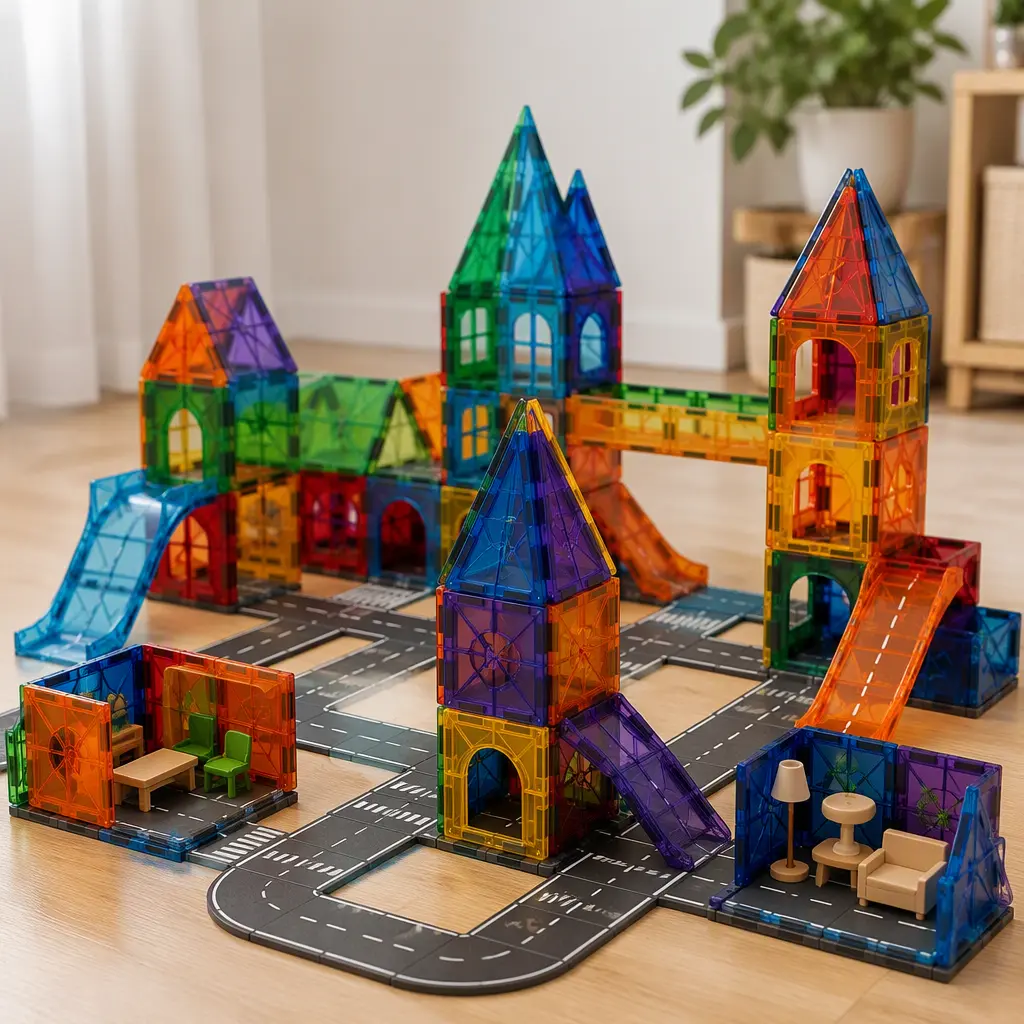
Tileblox Magnetic Worlds reflects a newer wave of magnetic tile play, shifting from simple tower-building into detailed miniature environments with roads, rooms, vehicles, and storytelling elements.
Compare prices and availability
Check current prices and availability for this guide on eBay.
As an eBay Partner, we may be compensated if you make a purchase.
Magnetic tile toys have been popular for years, but newer sets like Tileblox Magnetic Worlds show how the category is changing. Earlier magnetic construction sets often focused on stacking towers, geometric shapes, or simple architectural builds. The newer generation adds roads, scenery, vehicles, room layouts, and interactive accessories that turn a building activity into a miniature world. Instead of stopping once the structure is complete, children continue playing inside the environment they created. That shift from pure construction to storytelling is one reason magnetic tile systems remain one of the fastest-growing categories in open-ended play.
Where it came from
Tileblox Magnetic Worlds emerged during a period when magnetic construction toys were already firmly established in homes, classrooms, and therapy settings. By the early 2020s, parents and educators were looking for toys that combined STEM-style building with longer-lasting imaginative play. Brands across the category responded by introducing systems that expanded beyond flat squares and triangles into roads, hinges, decorative elements, and scene-building accessories.
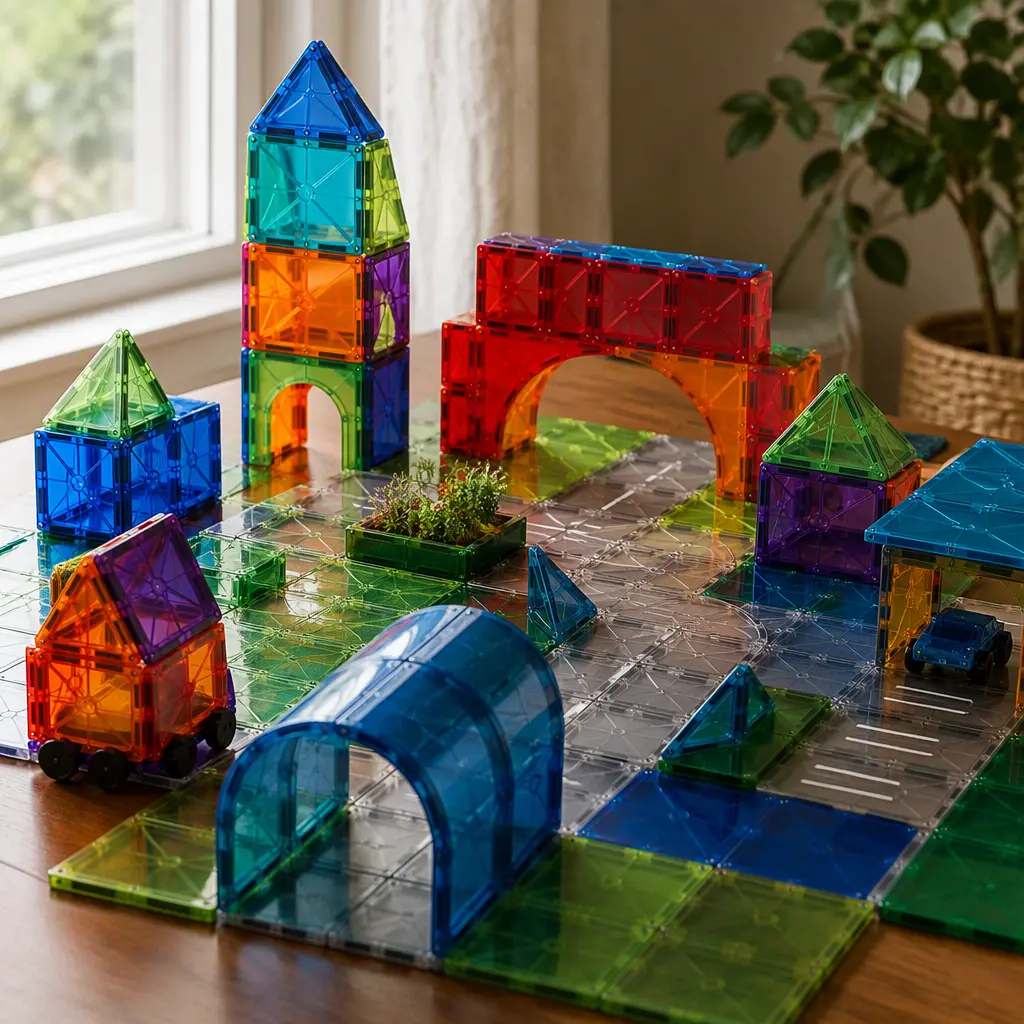
Released in 2023, Tileblox Magnetic Worlds fits squarely into that newer direction. Rather than positioning magnetic tiles only as engineering tools, the line encourages children to create connected environments: cities, transportation networks, animal habitats, shops, garages, and fantasy spaces. The toy reflects a broader design philosophy seen across contemporary construction sets, where the building process is only one stage of play. Once the environment exists, it becomes a backdrop for storytelling, role-play, and social interaction.
Why it works
The appeal of magnetic tile systems is partly mechanical. Embedded magnets make pieces easy to connect, pull apart, and rebuild without complicated instructions or precise alignment. Younger children can quickly achieve stable structures, while older kids experiment with symmetry, balance, and larger layouts. That immediate success creates a low-frustration experience compared with some traditional interlocking brick systems.
What distinguishes environment-focused sets like Tileblox Magnetic Worlds is the addition of context. Roads suggest movement. Windows suggest rooms. Curved pieces encourage tunnels, garages, or enclosures. The builds naturally lead to stories. Children may start by constructing a tower but continue by inventing a town, a racetrack, or a rescue station. This combination of tactile building and imaginative world-making gives the category unusually broad age appeal.
- Magnetic connections that allow quick rebuilding and experimentation
- Translucent colorful pieces that interact well with natural light
- Open-ended layouts without a single correct outcome
- Roads, ramps, windows, and scenery pieces that support storytelling
- Expandable systems that combine with many existing magnetic tile collections
Who it's for
Tileblox Magnetic Worlds is designed primarily for preschool and elementary-age children, though the broad appeal of magnetic construction sets means older siblings and adults often join in. Younger children usually focus on stacking and simple enclosures, while older kids build organized cities, marble-style pathways, or elaborate play environments. The toy also works well for collaborative play because multiple children can contribute different sections to a larger shared layout. Adults tend to appreciate the calm, screen-free nature of magnetic construction and the way the toy grows with a child's skills instead of relying on fixed instructions.
Variants and what to look for today
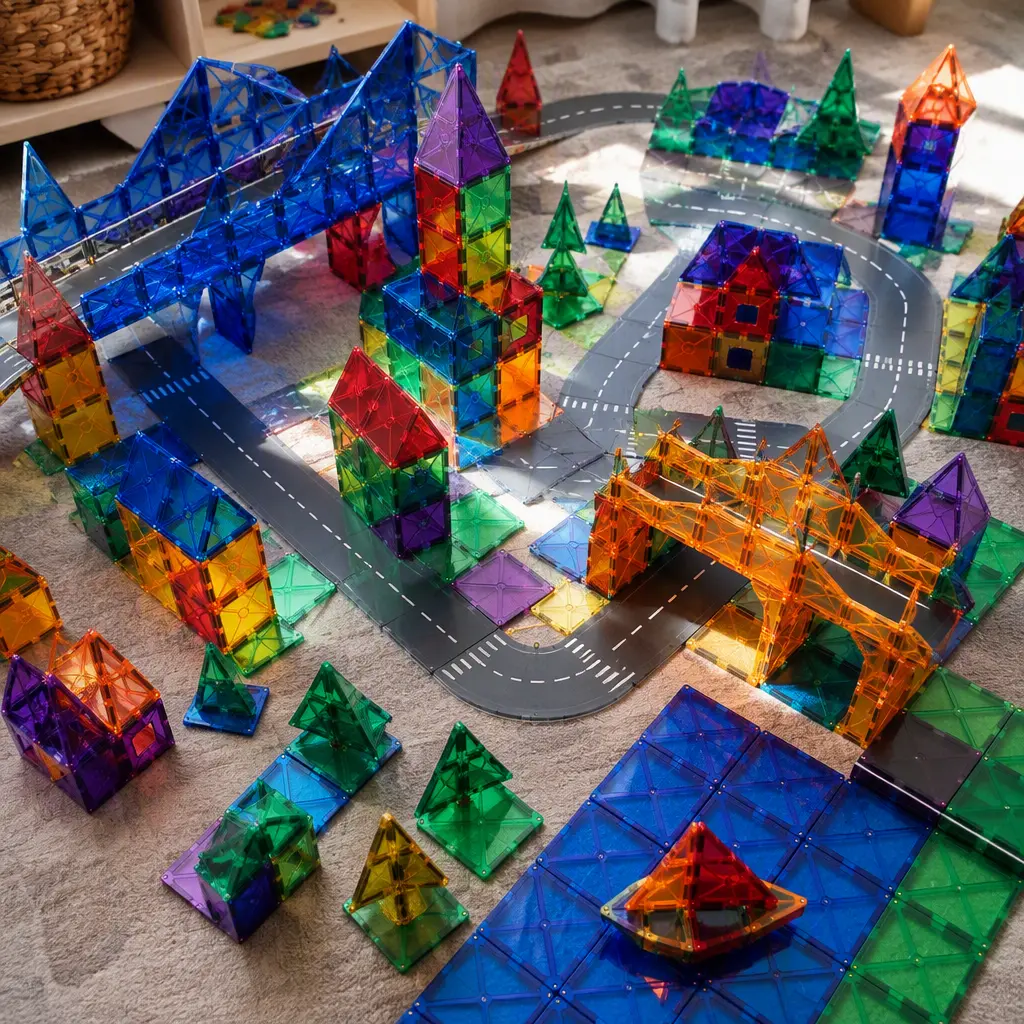
The magnetic tile category has expanded rapidly, and today's sets vary widely in quality, scale, and intended style of play. Some focus heavily on engineering challenges with stronger magnets and structural parts, while others emphasize scenery and role-play with decorative pieces, vehicles, or themed environments. Tileblox Magnetic Worlds belongs to the latter group, where building and storytelling are meant to work together.
Compatibility is one of the biggest factors parents consider. Many magnetic tile systems use similar sizing standards, allowing collections to mix together, though magnet strength and plastic thickness can differ noticeably between brands. Heavier-duty pieces generally hold larger structures together more reliably, especially for tall builds or complex bridges.
- Look for securely sealed magnets and durable edge construction
- Larger starter sets usually create more satisfying environments than very small packs
- Roads, ramps, and accessory pieces add more replay value for storytelling
- Clear or translucent tiles often create the strongest visual effect near windows or light tables
- Very lightweight knock-offs may have weaker magnets or thinner plastic
Frequently asked questions
Are magnetic tile toys mainly educational?
They are often marketed with STEM language because they encourage spatial reasoning, balance, geometry, and problem-solving. In practice, most children use them as a blend of educational and imaginative play. The strongest sets support both building challenges and free-form storytelling.
Do magnetic environments replace traditional building bricks?
Not necessarily. Magnetic tiles and traditional brick systems encourage different styles of construction. Magnetic pieces are faster to assemble and easier for younger children to manipulate, while brick systems typically allow finer detail and more rigid structures. Many families use both for different kinds of play.
Why are roads and scenery pieces becoming more common?
Toy makers increasingly design products around longer engagement rather than a single construction challenge. Roads, windows, vehicles, and scenery encourage children to continue playing after the structure is built, extending the toy's usefulness beyond the initial assembly phase.
Are magnetic tile toys suitable for mixed-age play?
Yes, and that flexibility is one reason the category has remained strong. Younger children can stack simple shapes while older kids design larger environments with more planning and detail. Families often end up creating collaborative builds that evolve over several days.
Tileblox Magnetic Worlds represents a broader evolution in construction toys. The emphasis is no longer only on what children can build, but on the worlds they can continue inhabiting afterward. By combining fast, forgiving construction with open-ended storytelling, magnetic environment sets occupy a middle ground between STEM activity, creative design, and imaginative play. That balance helps explain why magnetic tiles continue to expand from classroom tools into centerpiece toys for modern playrooms.