Jack-in-the-Box: Why a centuries-old surprise toy still works
A simple box, a crank, and a sudden pop. The Jack-in-the-Box has startled and delighted children for centuries, proving that anticipation and surprise never go out of style.
Compare prices and availability
Check current prices and availability for this guide on eBay.
As an eBay Partner, we may be compensated if you make a purchase.
Few toys do so little and achieve so much. The Jack-in-the-Box is, at heart, a simple promise: turn the handle, wait, and something will happen. That moment of suspense — followed by a sudden, silly reveal — is enough to make babies giggle, toddlers squeal, and adults smile knowingly. In an age of flashing lights and talking toys, this centuries-old surprise still earns its place in the toy cupboard.
Where it came from
The roots of the Jack-in-the-Box stretch back several centuries. Early versions are thought to have appeared in Europe, where surprise boxes and mechanical toys were popular novelties. Some historians link the name to folklore and political satire, but the basic idea — a hidden figure released by a simple mechanism — predates mass-produced toys by a long way.
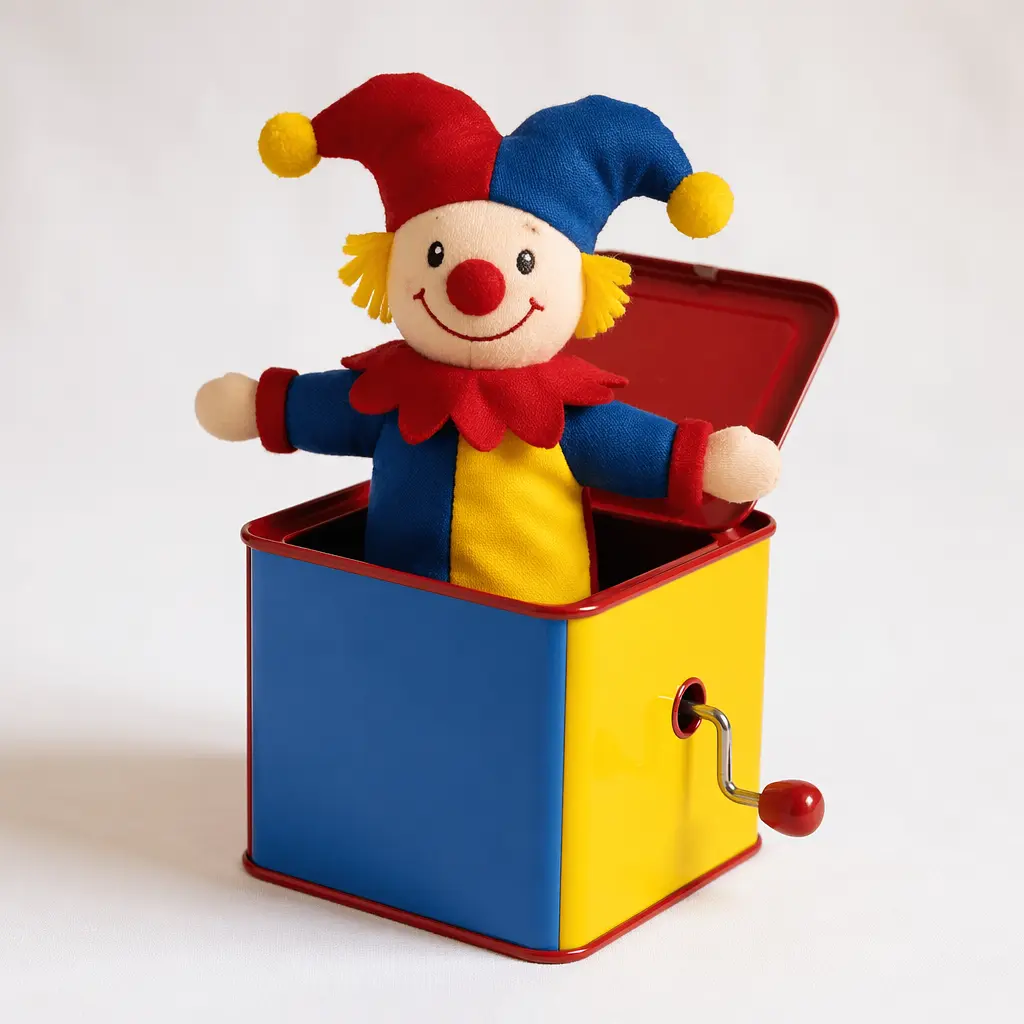
By the 18th and 19th centuries, spring-loaded boxes had become familiar playthings for children, often handmade from wood and cloth. As toy manufacturing expanded, the Jack-in-the-Box settled into its modern form: a small box, a turning handle that plays a tune, and a soft character that pops up at the end. It was never about realism or storytelling; it was about timing.
Why it works
The genius of the Jack-in-the-Box lies in its restraint. Nothing happens until the child makes it happen. Turning the handle creates anticipation, the tune builds expectation, and the final pop delivers a harmless shock. For young children, this is a perfect lesson in cause and effect — with a strong emotional payoff.
Design-wise, it hits several developmental sweet spots at once. Standout features typically include:
- A clear action-reward loop: turn the handle, get a surprise
- Repetition that encourages mastery rather than boredom
- A soft, friendly figure that removes real fear from the surprise
- Simple music that signals what’s coming next
Importantly, the toy invites shared play. Adults often control the pace at first, then gradually hand over responsibility. That shared anticipation — watching a child brace for the pop — is part of the enduring charm.
Who it’s for
Jack-in-the-Box toys are usually aimed at babies and toddlers, often from around 6 to 18 months, depending on design. Younger babies enjoy watching the motion and listening to the tune, while older toddlers love being in control of the crank. There’s also a quiet adult appeal: many parents remember being both thrilled and slightly startled by the same toy decades earlier.
Variants and what to look for today
While the core idea hasn’t changed, today’s Jack-in-the-Box toys come in a range of styles. Traditional wooden boxes still exist, often bought as keepsakes or nursery décor. More commonly, you’ll find fabric-covered or plastic versions designed with safety and softness in mind.
When choosing one today, look for smooth edges, a gentle spring action, and a tune that isn’t too loud. Some modern versions replace the classic clown with animals or friendly characters, which can feel less intimidating for sensitive children. As with many classic toys, quality varies, so it’s worth avoiding very flimsy constructions that may not survive repeated popping.
Frequently asked questions
Can Jack-in-the-Box toys scare babies?
They can, briefly. The sudden motion is the point of the toy, but most versions are designed with soft figures and gentle tunes to keep the surprise playful rather than frightening. Adult guidance at first makes a big difference.
Are they good for development?
Yes. They help with cause-and-effect learning, fine motor skills through turning the handle, and emotional regulation as children learn to anticipate and enjoy the surprise.
Why are clowns so common in Jack-in-the-Box toys?
Clowns were once a familiar symbol of humour and playfulness, especially in Europe and North America. While some children now find clowns unsettling, the association stuck, and many modern toys offer alternative characters.
Do Jack-in-the-Box toys still make sense today?
Absolutely. In fact, their simplicity can be a relief in a noisy toy market. They don’t need screens, batteries, or updates — just a willing hand and a bit of curiosity.
The Jack-in-the-Box endures because it understands something fundamental about play. Children don’t need endless features; they need moments. That brief pause before the pop, followed by laughter or surprise, is a moment that has crossed centuries — and still lands every time.