The Kaleidoscope: Why a 1816 tube of mirrors still amazes
Invented in 1816, the kaleidoscope proves that mirrors, light, and chance can be endlessly entertaining. Here’s why this simple optical toy still captivates children and adults today.
Compare prices and availability
Check current prices and availability for this guide on eBay.
As an eBay Partner, we may be compensated if you make a purchase.
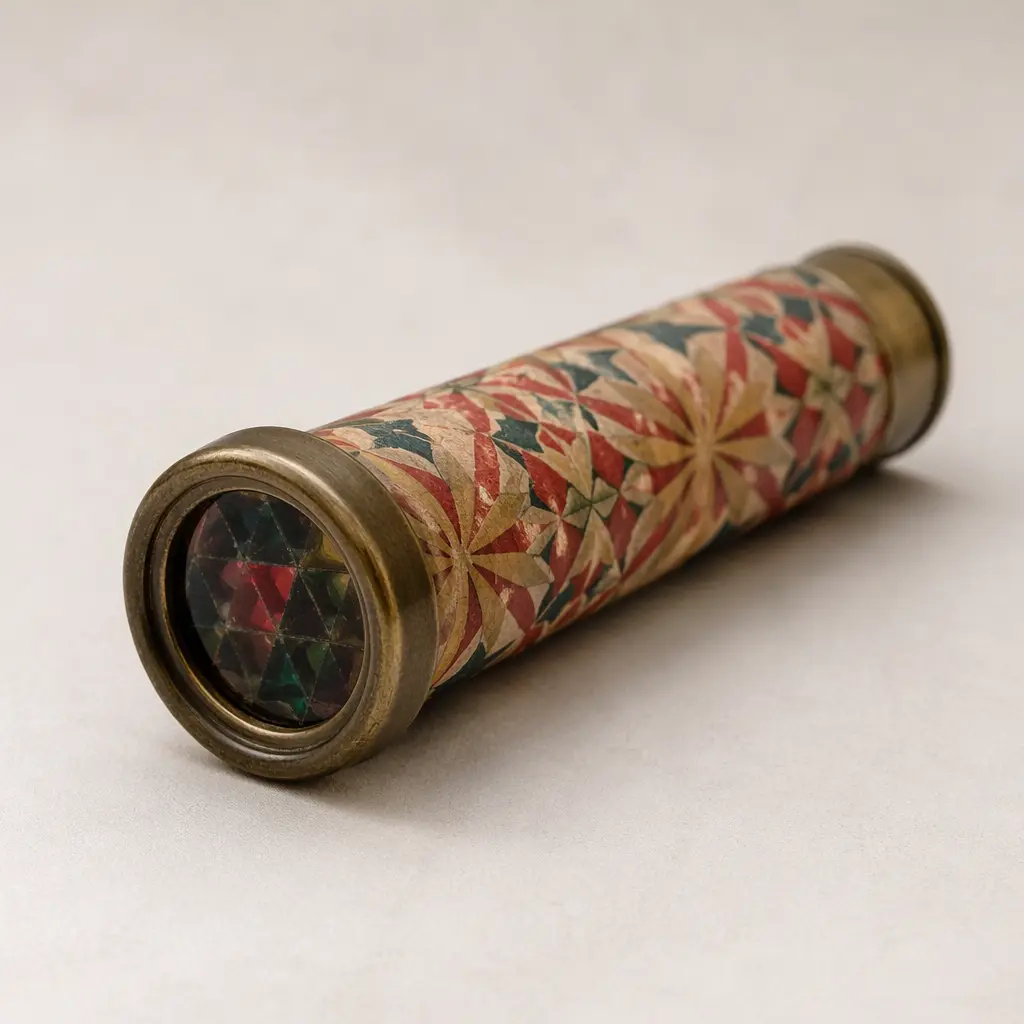
The kaleidoscope doesn’t beep, blink, or connect to anything — yet it has held children’s attention for more than two centuries. With nothing more than mirrors, colored fragments, and light, this slender tube creates endlessly changing patterns that feel almost magical. It’s a reminder that fascination doesn’t always require complexity, and that some toys work because they reveal the beauty already hiding in the world.
Where it came from
The kaleidoscope was invented in 1816 by Scottish physicist Sir David Brewster. Brewster wasn’t trying to design a toy; he was experimenting with light polarization and mirror reflections. When he noticed the striking symmetrical patterns produced by reflected fragments inside a tube, he realized the effect could be both scientifically interesting and visually delightful.
Brewster patented the idea, but the kaleidoscope quickly escaped his control. Makers across Britain and Europe began producing their own versions, and the toy became an instant craze. Within months, hundreds of thousands were sold. Its popularity spread because it required no instructions, crossed language barriers, and worked equally well for children, artists, and curious adults.
Why it works
At its core, the kaleidoscope is a lesson in symmetry and chance. Inside the tube, angled mirrors reflect small colored objects — often glass beads or bits of plastic — into repeating geometric patterns. A slight twist reshuffles the fragments, producing a new image every time. There’s no winning or losing, only discovery.
The appeal comes from a balance of predictability and surprise. The viewer understands that the pattern will be symmetrical, but never knows exactly what it will look like. That tension keeps eyes glued to the viewfinder, even for children who are otherwise quick to move on.
- Simple optical design based on mirrors and light
- Infinite pattern variations from a small set of pieces
- Hands-on interaction through gentle turning
- No batteries, screens, or setup required
- Quiet, calming play that rewards patience
Who it’s for
Kaleidoscopes are often labeled as children’s toys, but they naturally span generations. Young children enjoy the bright colors and immediate visual payoff, while older kids begin to notice symmetry and repetition. Adults often find them relaxing or nostalgic, and artists sometimes use them as inspiration tools. Because play is intuitive, they’re especially good for shared moments between parents and children.
Variants and what to look for today
Modern kaleidoscopes range from inexpensive cardboard tubes to finely crafted metal or wooden versions. Some are designed for children, with lightweight materials and sealed ends, while others are aimed at collectors and emphasize craftsmanship.
When choosing one today, it’s worth paying attention to build quality and viewing clarity. Poorly aligned mirrors can result in dull or uneven patterns. Many modern versions also experiment with different chambers, such as liquid-filled ends that allow pieces to float more smoothly.
- Classic rotating-end kaleidoscopes with loose pieces
- Liquid-chamber versions for slower pattern changes
- Child-safe designs with reinforced tubes
- Handcrafted styles using wood or metal for durability
Frequently asked questions
Is a kaleidoscope educational?
Yes. While it feels like pure play, a kaleidoscope introduces concepts like symmetry, reflection, and pattern recognition. It also encourages careful observation and curiosity about how images are formed.
What age is appropriate for a kaleidoscope?
Many are suitable from around age three and up, provided they are well made and sealed. Older children and adults can enjoy more complex or handcrafted versions.
Do all kaleidoscopes create the same patterns?
No. Differences in mirror angles, object shapes, and chamber design mean each kaleidoscope produces its own visual style, even though the basic principle is the same.
Why has the kaleidoscope lasted so long?
Its longevity comes from simplicity. It doesn’t rely on trends or technology, and its core experience hasn’t needed updating. As long as people are drawn to light and pattern, it remains relevant.
In a world crowded with fast-moving digital entertainment, the kaleidoscope stands apart by slowing things down. It invites the viewer to pause, look closely, and enjoy the quiet thrill of discovery. More than two hundred years on, that simple invitation still works.