KidKraft Dollhouses: The rise of oversized wooden play worlds
KidKraft dollhouses turned classic pretend play into room‑scale experiences. Here’s how their oversized wooden designs became a staple of open‑ended play—and what to know if you’re considering one today.
Compare prices and availability
Check current prices and availability for this guide on eBay.
As an eBay Partner, we may be compensated if you make a purchase.
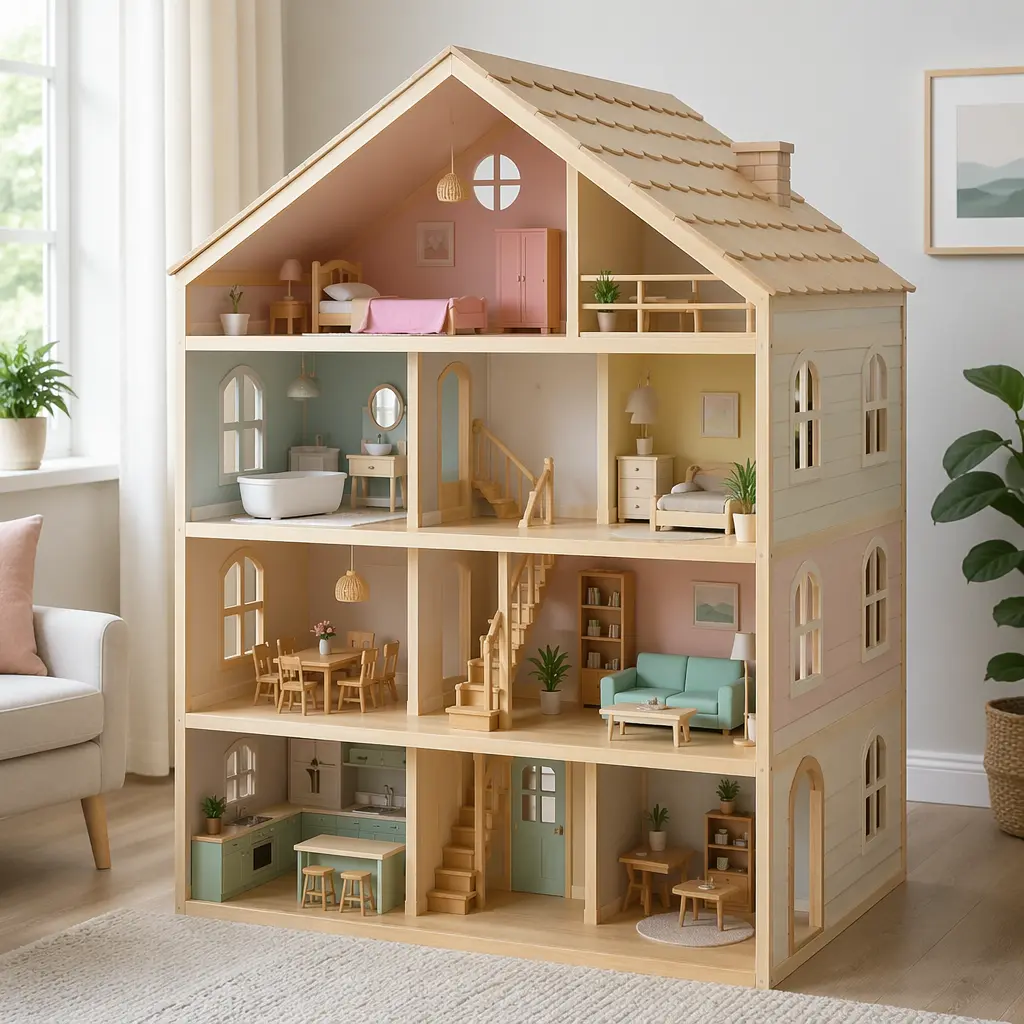
Few toys announce themselves in a home quite like a KidKraft dollhouse. Taller than many toddlers and wide enough to require a dedicated corner, these wooden structures transformed the idea of a dollhouse from a tabletop accessory into a full‑scale play environment. For many families, they’ve become a centerpiece—less a toy you put away and more a small world that lives alongside everyday family life.
Where it came from
KidKraft began in 1968 as a small family business focused on children’s furniture, not toys. The company’s roots in woodworking and functional design shaped its later approach to playthings: sturdy materials, simple construction, and an emphasis on pieces that fit naturally into a home. When KidKraft moved into dollhouses decades later, it brought that same furniture‑first mindset along.
Traditional dollhouses had long been compact and often ornate, sometimes more display piece than play tool. KidKraft’s modern wooden dollhouses flipped that script. Built to be accessible from multiple sides and scaled for floor play, they were designed for active use—hands reaching in, figures moving room to room, and stories evolving over months or years rather than a single afternoon.
Why it works
The appeal of KidKraft dollhouses lies in how they support open‑ended play. Instead of prescribing a single narrative or character set, the houses provide a flexible stage. Children decide who lives there, what happens next, and how the space is used. The size matters: big rooms and open backs make it easy for multiple children to play at once, encouraging collaboration and conversation.
Their design tends to balance detail with simplicity. Rooms are clearly defined, but not overly themed, leaving space for imagination. Key features that helped them stand out include:
- Large, multi‑storey layouts that feel immersive
- Open‑back or open‑side designs for easy access
- Wood construction for weight and durability
- Neutral or pastel colour palettes that don’t dominate a room
- Compatibility with a wide range of doll sizes and brands
Who it’s for
KidKraft dollhouses are typically aimed at preschool and early primary‑school children, roughly ages three to eight, when pretend play is at its peak. That said, they often hold attention beyond that range, especially when used with different figures, animals, or even homemade props. Adults tend to appreciate them too—not just for nostalgic reasons, but because their wooden construction and furniture‑like scale feel more at home in shared family spaces than many plastic alternatives.
Variants and what to look for today
Over time, KidKraft’s dollhouse range has expanded to include a variety of footprints and themes—from tall, narrow townhouses to wide, sprawling homes designed for shared play. Some focus on modern interiors, others nod to classic family houses, but the core idea remains the same: scale, access, and flexibility.
If you’re looking at one today, pay attention to room size and overall height, especially if you want compatibility with dolls you already own. Many families also consider how the house will fit into a room long‑term. Cheaper knock‑offs can look similar online but often use thinner materials or have sharp edges, which can affect both durability and play comfort.
Frequently asked questions
Are KidKraft dollhouses hard to assemble?
Assembly usually takes some time, as the size means multiple panels and floors. Most are designed for adult assembly with basic tools, and once built, they’re intended to stay in place rather than be taken apart regularly.
Do they only work with specific dolls?
One of their strengths is flexibility. While they’re often shown with fashion‑style dolls, many families use them with wooden figures, animal sets, or mixed collections without issue.
Are wooden dollhouses safer than plastic ones?
Wooden construction can offer more stability and weight, which helps prevent tipping. As with any large toy, proper placement and adult assembly are key to safe use.
Why do kids keep coming back to them?
Because the play evolves. A dollhouse can be a family home one day, a school the next, and something entirely different a month later. That adaptability keeps it relevant as children grow.
In a toy world increasingly dominated by screens and scripted experiences, KidKraft dollhouses stand out by doing something surprisingly simple: offering space. Space to imagine, to rearrange, and to tell stories that don’t have an endpoint. That’s why, years after assembly day, many of them are still standing—quietly hosting new chapters of play.