littleBits: How snap-together circuits opened up inventing
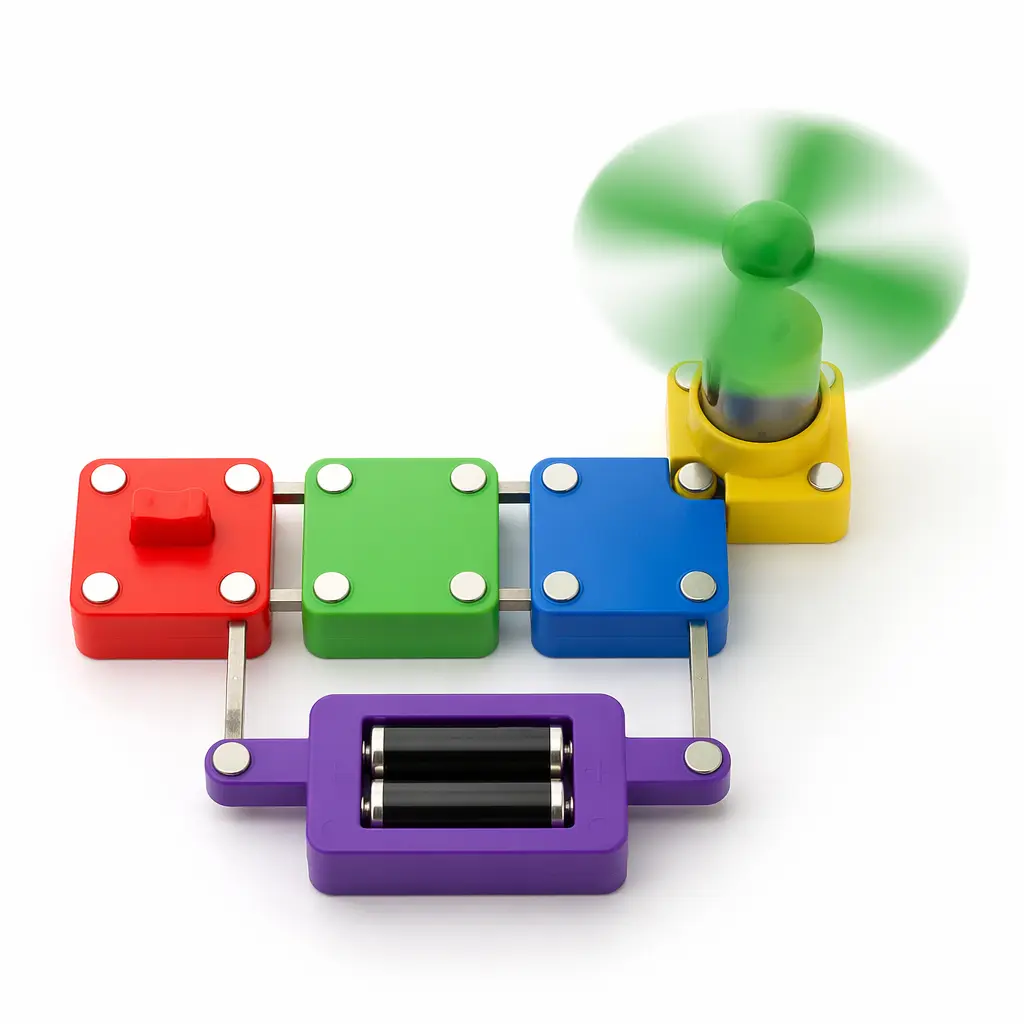
Launched in 2011, littleBits made electronics feel like LEGO. With magnetic, snap-together modules, it lowered the barrier to inventing and brought hands-on STEM learning into homes and classrooms.
Compare prices and availability
Check current prices and availability for this guide on eBay.
As an eBay Partner, we may be compensated if you make a purchase.
littleBits is one of those toys that quietly changed expectations. Instead of asking kids to follow instructions or memorise facts, it handed them real electronic components and said, essentially, “Go build something.” The clever part was that you didn’t need solder, coding experience, or even a grown-up hovering nearby. If you could snap pieces together, you could invent.
Where it came from
littleBits was founded in 2011 by engineer and entrepreneur Ayah Bdeir. Her idea grew out of frustration with how hard it was for beginners to experiment with electronics. Traditional kits required tools, careful wiring, and a tolerance for mistakes that could literally let the smoke out. Bdeir wanted a system where curiosity came first and technical barriers faded into the background.
The breakthrough was magnetic snapping. Each module represented a function—power, input, output—and magnets ensured they only connected in safe, sensible ways. What began as a startup experiment quickly found an audience in schools, maker spaces, and homes. By the mid-2010s, littleBits had become shorthand for hands-on STEM learning that felt more like play than coursework.
Why it works
At its heart, littleBits succeeds because it removes fear. Electronics can feel intimidating, especially to adults who remember bad experiences with wires and warnings. littleBits reframed the activity as something modular, colourful, and forgiving. You can try an idea, see what happens, and change it instantly.
The system also teaches real concepts without heavy explanation. As children snap pieces together, they naturally learn about power flow, inputs and outputs, and cause and effect. It’s learning by doing, not by lecture.
- Magnetic connectors that prevent incorrect wiring
- Clearly separated functions (power, input, output)
- Immediate visual or physical feedback
- Open-ended designs with no single “right” build
- Compatibility across sets encourages expansion
Who it's for
littleBits is typically aimed at children aged around 8 and up, but that label undersells its reach. Younger kids can enjoy supervised building, while teenagers often use it for school projects or creative challenges. Adults—especially parents and teachers—frequently find themselves drawn in as well. It’s one of those rare toys that invites collaboration rather than asking kids to play alone.
Variants and what to look for today
Over time, littleBits expanded from simple starter sets into themed kits focused on areas like motion, sound, or coding. Educational bundles for classrooms added lesson ideas and storage, while home sets leaned into creativity and play. Although availability has varied in recent years, the core idea remains the same across versions.
If you’re considering littleBits today, look for sets that include a good mix of inputs and outputs rather than lots of one type. Magnetic connections should feel solid, and instructions should emphasise experimentation over step-by-step builds. Be cautious with generic snap-together electronics that copy the look but lack the same safety and clarity.
Frequently asked questions
Is littleBits safe for beginners?
Yes. The magnetic connectors are designed to prevent incorrect connections, and the low-voltage power keeps things safe for home and classroom use.
Does it require coding knowledge?
Basic sets do not require coding at all. Some advanced modules introduce simple programming concepts, but they’re optional rather than mandatory.
Can adults actually enjoy it?
Absolutely. Many adults find littleBits satisfying because it allows quick prototyping and playful experimentation without technical hassle.
Is it more toy or teaching tool?
It sits comfortably in between. littleBits works best when treated as a toy first, with learning emerging naturally from play.
More than a decade after its debut, littleBits still represents a shift in how we think about educational toys. By lowering the barrier to inventing, it showed that meaningful STEM learning doesn’t have to feel formal. Sometimes, all it takes is a satisfying snap and the freedom to ask, “What if?”