Ludo: Why a simple race game became a family staple worldwide
From Victorian Britain to living rooms around the world, Ludo has endured as a simple, social race game that bridges generations, cultures, and skill levels with ease.
Compare prices and availability
Check current prices and availability for this guide on eBay.
As an eBay Partner, we may be compensated if you make a purchase.
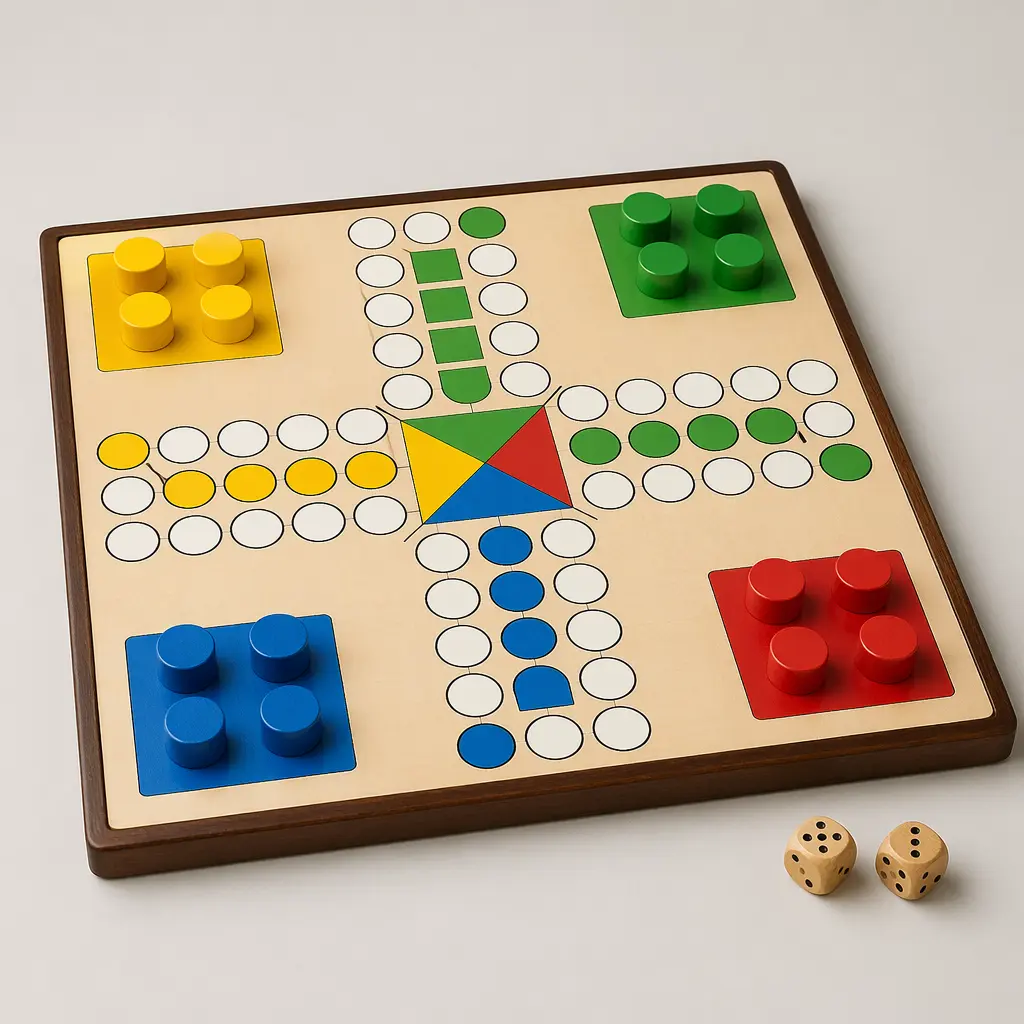
Few board games are as instantly recognisable as Ludo. With its bright colours, simple rules, and familiar roll-and-move rhythm, it has been a fixture in family cupboards for generations. Ludo’s appeal isn’t about strategy mastery or flashy components. It’s about shared moments — cheering a lucky roll, groaning when a piece gets sent back home, and lingering at the table long after the game ends.
Where it came from
Although many people think of Ludo as a British invention, its roots stretch much further back. The game is based on Pachisi, a cross-and-circle race game played in India for centuries. Pachisi was traditionally played outdoors, sometimes with people acting as the pieces, and it held social and cultural importance well beyond simple entertainment.
In 1896, a simplified, home-friendly version was patented in England under the name “Ludo,” derived from the Latin word for “I play.” The new version reduced complexity, standardised the board, and made the game easier to manufacture and teach. From there, it spread rapidly through Europe and beyond, becoming a household name in many countries — often under different local names, but with the same familiar gameplay.
Why it works
Ludo succeeds because it removes barriers to entry. You can explain the rules in minutes, and even young children can play independently after a round or two. The game balances luck and light decision-making in a way that keeps everyone engaged, regardless of age or experience.
At its heart, Ludo is about pacing and tension. A single roll can dramatically change the game, creating excitement without overwhelming players.
- Simple roll-and-move mechanics that are easy to learn
- Bright colours that help players instantly identify their pieces
- Short turns that keep everyone involved
- Moments of conflict that feel playful rather than aggressive
- A clear finish line that builds anticipation toward the end
Who it's for
Ludo is typically suitable for children from around age four or five, once they can count spaces reliably. That said, its charm isn’t limited to kids. Adults often enjoy it as a low-pressure, social game — especially in mixed-age groups where more complex games might leave some players behind. It’s also popular with grandparents and caregivers because it rewards patience and turn-taking rather than quick reflexes.
Variants and what to look for today
Modern Ludo sets come in a wide range of styles, from foldable cardboard boards to solid wooden versions designed to live on a coffee table. Some include storage drawers for pieces, while others are travel-sized with magnetic tokens to prevent spills.
You’ll also find regional variations and house rules, such as different ways to enter the board or extra penalties for being captured. When buying a set today, clarity matters more than novelty — clear markings, sturdy pieces, and a well-balanced die will do more for the experience than decorative extras.
Frequently asked questions
Is Ludo purely a game of luck?
Luck plays a major role, but players still make choices about which piece to move and when to take risks. Those small decisions can influence the flow of the game, especially in the later stages.
How long does a typical game last?
Most games last between 20 and 40 minutes, depending on the number of players and how quickly pieces are captured and returned home.
Can Ludo help children learn skills?
Yes. Ludo helps reinforce counting, turn-taking, patience, and emotional regulation — especially learning to cope with setbacks in a playful environment.
Is Ludo the same as Pachisi?
Ludo is a simplified descendant of Pachisi. While the core idea is similar, Pachisi usually has more complex movement rules and is often played with different materials and traditions.
More than a century after its modern form was introduced, Ludo remains a quiet success story. It doesn’t rely on trends or technology to stay relevant. Instead, it endures because it brings people together at the same table, speaking a shared language of colour, chance, and friendly competition.