Makedo Cardboard Tools and the Rise of Box-Building
Makedo turned ordinary cardboard boxes into reusable building kits with safe plastic connectors and kid-friendly tools, blending craft, engineering, and imaginative play into one open-ended system.
Compare prices and availability
Check current prices and availability for this guide on eBay.
As an eBay Partner, we may be compensated if you make a purchase.
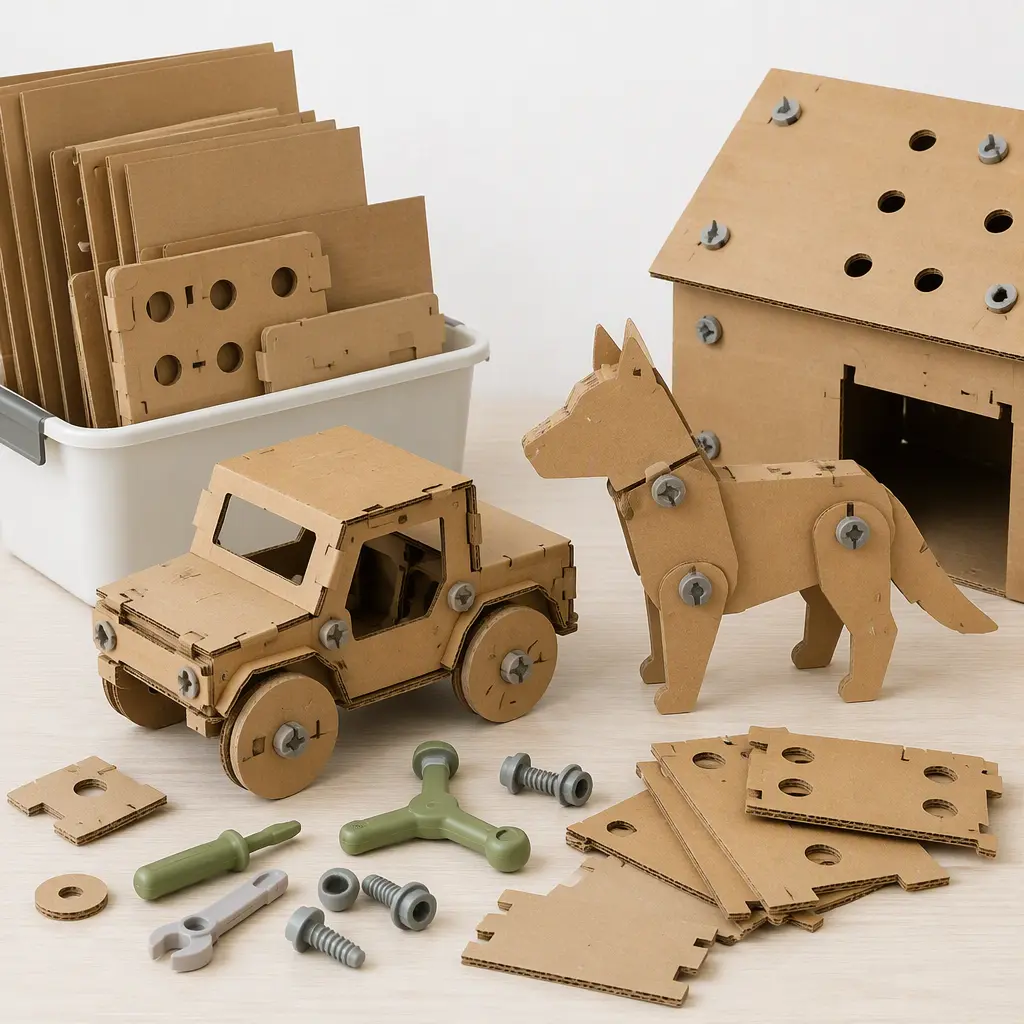
Few toys ask children to look at a delivery box and see a robot, a costume, or a working drawbridge. Makedo built its reputation around that exact shift in perspective. Instead of supplying large sets of plastic bricks or electronic parts, the company created a simple system of reusable connectors, folding tools, and safe cardboard saws that turn everyday packaging into building material. The result sits somewhere between arts-and-crafts, engineering kit, and free-form imaginative play. Since its launch in 2008, Makedo has become a familiar classroom and playroom tool for families who want hands-on creativity without relying on screens or highly scripted toys.
Where it came from
Makedo was introduced in Australia in 2008 with a fairly unusual idea for the toy industry: the packaging around the toy could become part of the play itself. The creators were responding to two trends at once. One was growing concern about waste and disposable products. The other was renewed interest in hands-on STEM learning that encouraged experimentation instead of fixed instructions. Cardboard was already everywhere in homes and schools, but most families treated it as temporary craft material rather than a true construction system.
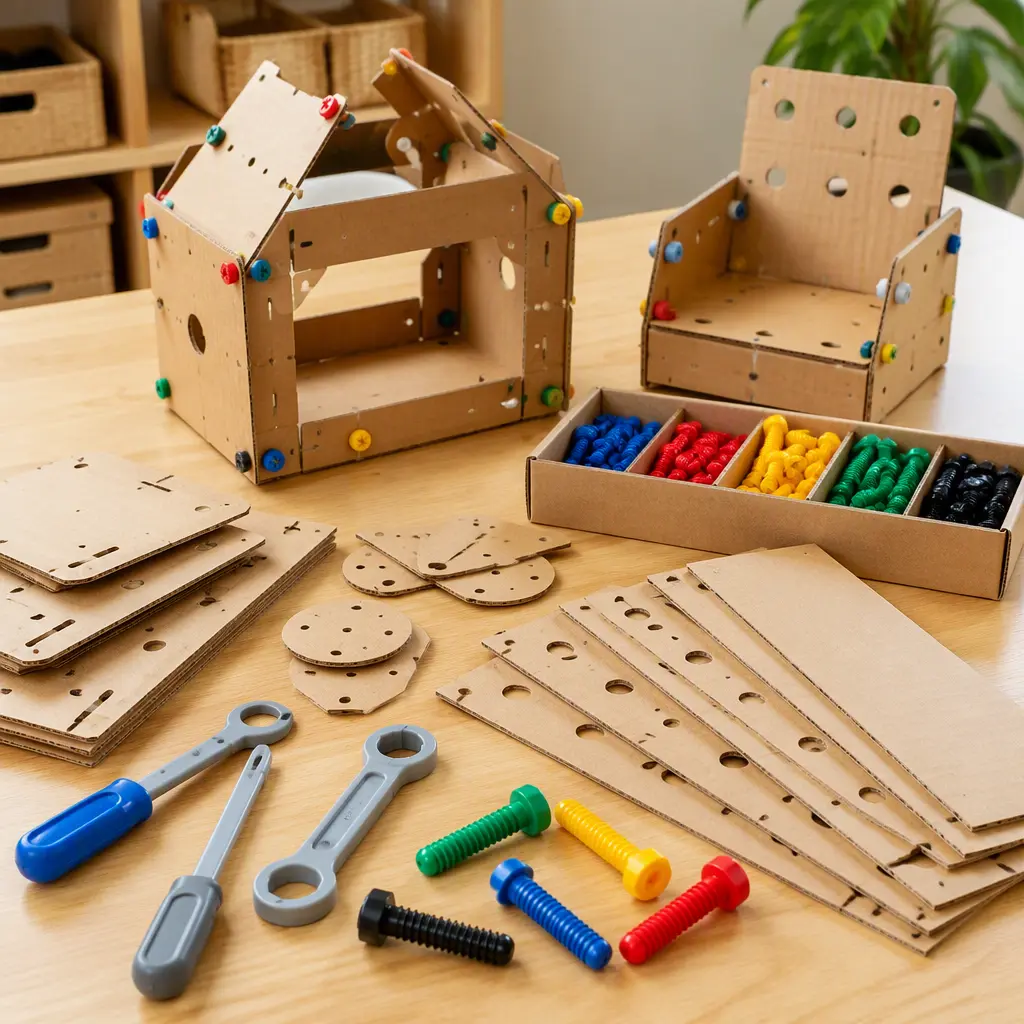
The company’s answer was to create durable reusable parts that could repeatedly join cardboard sheets together. The connectors were designed to be easy for children to handle while still sturdy enough for larger projects. Safe cutting tools and perforation aids helped kids modify boxes without sharp hobby knives or complicated measuring equipment. Early classroom adoption helped the brand spread internationally because teachers found that the tools encouraged collaboration, problem-solving, and iterative design in a way that felt approachable even for younger children.
Why it works
The appeal of Makedo comes from how little structure it imposes on the builder. Many construction toys guide children toward specific finished models, but cardboard building starts with loose shapes and unpredictable materials. A cereal box bends differently from a shipping carton. One project may collapse and need reinforcing. Another may become larger than expected because more boxes appear during the process. That unpredictability pushes children to experiment with balance, hinges, supports, and scale without turning the activity into a formal lesson.
The physical design of the tools also matters. The connectors are intentionally oversized enough for younger hands, and the reusable fastening system allows repeated rebuilding without permanently damaging the cardboard. Children can disassemble a creature one day and turn the same materials into a puppet theater the next. Because cardboard is lightweight and common, the projects tend to feel less precious than model kits or expensive building sets. Kids are often more willing to try ambitious ideas when mistakes are easy to undo.
- Reusable connectors allow repeated building and rebuilding
- Safe cutting and perforation tools support independent play
- Works with common household cardboard instead of proprietary parts
- Encourages engineering thinking through trial and error
- Large-scale creations feel possible without complicated electronics
Who it's for
Makedo products are generally aimed at school-age children, though younger kids can participate with supervision during cutting or assembly. The system works especially well for children who enjoy open-ended projects, forts, costumes, puppets, or collaborative group activities. Adults often become involved too, partly because large cardboard builds naturally take over shared spaces like kitchens, garages, or classrooms. Teachers, library programs, and makerspaces have also embraced the format because it scales easily from simple individual projects to group engineering challenges.
Variants and what to look for today
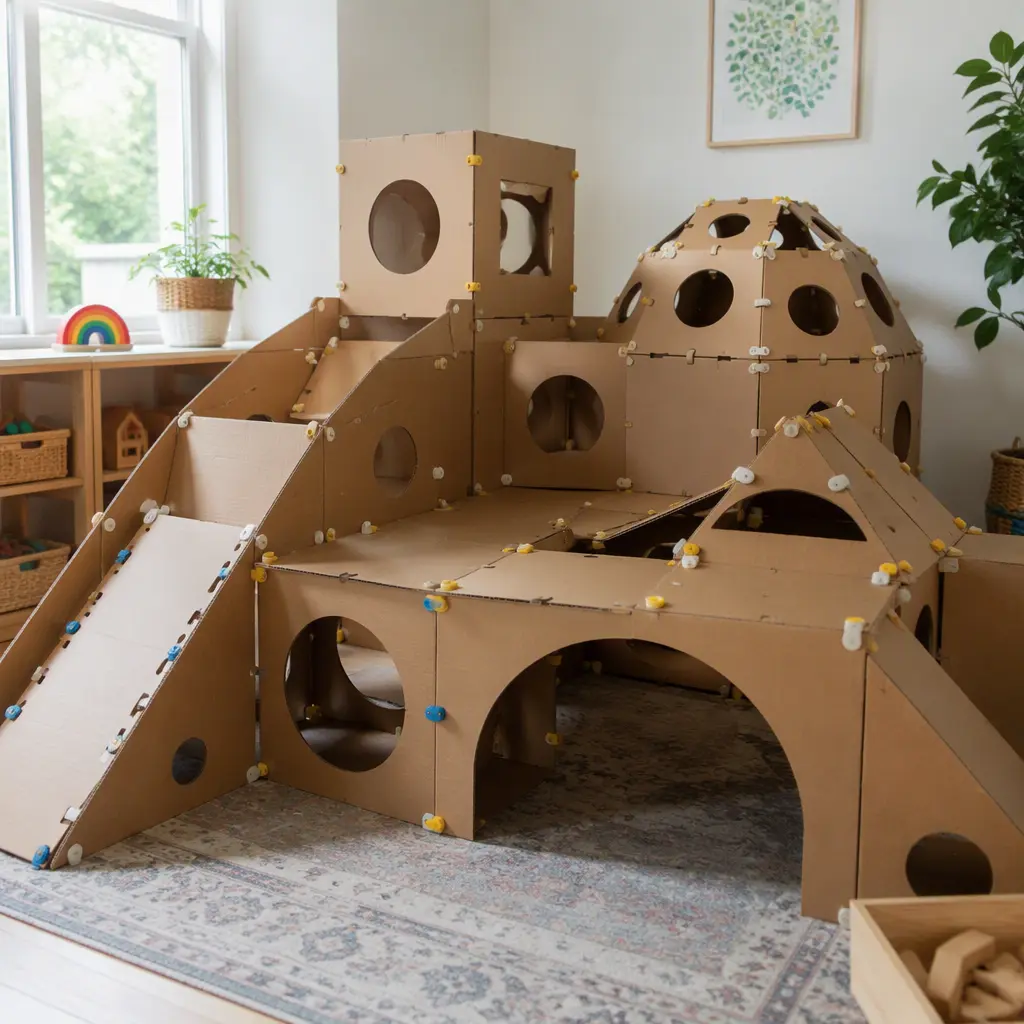
Modern Makedo sets are typically organized around the number of connectors and tools included rather than around specific themed builds. Smaller starter kits focus on introducing the fastening system, while larger classroom-oriented collections support collaborative projects with many participants. Some sets emphasize portability and simple construction, while others include expanded tool selections for more ambitious engineering projects.
If you are shopping today, the main consideration is usually scale. Families making occasional weekend projects may only need a basic set and access to recycling boxes. Classrooms or highly creative builders often benefit from larger connector counts because cardboard projects grow quickly once children start experimenting. Generic cardboard construction tools from other brands also exist, but durability and ease of use can vary widely. Smooth connector threading and child-safe cutting tools tend to matter more than decorative extras.
- Starter kits for occasional home projects
- Larger classroom sets for collaborative builds
- Portable travel-friendly kits with compact tool selections
- Expansion packs focused on additional connectors and hinges
Frequently asked questions
Does Makedo only work with shipping boxes?
No. Shipping cartons are popular because they are sturdy and easy to find, but builders also use cereal boxes, shoe boxes, paper tubes, and other recycled cardboard materials. Different thicknesses can even become part of the design challenge.
Is it more of a craft toy or an engineering toy?
It comfortably overlaps both categories. Some children focus on decoration and imaginative storytelling, while others become interested in structure, mechanics, and stability. The open-ended format allows both approaches to exist within the same project.
Can adults enjoy it too?
Yes. Many adults end up participating because cardboard construction naturally invites collaborative building. Parents and teachers often enjoy the problem-solving side of large projects, especially forts, costumes, or moving parts.
Why has cardboard building stayed popular?
Part of the appeal is accessibility. Cardboard is inexpensive, familiar, and constantly available. Makedo adds a reusable system that makes those materials feel more permanent and intentional, turning recycling into a genuine construction activity rather than a one-time craft.
Makedo succeeded by reframing an ordinary household material as a creative platform. The connectors themselves are simple, but the larger idea has proven durable: children do not always need highly detailed kits or expensive technology to build ambitious things. Sometimes the most memorable projects begin with an empty box, a handful of reusable parts, and permission to experiment.